Kiriyama Yoshimitsu, Nochi Hiromi
School of Pharmaceutical Sciences, Tokushima Bunri University, Shido 1314-1, Sanuki, Kagawa 769-2193, Japan.
Int J Mol Sci. 2015 Nov 9;16(11):26797-812. doi: 10.3390/ijms161125990.
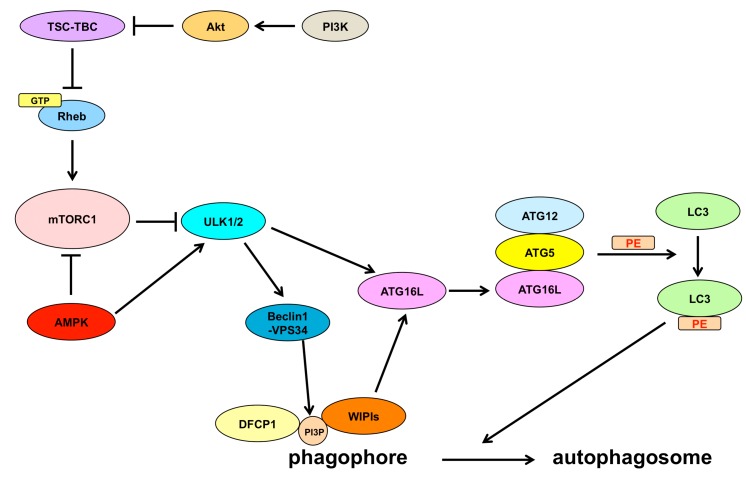
Macroautophagy, hereafter referred to as autophagy, is a bulk degradation process performed by lysosomes in which aggregated and altered proteins as well as dysfunctional organelles are decomposed. Autophagy is a basic cellular process that maintains homeostasis and is crucial for postmitotic neurons. Thus, impaired autophagic processes in neurons lead to improper homeostasis and neurodegeneration. Recent studies have suggested that impairments of the autophagic process are associated with several neurodegenerative diseases, such as Alzheimer's disease, Parkinson's disease, Huntington's disease, amyotrophic lateral sclerosis, and static encephalopathy of childhood with neurodegeneration in adulthood. In this review, we focus on the recent findings regarding the autophagic process and the involvement of autophagy in neurodegenerative diseases.
巨自噬,以下简称为自噬,是一种由溶酶体执行的大规模降解过程,在此过程中,聚集和改变的蛋白质以及功能失调的细胞器会被分解。自噬是维持体内平衡的基本细胞过程,对有丝分裂后的神经元至关重要。因此,神经元中自噬过程受损会导致体内平衡失调和神经退行性变。最近的研究表明,自噬过程受损与几种神经退行性疾病有关,如阿尔茨海默病、帕金森病、亨廷顿病、肌萎缩侧索硬化症以及成年期出现神经退行性变的儿童静止性脑病。在本综述中,我们重点关注自噬过程的最新发现以及自噬在神经退行性疾病中的作用。