Shu Lin, Peng Bin, Yang Zhengbing, Wang Rui, Deng Senyang, Liu Xingzhao
State Key Laboratory of Electronic Thin Films and Integrated Devices, University of Electronic Science and Technology of China, Chengdu 610054, China.
China Gas Turbine Establishment, Jiangyou 621703, China.
Sensors (Basel). 2015 Nov 11;15(11):28531-42. doi: 10.3390/s151128531.
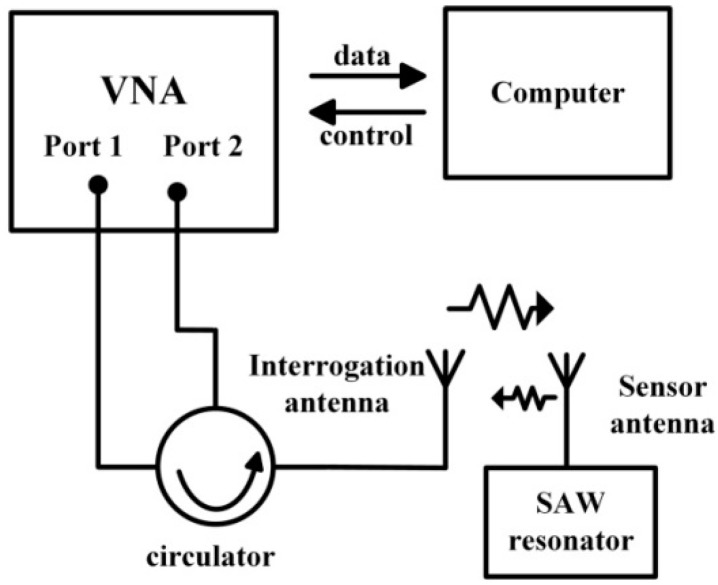
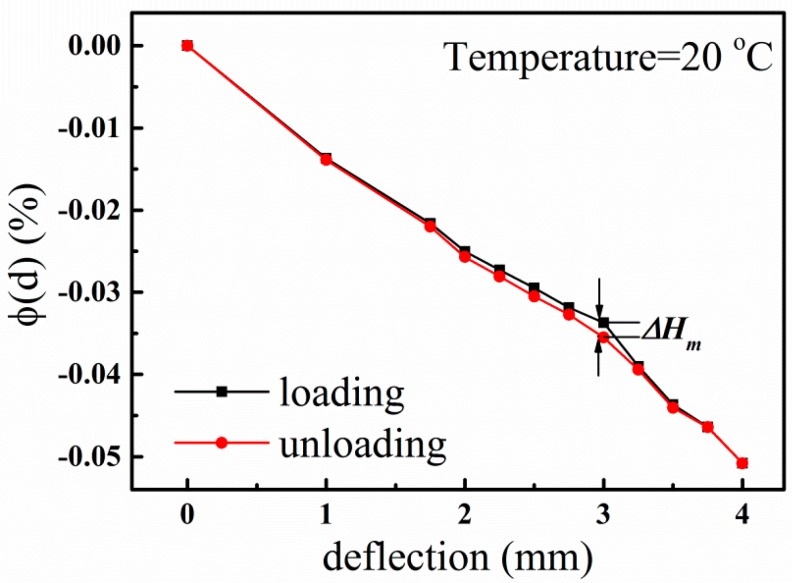
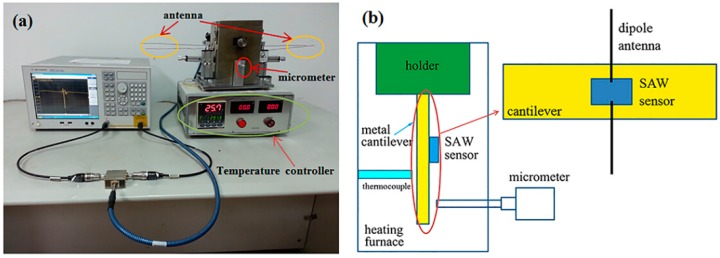
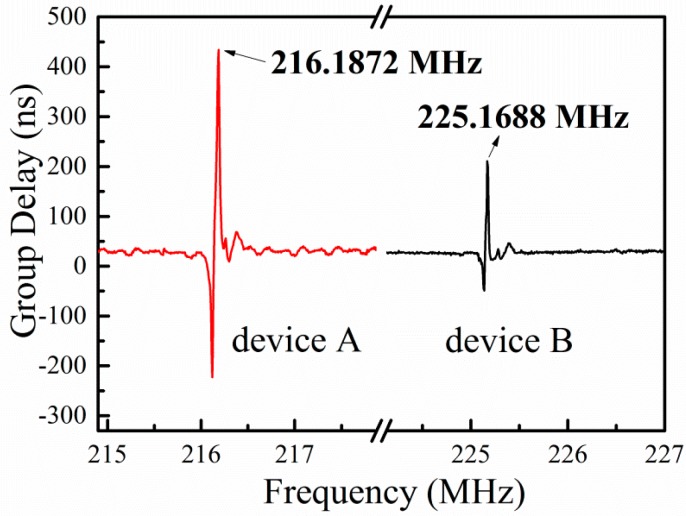
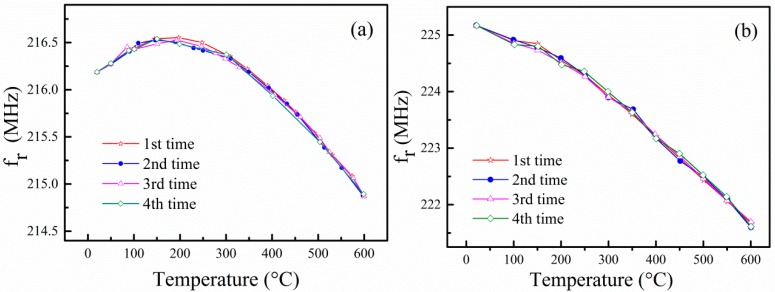
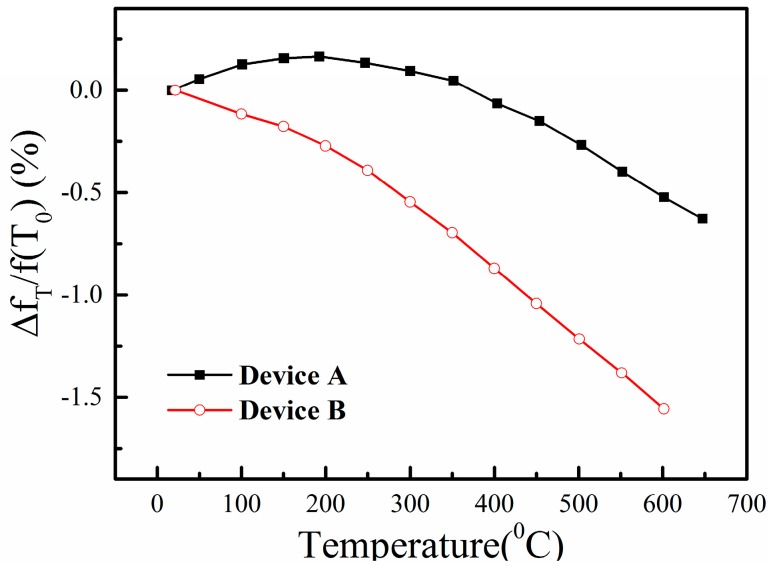
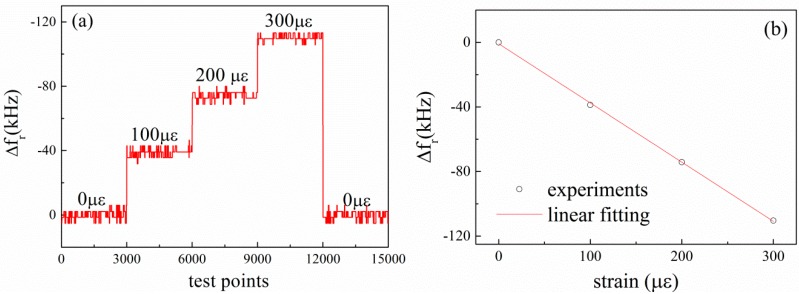
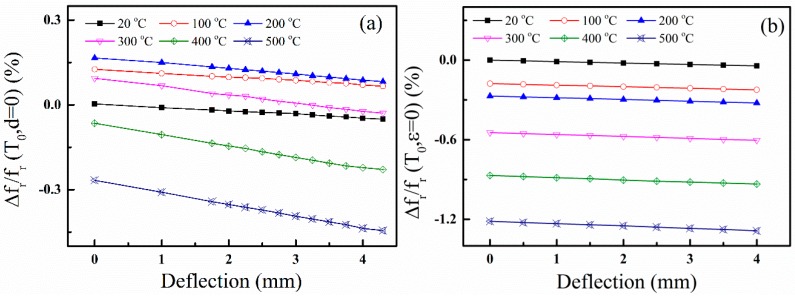
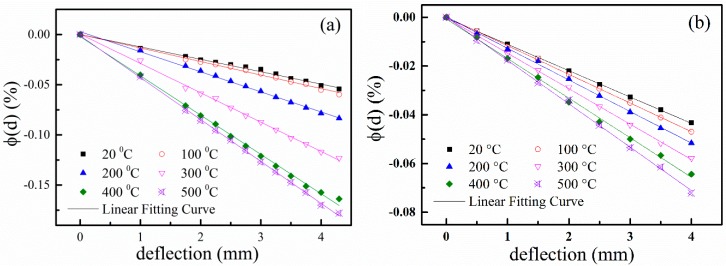
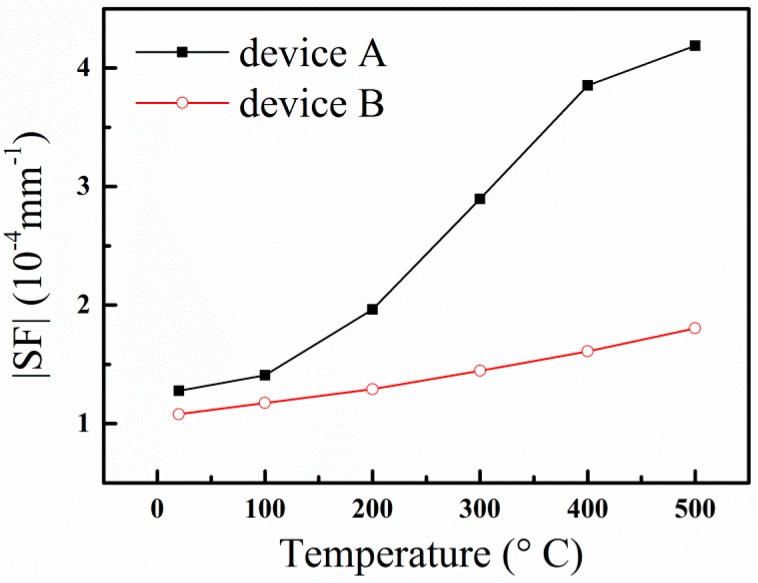
Two Surface acoustic wave (SAW) resonators were fabricated on langasite substrates with Euler angle of (0°, 138.5°, 117°) and (0°, 138.5°, 27°). A dipole antenna was bonded to the prepared SAW resonator to form a wireless sensor. The characteristics of the SAW sensors were measured by wireless frequency domain interrogation methods from 20 °C to 600 °C. Different temperature behaviors of the sensors were observed. Strain sensing was achieved using a cantilever configuration. The sensors were measured under applied strain from 20 °C to 500 °C. The shift of the resonance frequency contributed merely by strain is extracted from the combined effects of temperature and strain. Both the strain factors of the two SAW sensors increase with rising ambient temperature, and the SAW sensor deposited on (0°, 138.5°, 117°) cut is more sensitive to applied strain. The measurement errors of the two sensors are also discussed. The relative errors of the two sensors are between 0.63% and 2.09%. Even at 500 °C, the hysteresis errors of the two sensors are less than 5%.
在欧拉角为(0°, 138.5°, 117°)和(0°, 138.5°, 27°)的硅酸镧镓衬底上制备了两个表面声波(SAW)谐振器。将一个偶极天线连接到制备好的SAW谐振器上,以形成一个无线传感器。通过无线频域询问方法在20°C至600°C范围内测量了SAW传感器的特性。观察到了传感器不同的温度行为。使用悬臂结构实现了应变传感。在20°C至500°C的外加应变下对传感器进行了测量。从温度和应变的综合影响中提取出仅由应变引起的谐振频率偏移。两个SAW传感器的应变因子均随环境温度升高而增大,且沉积在(0°, 138.5°, 117°)切割面上的SAW传感器对应变更敏感。还讨论了两个传感器的测量误差。两个传感器的相对误差在0.63%至2.09%之间。即使在500°C时,两个传感器的滞后误差也小于5%。