Davis Jenny L, Currin Carolyn A, O'Brien Colleen, Raffenburg Craig, Davis Amanda
NOAA National Ocean Service Center for Coastal Fisheries & Habitat Research, Beaufort, North Carolina, United States of America.
Consolidated Safety Services, Fairfax, Virginia, United States of America.
PLoS One. 2015 Nov 16;10(11):e0142595. doi: 10.1371/journal.pone.0142595. eCollection 2015.
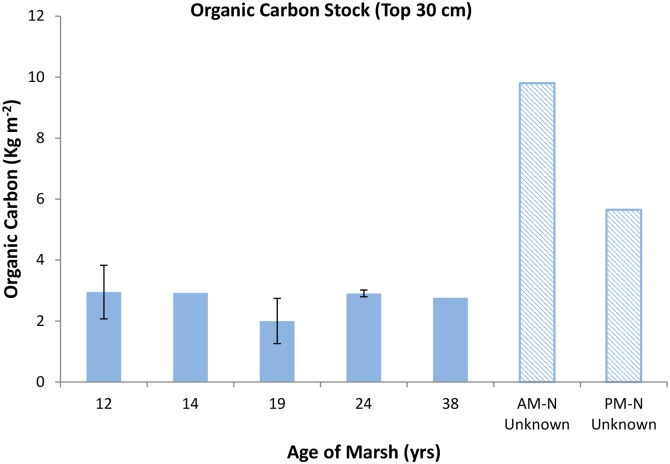
Living shorelines are a type of estuarine shoreline erosion control that incorporates native vegetation and preserves native habitats. Because they provide the ecosystem services associated with natural coastal wetlands while also increasing shoreline resilience, living shorelines are part of the natural and hybrid infrastructure approach to coastal resiliency. Marshes created as living shorelines are typically narrow (< 30 m) fringing marshes with sandy substrates that are well flushed by tides. These characteristics distinguish living shorelines from the larger meadow marshes in which most of the current knowledge about created marshes was developed. The value of living shorelines for providing both erosion control and habitat for estuarine organisms has been documented but their capacity for carbon sequestration has not. We measured carbon sequestration rates in living shorelines and sandy transplanted Spartina alterniflora marshes in the Newport River Estuary, North Carolina. The marshes sampled here range in age from 12 to 38 years and represent a continuum of soil development. Carbon sequestration rates ranged from 58 to 283 g C m-2 yr-1 and decreased with marsh age. The pattern of lower sequestration rates in older marshes is hypothesized to be the result of a relative enrichment of labile organic matter in younger sites and illustrates the importance of choosing mature marshes for determination of long-term carbon sequestration potential. The data presented here are within the range of published carbon sequestration rates for S. alterniflora marshes and suggest that wide-scale use of the living shoreline approach to shoreline management may come with a substantial carbon benefit.
生态护岸是一种河口海岸线侵蚀控制方式,它结合了本地植被并保护本地栖息地。由于生态护岸提供了与天然海岸湿地相关的生态系统服务,同时还增强了海岸线的恢复力,因此它是海岸恢复力自然和混合基础设施方法的一部分。作为生态护岸创建的沼泽通常是狭窄的(<30米)边缘沼泽,具有沙质基质,受潮汐充分冲刷。这些特征将生态护岸与更大的草甸沼泽区分开来,目前关于人工创建沼泽的大部分知识都是在草甸沼泽中形成的。生态护岸在提供侵蚀控制和河口生物栖息地方面的价值已有文献记载,但其碳固存能力尚未得到记录。我们测量了北卡罗来纳州纽波特河河口生态护岸和沙地移植互花米草沼泽中的碳固存率。这里采样的沼泽年龄从12年到38年不等,代表了土壤发育的一个连续过程。碳固存率在58至283克碳/平方米·年之间,并且随着沼泽年龄的增长而降低。据推测,较老沼泽中较低固存率的模式是由于较年轻地点中不稳定有机物质相对富集的结果,这说明了选择成熟沼泽来确定长期碳固存潜力的重要性。此处呈现的数据处于已发表的互花米草沼泽碳固存率范围内,这表明广泛采用生态护岸方法进行海岸线管理可能会带来可观的碳效益。