Moran-Jones Kim, Gloss Brian S, Murali Rajmohan, Chang David K, Colvin Emily K, Jones Marc D, Yuen Samuel, Howell Viive M, Brown Laura M, Wong Carol W, Spong Suzanne M, Scarlett Christopher J, Hacker Neville F, Ghosh Sue, Mok Samuel C, Birrer Michael J, Samimi Goli
Kinghorn Cancer Centre and Garvan Institute of Medical Research, Cancer Research Program, Darlinghurst, NSW, Australia.
St. Vincent's Clinical School, Faculty of Medicine, University of New South Wales, Sydney, NSW, Australia.
Oncotarget. 2015 Dec 29;6(42):44551-62. doi: 10.18632/oncotarget.6082.
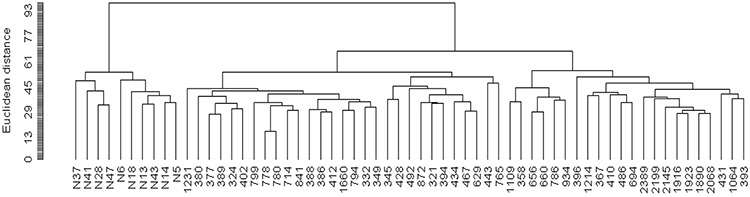
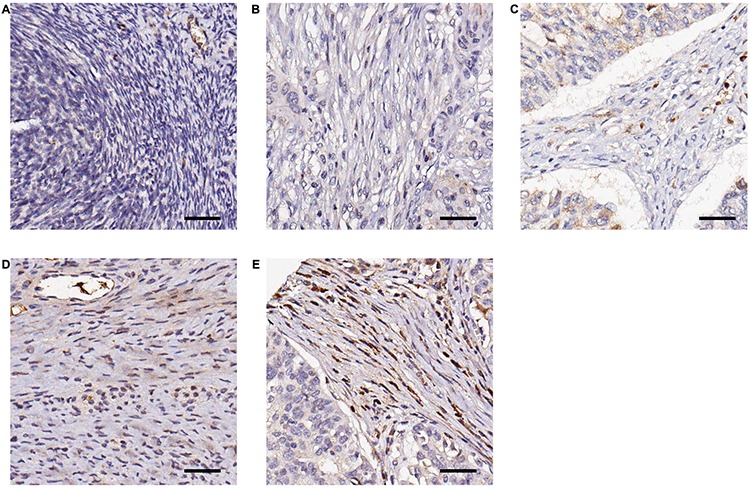
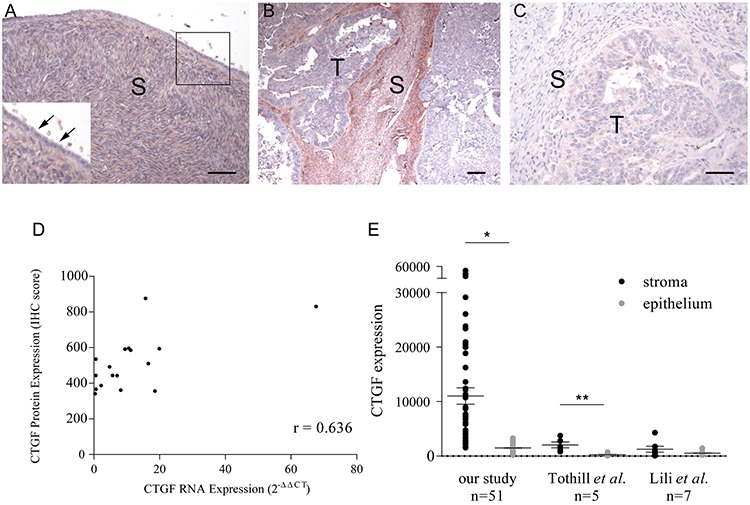
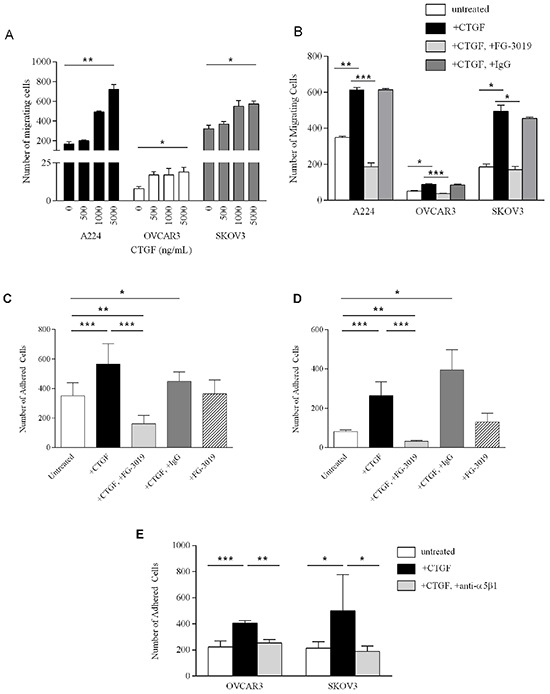
Ovarian cancer is the most common cause of death among women with gynecologic cancer. We examined molecular profiles of fibroblasts from normal ovary and high-grade serous ovarian tumors to identify novel therapeutic targets involved in tumor progression. We identified 2,300 genes that are significantly differentially expressed in tumor-associated fibroblasts. Fibroblast expression of one of these genes, connective tissue growth factor (CTGF), was confirmed by immunohistochemistry. CTGF protein expression in ovarian tumor fibroblasts significantly correlated with gene expression levels. CTGF is a secreted component of the tumor microenvironment and is being pursued as a therapeutic target in pancreatic cancer. We examined its effect in in vitro and ex vivo ovarian cancer models, and examined associations between CTGF expression and clinico-pathologic characteristics in patients. CTGF promotes migration and peritoneal adhesion of ovarian cancer cells. These effects are abrogated by FG-3019, a human monoclonal antibody against CTGF, currently under clinical investigation as a therapeutic agent. Immunohistochemical analyses of high-grade serous ovarian tumors reveal that the highest level of tumor stromal CTGF expression was correlated with the poorest prognosis. Our findings identify CTGF as a promoter of peritoneal adhesion, likely to mediate metastasis, and a potential therapeutic target in high-grade serous ovarian cancer. These results warrant further studies into the therapeutic efficacy of FG-3019 in high-grade serous ovarian cancer.
卵巢癌是妇科癌症女性患者中最常见的死因。我们检测了来自正常卵巢和高级别浆液性卵巢肿瘤的成纤维细胞的分子图谱,以确定参与肿瘤进展的新治疗靶点。我们鉴定出2300个在肿瘤相关成纤维细胞中显著差异表达的基因。其中一个基因,结缔组织生长因子(CTGF),在成纤维细胞中的表达通过免疫组织化学得到证实。卵巢肿瘤成纤维细胞中CTGF蛋白表达与基因表达水平显著相关。CTGF是肿瘤微环境的一种分泌成分,正被作为胰腺癌的治疗靶点进行研究。我们在体外和体内卵巢癌模型中检测了其作用,并检测了CTGF表达与患者临床病理特征之间的关联。CTGF促进卵巢癌细胞的迁移和腹膜粘连。这些作用被FG-3019消除,FG-3019是一种针对CTGF的人单克隆抗体,目前正作为治疗药物进行临床研究。对高级别浆液性卵巢肿瘤的免疫组织化学分析显示,肿瘤基质中CTGF表达水平最高与预后最差相关。我们的研究结果确定CTGF是腹膜粘连的促进因子,可能介导转移,是高级别浆液性卵巢癌的潜在治疗靶点。这些结果值得进一步研究FG-3019在高级别浆液性卵巢癌中的治疗效果。