Faculty of Pharmacy, Centre Hospitalier de L'Universite de Montreal, Montreal, Quebec, Canada.
Institut du Cancer de Montréal, Centre Hospitalier de L'Universite de Montreal, Montreal, Quebec, Canada.
J Immunother Cancer. 2021 Mar;9(3). doi: 10.1136/jitc-2020-001965.
Hydrolysis of extracellular ATP to adenosine (eADO) is an important immune checkpoint in cancer immunology. We here investigated the impact of the eADO pathway in high-grade serous ovarian cancer (HGSC) using multiparametric platforms.
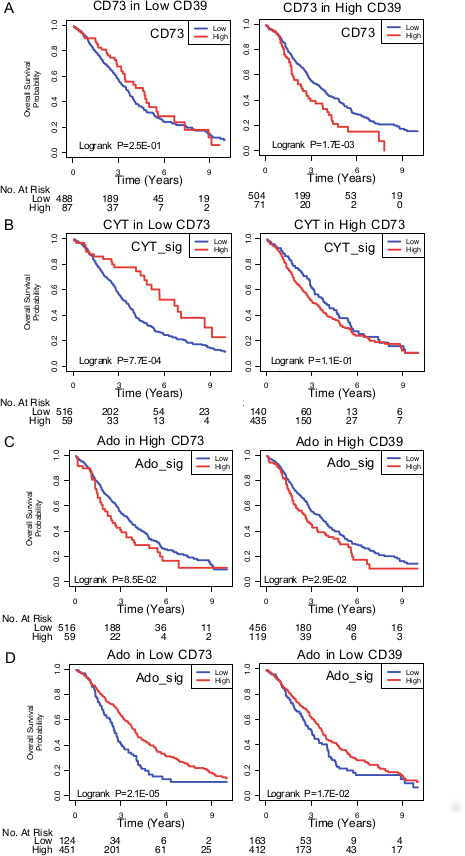
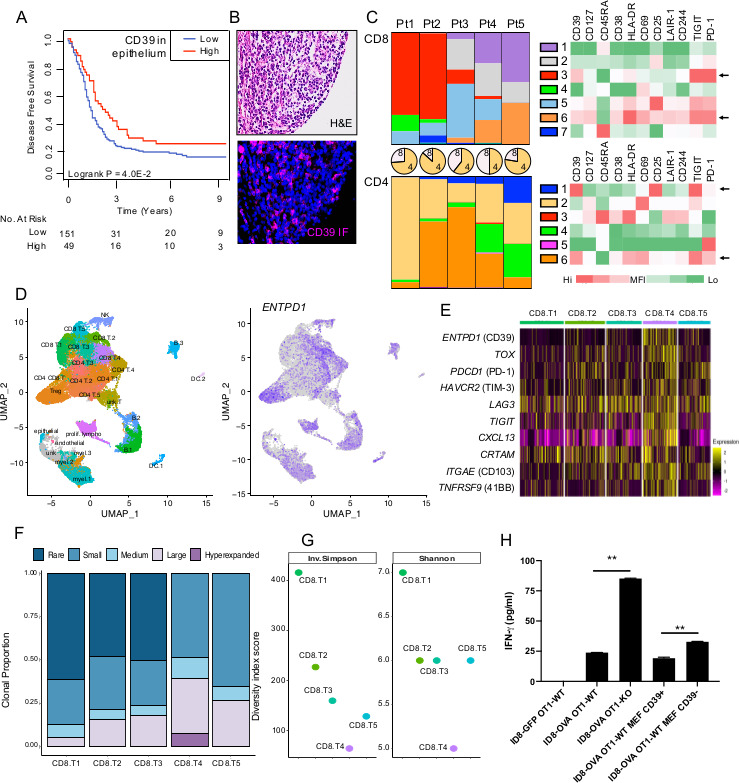
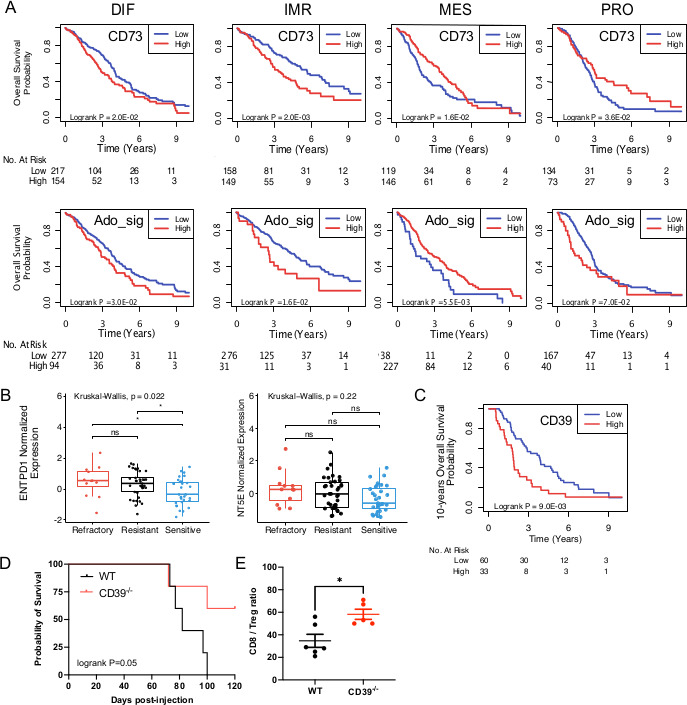
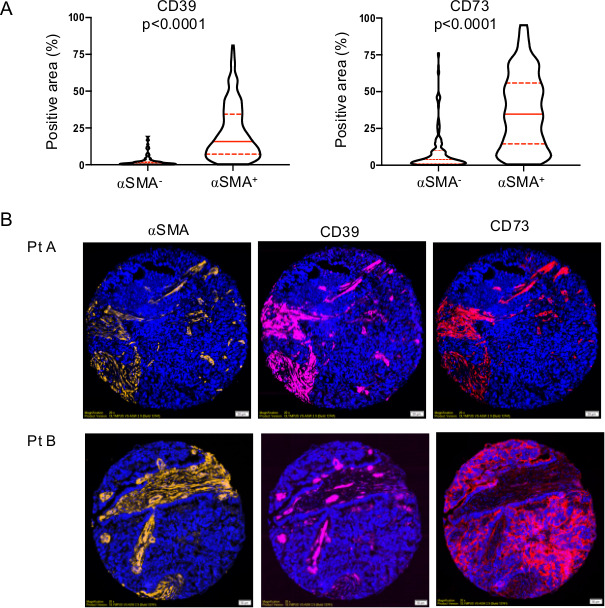
We performed a transcriptomic meta-analysis of eADO-producing CD39 and CD73, an eADO signaling gene signature, immune gene signatures and clinical outcomes in approximately 1200 patients with HGSC. Protein expression, localization and prognostic impact of CD39, CD73 and CD8 were then performed on approximately 1000 cases on tissue microarray, and tumor-infiltrating lymphocytes (TILs) were analyzed by flow cytometry and single-cell RNA sequencing on a subset of patients.
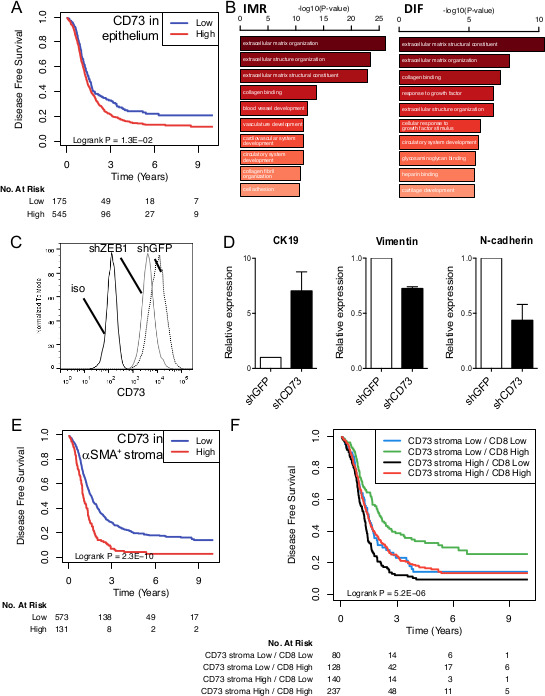
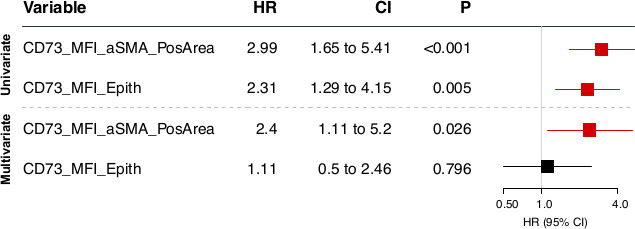
Concomitant CD39 and CD73 gene expression, as well as high levels of an eADO gene signature, were associated with worse prognosis in patients with HGSC, notably in the immunoregulatory molecular subtype, characterized by an immune-active microenvironment. CD39 was further associated with primary chemorefractory and chemoresistant human HGSC and platinum-based chemotherapy of murine HGSC was significantly more effective in CD39-deficient mice. At protein level, CD39 and CD73 were predominantly expressed by cancer-associated fibroblasts, and CD39 was expressed on severely exhausted, clonally expanded and putative tissue-resident memory TILs.
Our study revealed the clinical, immunological, subtype-specific impacts of eADO signaling in HGSC, unveiled the chemoprotective effect of CD39 and supports the evaluation of eADO-targeting agents in patients with ovarian cancer.
细胞外三磷酸腺苷(ATP)水解为腺苷(eADO)是癌症免疫学中的一个重要免疫检查点。我们使用多参数平台研究了 eADO 通路在高级别浆液性卵巢癌(HGSC)中的作用。
我们对大约 1200 例 HGSC 患者的 eADO 产生 CD39 和 CD73、eADO 信号基因特征、免疫基因特征和临床结局进行了转录组元分析。然后,在大约 1000 例组织微阵列上进行了 CD39、CD73 和 CD8 的蛋白表达、定位和预后影响分析,并对部分患者进行了肿瘤浸润淋巴细胞(TIL)的流式细胞术和单细胞 RNA 测序分析。
CD39 和 CD73 基因表达的同时升高以及高水平的 eADO 基因特征与 HGSC 患者的预后较差相关,尤其是在免疫调节分子亚型中,其特征是免疫活跃的微环境。CD39 还与原发性化疗耐药和化疗耐药的人类 HGSC 相关,并且在 CD39 缺陷型小鼠中,铂类为基础的化疗对 HGSC 更有效。在蛋白水平上,CD39 和 CD73 主要由肿瘤相关成纤维细胞表达,CD39 表达于严重耗尽、克隆扩增和假定的组织驻留记忆 TIL 上。
本研究揭示了 eADO 信号在 HGSC 中的临床、免疫学、亚型特异性影响,揭示了 CD39 的化学保护作用,并支持在卵巢癌患者中评估 eADO 靶向药物。