Wu Liang, Viola Cristina M, Brzozowski Andrzej M, Davies Gideon J
Department of Chemistry, University of York, York, UK.
Nat Struct Mol Biol. 2015 Dec;22(12):1016-22. doi: 10.1038/nsmb.3136. Epub 2015 Nov 16.
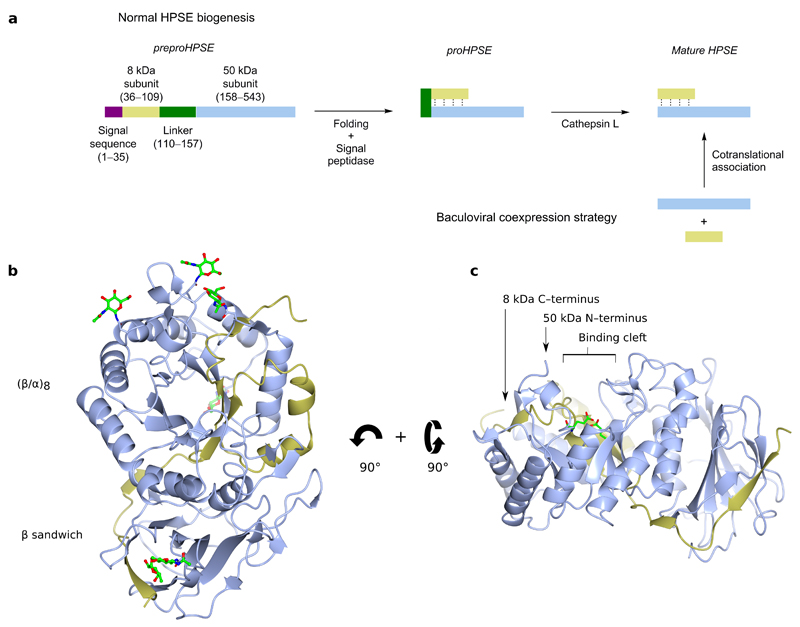
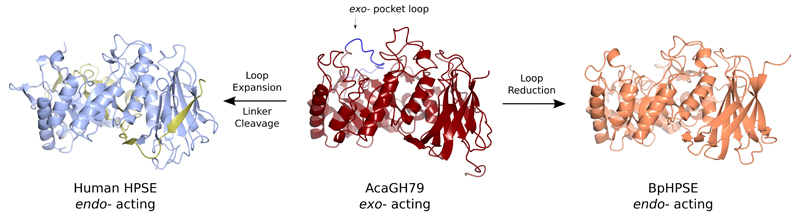
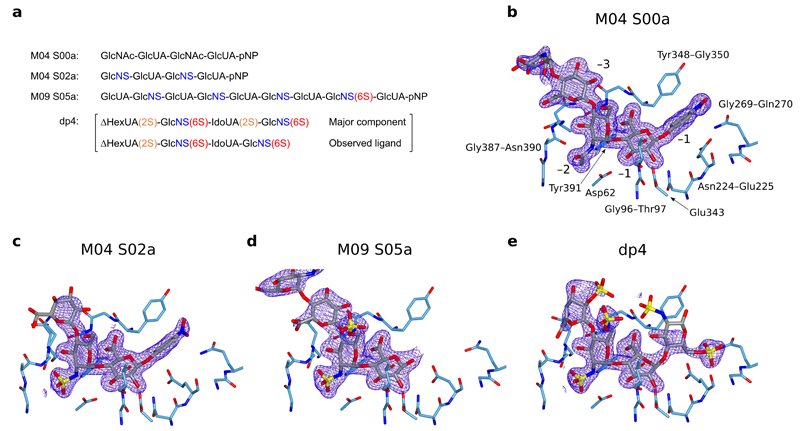
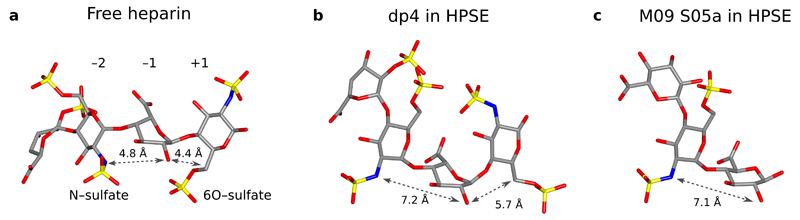
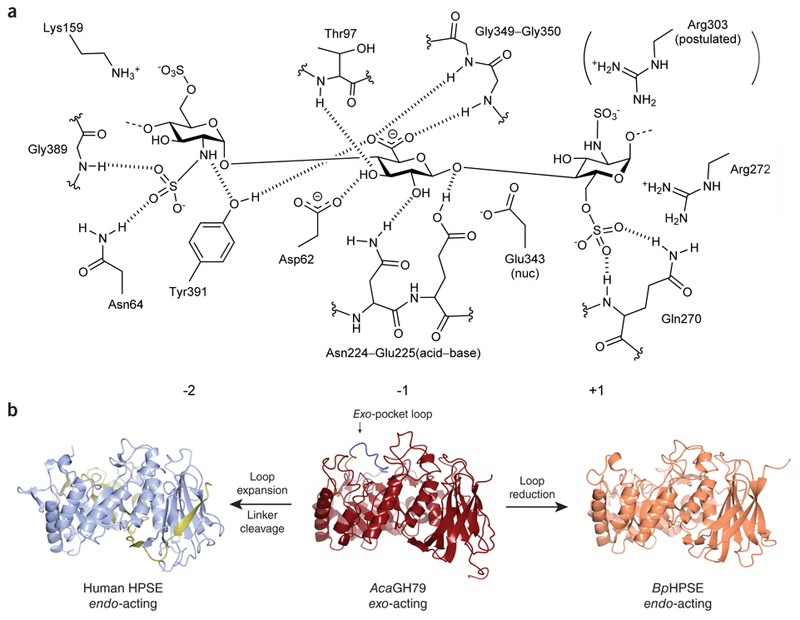
Heparan sulfate (HS) is a glycosaminoglycan that forms a key component of the extracellular matrix (ECM). Breakdown of HS is carried out by heparanase (HPSE), an endo-β-glucuronidase of the glycoside hydrolase 79 (GH79) family. Overexpression of HPSE results in breakdown of extracellular HS and release of stored growth factors and hence is strongly linked to cancer metastasis. Here we present crystal structures of human HPSE at 1.6-Å to 1.9-Å resolution that reveal how an endo-acting binding cleft is exposed by proteolytic activation of latent proHPSE. We used oligosaccharide complexes to map the substrate-binding and sulfate-recognition motifs. These data shed light on the structure and interactions of a key enzyme involved in ECM maintenance and provide a starting point for the design of HPSE inhibitors for use as biochemical tools and anticancer therapeutics.
硫酸乙酰肝素(HS)是一种糖胺聚糖,构成细胞外基质(ECM)的关键成分。HS的降解由乙酰肝素酶(HPSE)完成,它是糖苷水解酶79(GH79)家族的一种内切β-葡萄糖醛酸酶。HPSE的过表达导致细胞外HS的降解以及储存的生长因子的释放,因此与癌症转移密切相关。在此,我们展示了分辨率为1.6-Å至1.9-Å的人HPSE晶体结构,揭示了潜在的前体HPSE通过蛋白水解激活而暴露的内切作用结合裂隙。我们使用寡糖复合物来绘制底物结合和硫酸盐识别基序。这些数据阐明了参与ECM维持的关键酶的结构和相互作用,并为设计用作生化工具和抗癌治疗剂的HPSE抑制剂提供了起点。