Pfreundt Ulrike, Hess Wolfgang R
University of Freiburg, Faculty of Biology, Schänzlestr. 1, D-79104 Freiburg, Germany.
Sci Rep. 2015 Nov 18;5:16829. doi: 10.1038/srep16829.
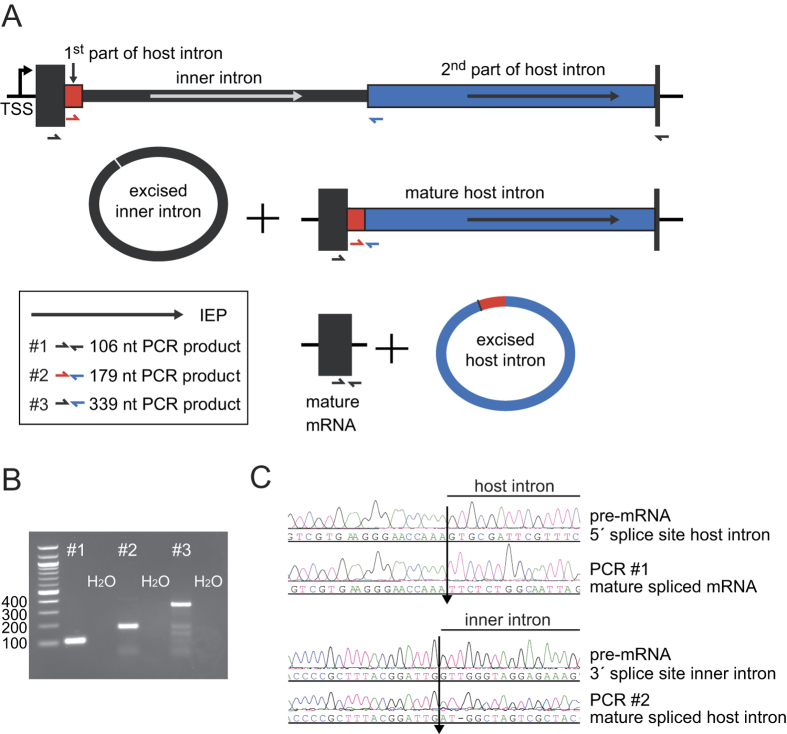
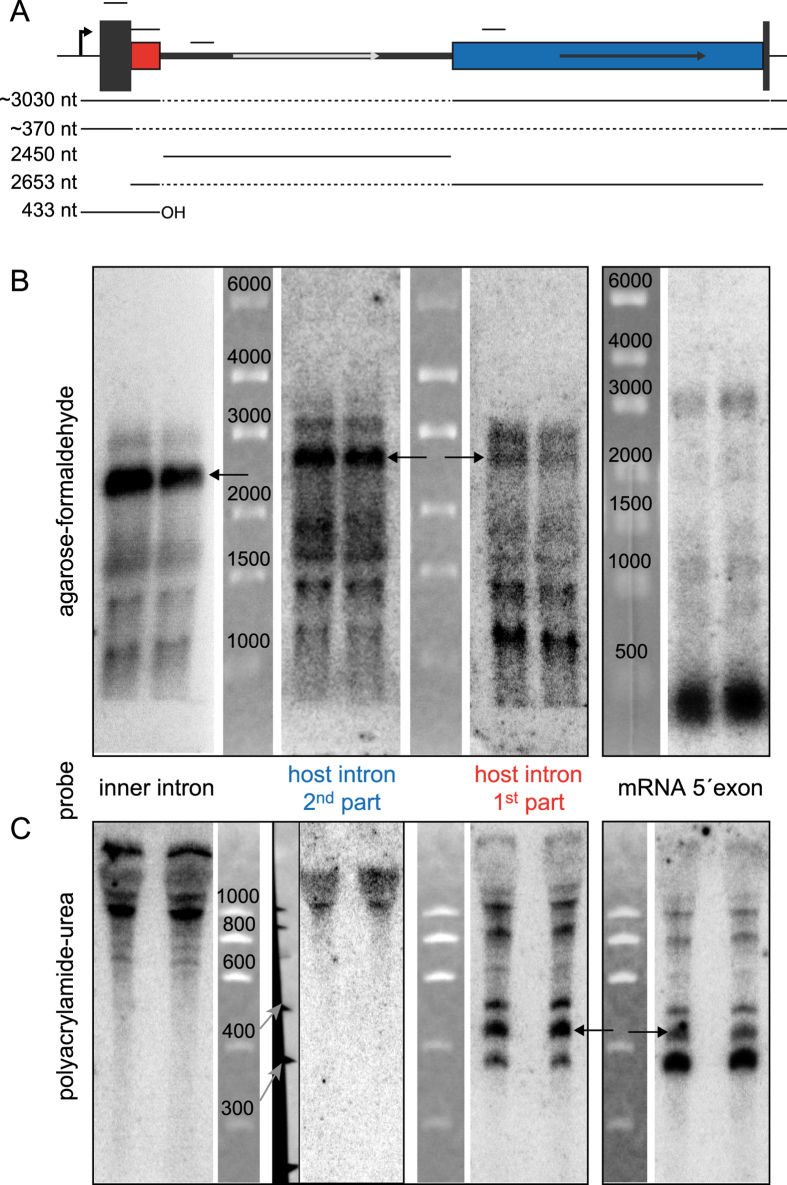
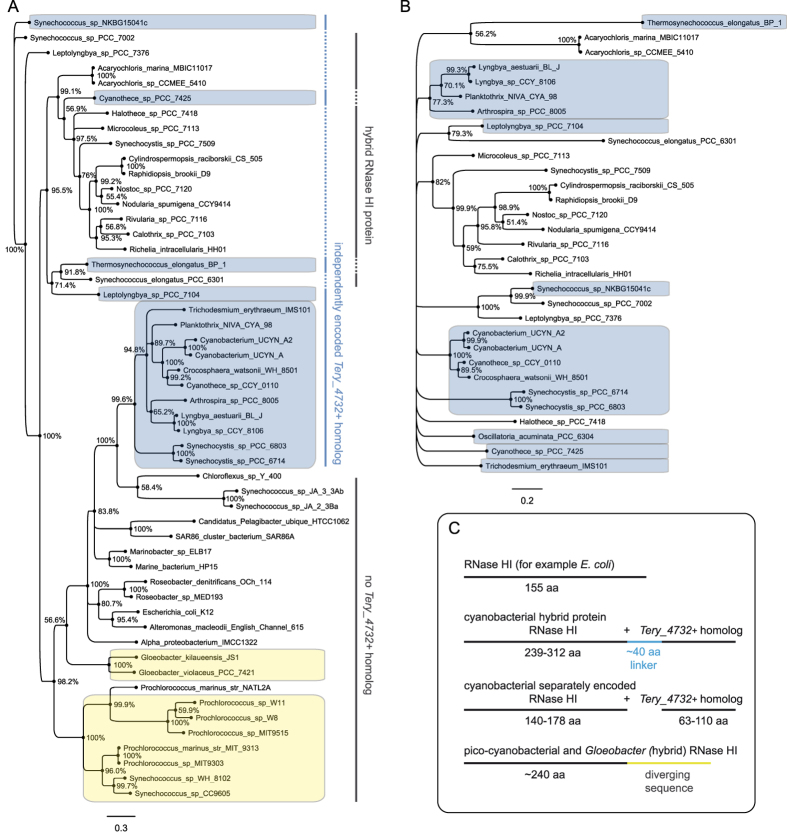
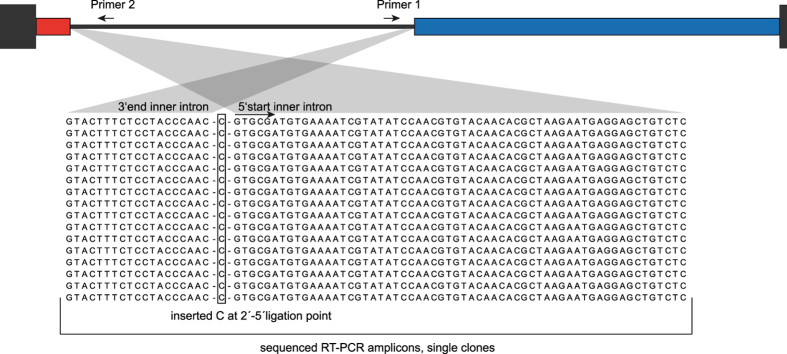
The marine cyanobacterium Trichodesmium is unusual in its genomic architecture as 40% of the genome is occupied by non-coding DNA. Although the majority of it is transcribed into RNA, it is not well understood why such a large non-coding genome fraction is maintained. Mobile genetic elements can contribute to genome expansion. Many bacteria harbor introns whereas twintrons, introns-in-introns, are rare and not known to interrupt protein-coding genes in bacteria. Here we show the sequential in vivo splicing of a 5400 nt long group II twintron interrupting a highly conserved gene that is associated with RNase HI in some cyanobacteria, but free-standing in others, including Trichodesmium erythraeum. We show that twintron splicing results in a putatively functional mRNA. The full genetic arrangement was found conserved in two geospatially distinct metagenomic datasets supporting its functional relevance. We further show that splicing of the inner intron yields the free intron as a true circle. This reaction requires the spliced exon reopening (SER) reaction to provide a free 5' exon. The fact that Trichodesmium harbors a functional twintron fits in well with the high intron load of these genomes, and suggests peculiarities in its genetic machinery permitting such arrangements.
海洋蓝细菌束毛藻在基因组结构上很不寻常,因为其基因组的40%被非编码DNA占据。尽管其中大部分转录成了RNA,但人们对为何维持如此大比例的非编码基因组还了解甚少。移动遗传元件可导致基因组扩张。许多细菌含有内含子,而内含子套内含子(双内含子)则很罕见,且在细菌中尚不知其会中断蛋白质编码基因。在此,我们展示了一个5400 nt长的II型双内含子在体内的顺序剪接过程,该双内含子中断了一个高度保守的基因,此基因在一些蓝细菌中与核糖核酸酶H I相关,但在包括红海束毛藻在内的其他蓝细菌中则是独立存在的。我们表明双内含子剪接产生了一个可能具有功能的mRNA。在两个地理空间上不同的宏基因组数据集中发现该完整的基因排列是保守的,这支持了其功能相关性。我们进一步表明,内部内含子的剪接产生了作为真正环状的游离内含子。该反应需要剪接后的外显子重新开放(SER)反应来提供一个游离的5'外显子。红海束毛藻含有功能性双内含子这一事实与其基因组的高内含子负荷相契合,并暗示了其遗传机制中允许这种排列的独特之处。