Yu Xinmao, Gong Haiyan, Zhou Yongzhi, Zhang Houshuang, Cao Jie, Zhou Jinlin
Key Laboratory of Animal Parasitology of Ministry of Agriculture, Shanghai Veterinary Research Institute, Chinese Academy of Agricultural Sciences, Shanghai, 200241, China.
Jiangsu Co-innovation Center for Prevention and Control of Important Animal Infectious Diseases and Zoonoses, Yangzhou, 225009, China.
Parasit Vectors. 2015 Nov 17;8:597. doi: 10.1186/s13071-015-1213-7.
Rhipicephalus haemaphysaloides, a hard tick, is a common ectoparasite and can be found in many countries. It is recognized as the primary vector of bovine babesiosis in the south of China. During blood feeding, the tick's salivary glands secret numerous essential multifunctional proteins. In this study, a R. haemaphysaloides salivary gland transcriptome was described following the production and analysis of the transcripts from the two cDNA libraries of unfed and fed female ticks. The study focused on the differentially expressed genes and cysteine proteases, which play essential roles in the tick life cycle, that were detected most commonly in the up-regulation libraries.
The sialotranscriptome was assembled and analyzed though bioinformatic tools and the cysteine protease which is differentially expressed form sialotranscriptome were confirmed by Real-time PCR in salivary glands and different developments of ticks.
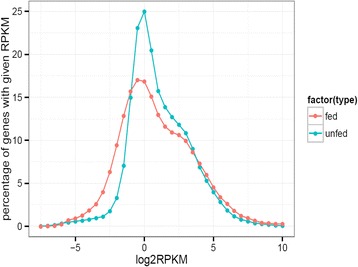
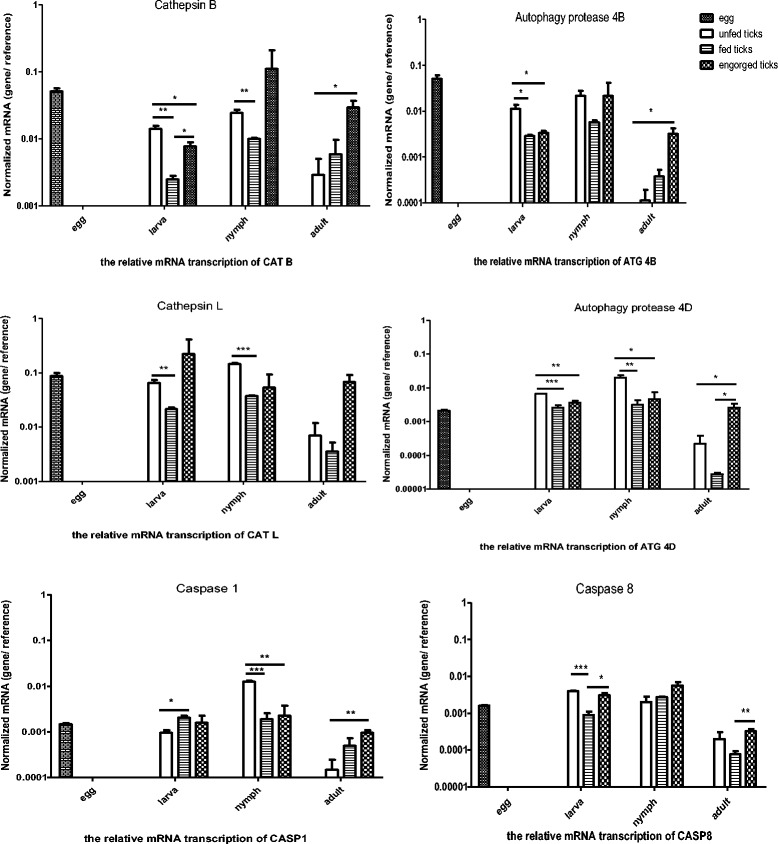
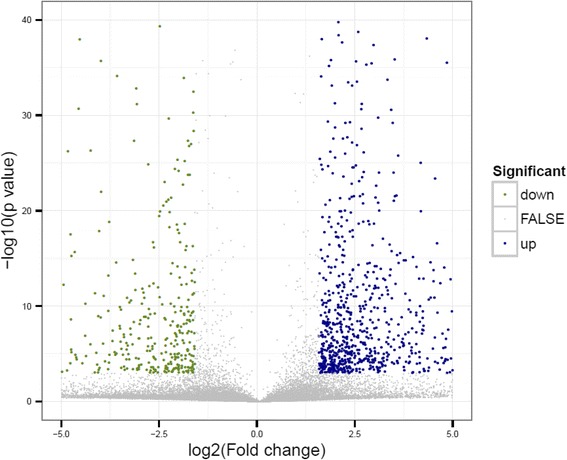
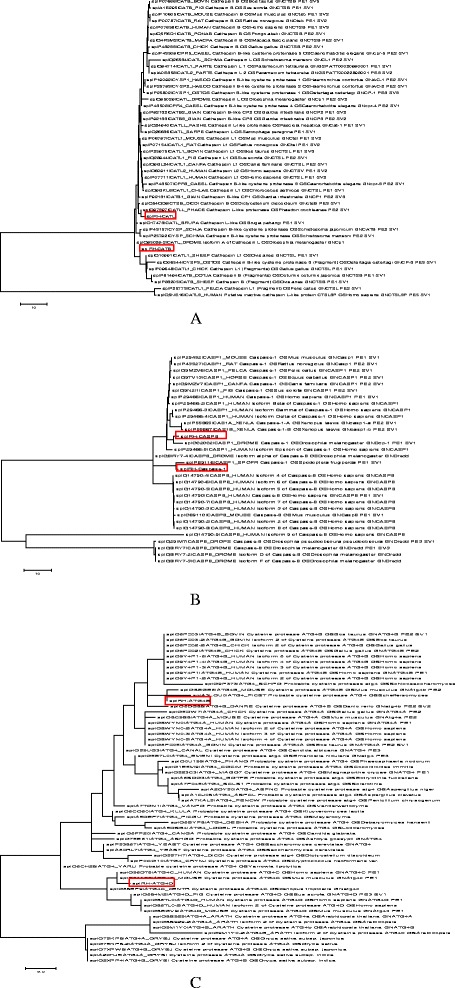
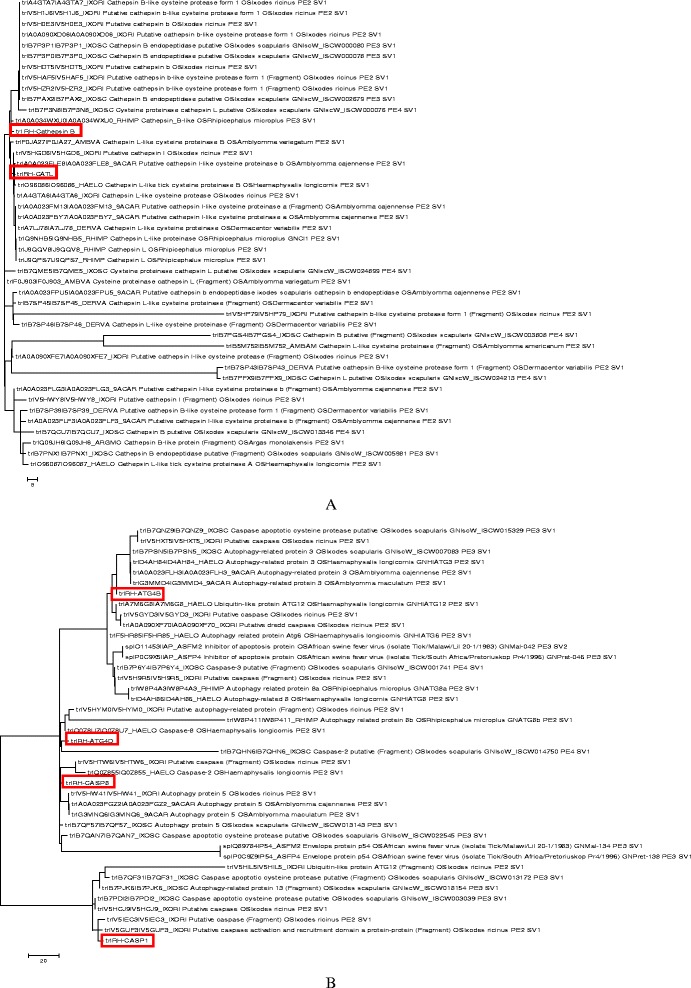
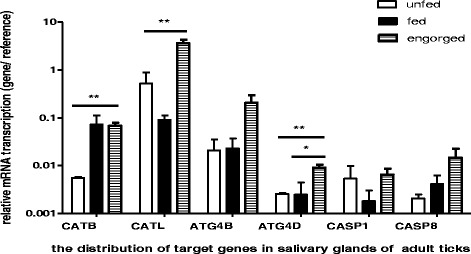
On the basis of sequence similarities with other species in various databases, we analyzed the unfed and fed sialotranscriptome of R. haemaphysaloides to identify the differentially expressed proteins secreted from the salivary glands during blood feeding and to investigate their biological functions. There were 25,113 transcripts (35 % of the total assembled transcripts) that showed significant similarity to known proteins with high BLAST from other species annotated. In total, 88 % and 89 % of the sequencing reads could be mapped back to assembled sequences in the unfed and fed library, respectively. Comparison of the abundance of transcripts from similar contigs of the two salivary gland cDNA libraries allowed the identification of differentially expressed genes. In total, there were 1179 up-regulated genes and 574 down-regulated genes found by comparing the two libraries. Twenty-five predicted cysteine proteases were screened from the transcript databases, whereas only six protein molecules were confirmed by gene cloning and molecular expression in E.coli which all belonged to the cysteine protease family. Bioinformatic evolutionary analysis showed the relationship of cysteine proteases in ticks with those of other species, suggesting the origin and conservation of these genes. Analysis of sequences from different tick species indicated the further relationships among the proteases, suggesting the closely related function of these genes. Thus, we confirmed their changes in unfed, fed and engorged ticks and salivary glands. The dynamic changes revealed their important roles in the tick life cycle.
Our survey provided an insight into the R. haemaphysaloides sialotranscriptome. The dynamic changes of cysteine proteases in ticks will assist further study of these proteases, which may contribute to the development of anti-tick vaccines or drugs, as well as improving understanding of the roles of cysteine proteases in the tick life cycle.
嗜群血蜱是一种硬蜱,是常见的体外寄生虫,在许多国家均有发现。它被认为是中国南方牛巴贝斯虫病的主要传播媒介。在吸血过程中,蜱的唾液腺会分泌大量重要的多功能蛋白质。在本研究中,通过构建未吸血和吸血雌蜱的两个cDNA文库并对转录本进行生产和分析,描述了嗜群血蜱的唾液腺转录组。该研究聚焦于差异表达基因和半胱氨酸蛋白酶,它们在蜱的生命周期中起着至关重要的作用,且在上调文库中最常被检测到。
通过生物信息学工具组装和分析唾液腺转录组,并通过实时PCR在唾液腺和蜱的不同发育阶段对从唾液腺转录组中差异表达的半胱氨酸蛋白酶进行确认。
基于与各种数据库中其他物种的序列相似性,我们分析了嗜群血蜱未吸血和吸血时的唾液腺转录组,以鉴定吸血过程中唾液腺分泌的差异表达蛋白,并研究它们的生物学功能。有25113个转录本(占组装转录本总数的35%)与其他物种注释的具有高BLAST相似性的已知蛋白显示出显著相似性。总的来说,分别有88%和89%的测序读数可以映射回未吸血和吸血文库中的组装序列。比较两个唾液腺cDNA文库相似重叠群的转录本丰度,从而鉴定差异表达基因。通过比较这两个文库,总共发现了1179个上调基因和574个下调基因。从转录本数据库中筛选出25个预测的半胱氨酸蛋白酶,而通过基因克隆和在大肠杆菌中的分子表达仅确认了6个蛋白质分子,它们均属于半胱氨酸蛋白酶家族。生物信息学进化分析显示了蜱中半胱氨酸蛋白酶与其他物种半胱氨酸蛋白酶的关系,表明了这些基因的起源和保守性。对不同蜱种序列的分析表明了这些蛋白酶之间的进一步关系,暗示了这些基因功能密切相关。因此,我们确认了它们在未吸血、吸血和饱血蜱以及唾液腺中的变化。动态变化揭示了它们在蜱生命周期中的重要作用。
我们的调查深入了解了嗜群血蜱的唾液腺转录组。蜱中半胱氨酸蛋白酶的动态变化将有助于对这些蛋白酶的进一步研究,这可能有助于抗蜱疫苗或药物的开发,以及增进对半胱氨酸蛋白酶在蜱生命周期中作用的理解。