Dillehay Tom D, Ocampo Carlos, Saavedra José, Sawakuchi Andre Oliveira, Vega Rodrigo M, Pino Mario, Collins Michael B, Scott Cummings Linda, Arregui Iván, Villagran Ximena S, Hartmann Gelvam A, Mella Mauricio, González Andrea, Dix George
Department of Anthropology, Vanderbilt University, Nashville, Tennessee, United States of America.
Universidad Austral de Chile, Valdivia, Chile.
PLoS One. 2015 Nov 18;10(11):e0141923. doi: 10.1371/journal.pone.0141923. eCollection 2015.
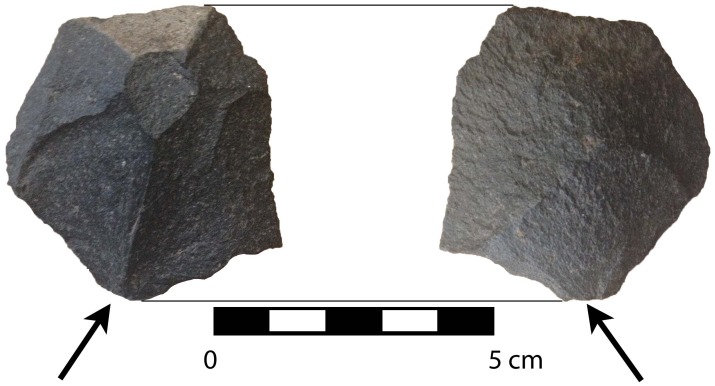
Questions surrounding the chronology, place, and character of the initial human colonization of the Americas are a long-standing focus of debate. Interdisciplinary debate continues over the timing of entry, the rapidity and direction of dispersion, the variety of human responses to diverse habitats, the criteria for evaluating the validity of early sites, and the differences and similarities between colonization in North and South America. Despite recent advances in our understanding of these issues, archaeology still faces challenges in defining interdisciplinary research problems, assessing the reliability of the data, and applying new interpretative models. As the debates and challenges continue, new studies take place and previous research reexamined. Here we discuss recent exploratory excavation at and interdisciplinary data from the Monte Verde area in Chile to further our understanding of the first peopling of the Americas. New evidence of stone artifacts, faunal remains, and burned areas suggests discrete horizons of ephemeral human activity in a sandur plain setting radiocarbon and luminescence dated between at least ~18,500 and 14,500 cal BP. Based on multiple lines of evidence, including sedimentary proxies and artifact analysis, we present the probable anthropogenic origins and wider implications of this evidence. In a non-glacial cold climate environment of the south-central Andes, which is challenging for human occupation and for the preservation of hunter-gatherer sites, these horizons provide insight into an earlier context of late Pleistocene human behavior in northern Patagonia.
围绕美洲最初人类殖民的年代顺序、地点和特征的问题,长期以来一直是争论的焦点。关于进入时间、扩散的速度和方向、人类对不同栖息地的各种反应、评估早期遗址有效性的标准以及北美和南美殖民之间的异同,跨学科的争论仍在继续。尽管我们对这些问题的理解最近有所进展,但考古学在界定跨学科研究问题、评估数据的可靠性以及应用新的解释模型方面仍然面临挑战。随着争论和挑战的持续,新的研究不断开展,以前的研究也在重新审视。在此,我们讨论智利蒙特沃德地区最近的探索性发掘以及跨学科数据,以加深我们对美洲首次有人居住情况的理解。石器、动物遗骸和焚烧区域的新证据表明,在一个沙质平原环境中存在短暂人类活动的离散层面,放射性碳和光释光测年显示其年代至少在公元前18500年至14500年之间。基于包括沉积代理和文物分析在内的多方面证据,我们阐述了这一证据可能的人为起源及其更广泛的影响。在安第斯山脉中南部的非冰川寒冷气候环境中,这对人类居住以及狩猎采集者遗址的保存都具有挑战性,这些层面为了解巴塔哥尼亚北部晚更新世人类行为的早期背景提供了线索。