Sturgeon Morgan, Davis Dustin, Albers Amanda, Beatty Derek, Austin Rik, Ferguson Matt, Tounsel Brittany, Liebl Faith L W
Department of Biological Sciences, Southern Illinois University Edwardsville, Edwardsville, IL 62026, United States.
Department of Biological Sciences, Southern Illinois University Edwardsville, Edwardsville, IL 62026, United States.
Mol Cell Neurosci. 2016 Jan;70:11-21. doi: 10.1016/j.mcn.2015.11.004. Epub 2015 Nov 17.
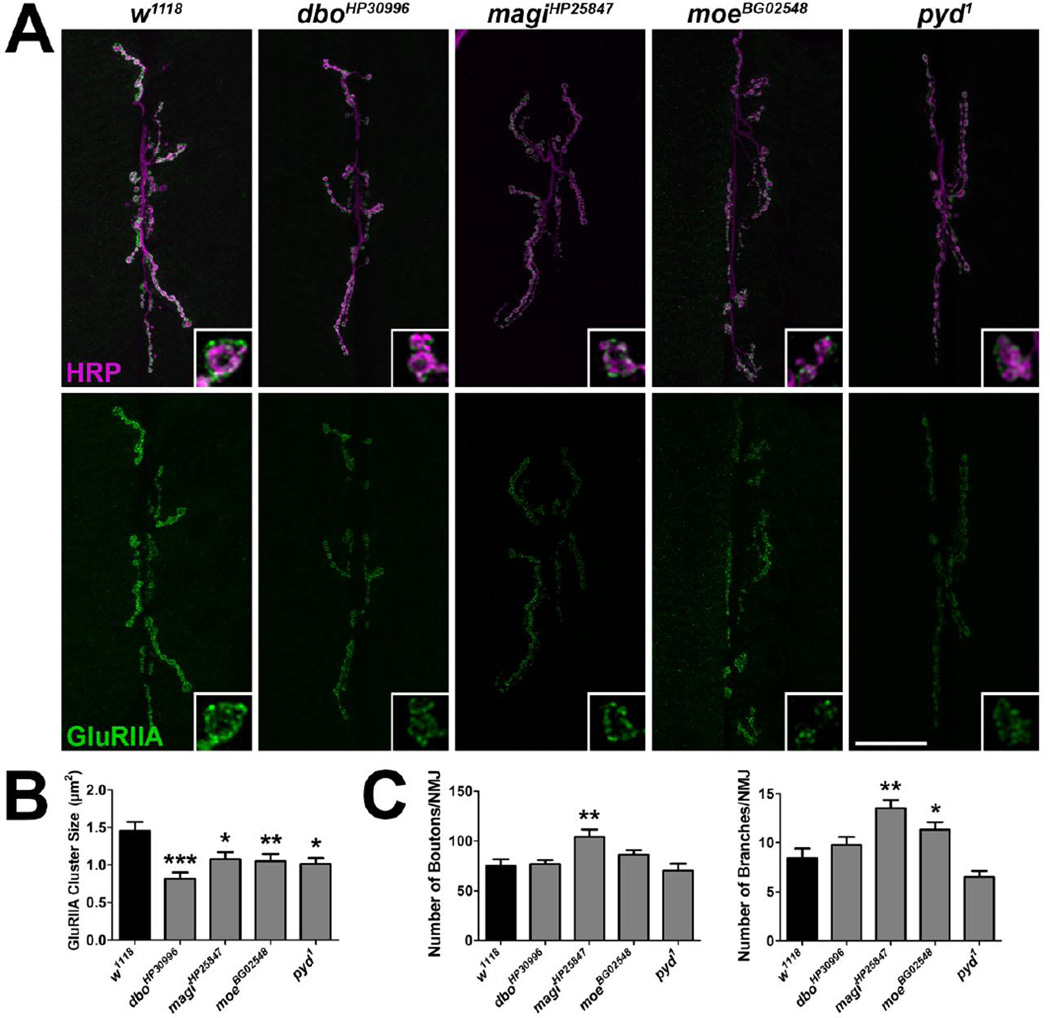
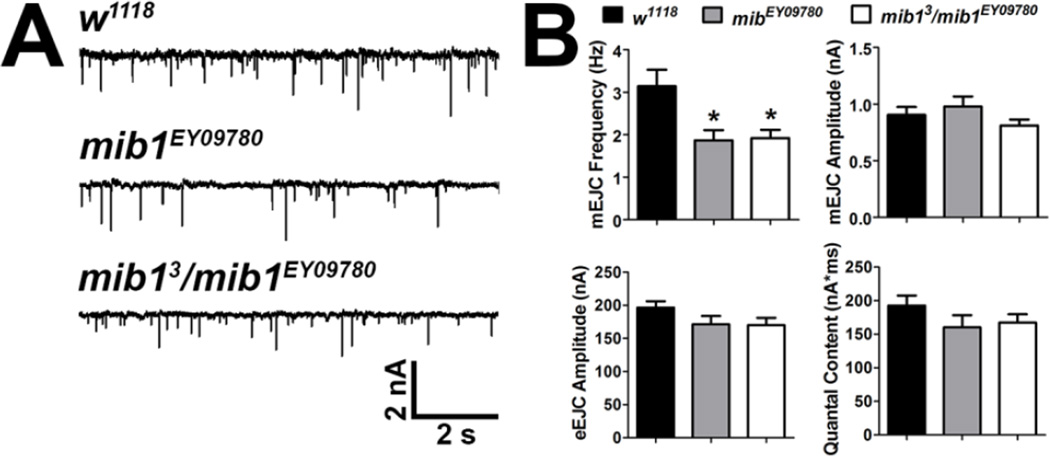
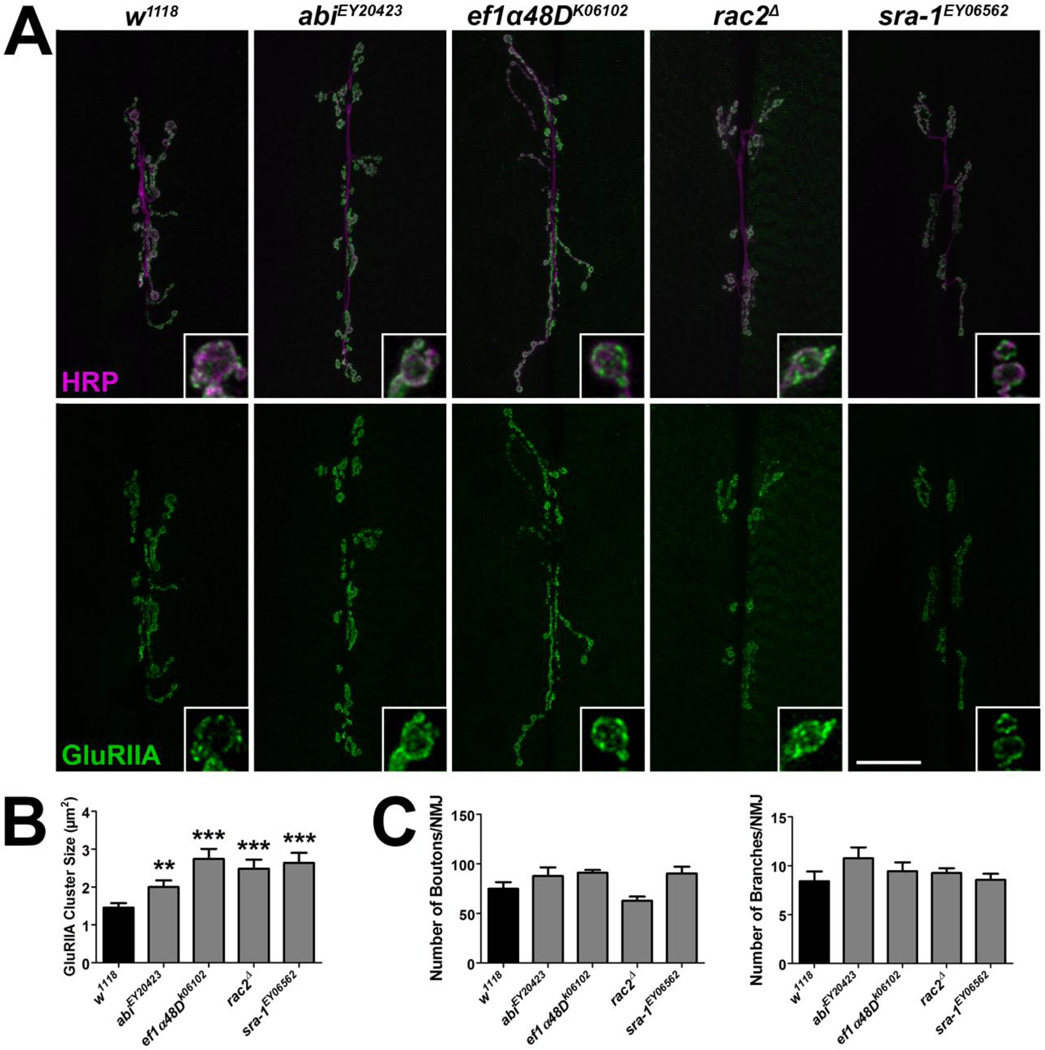
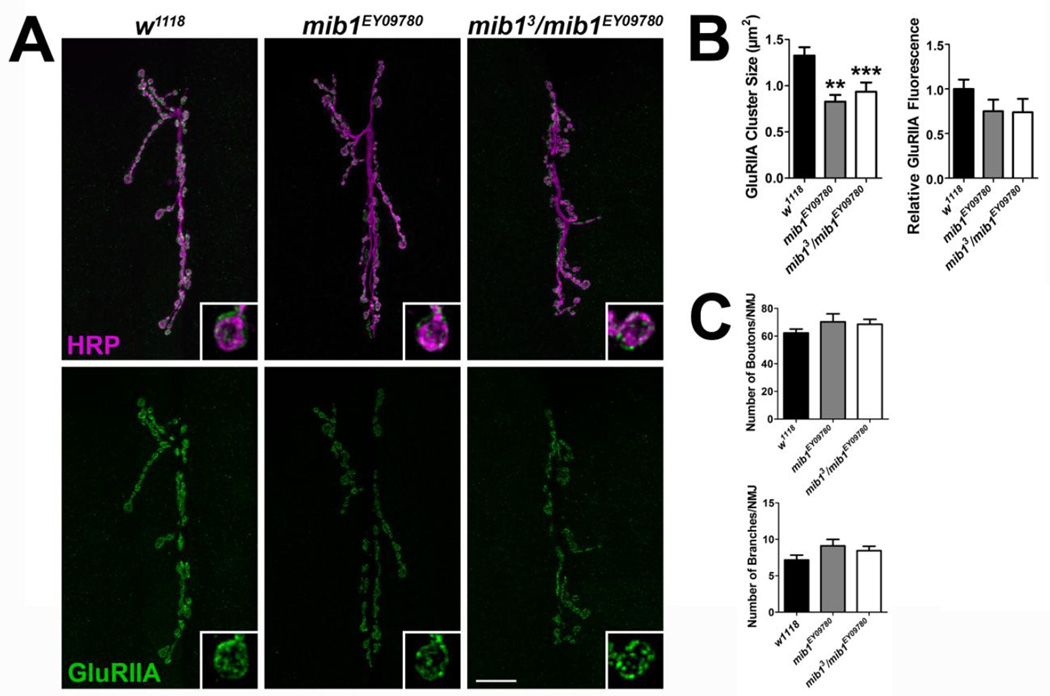
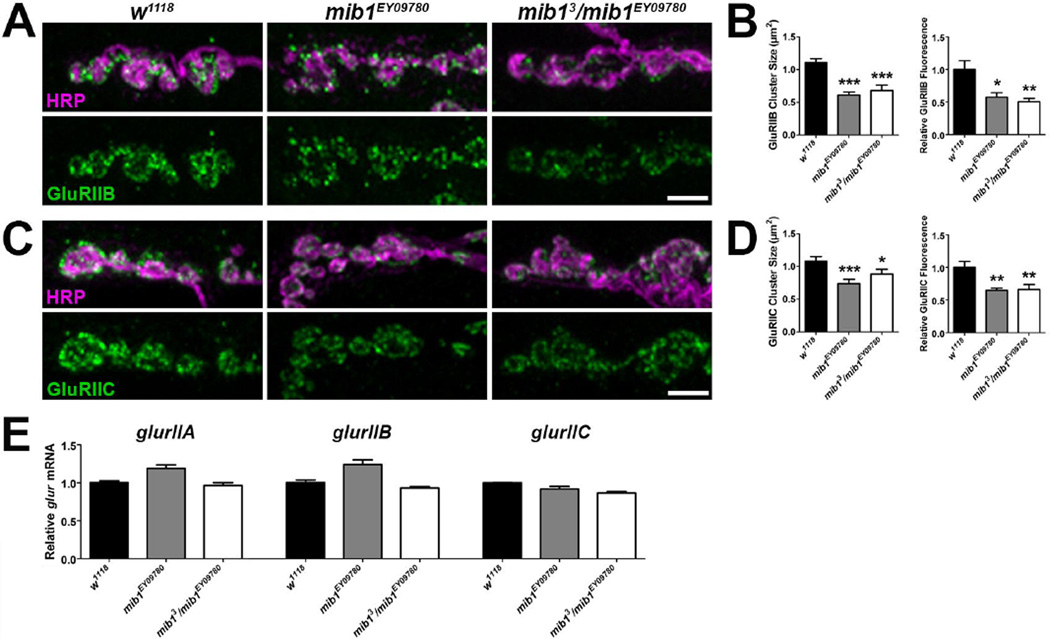
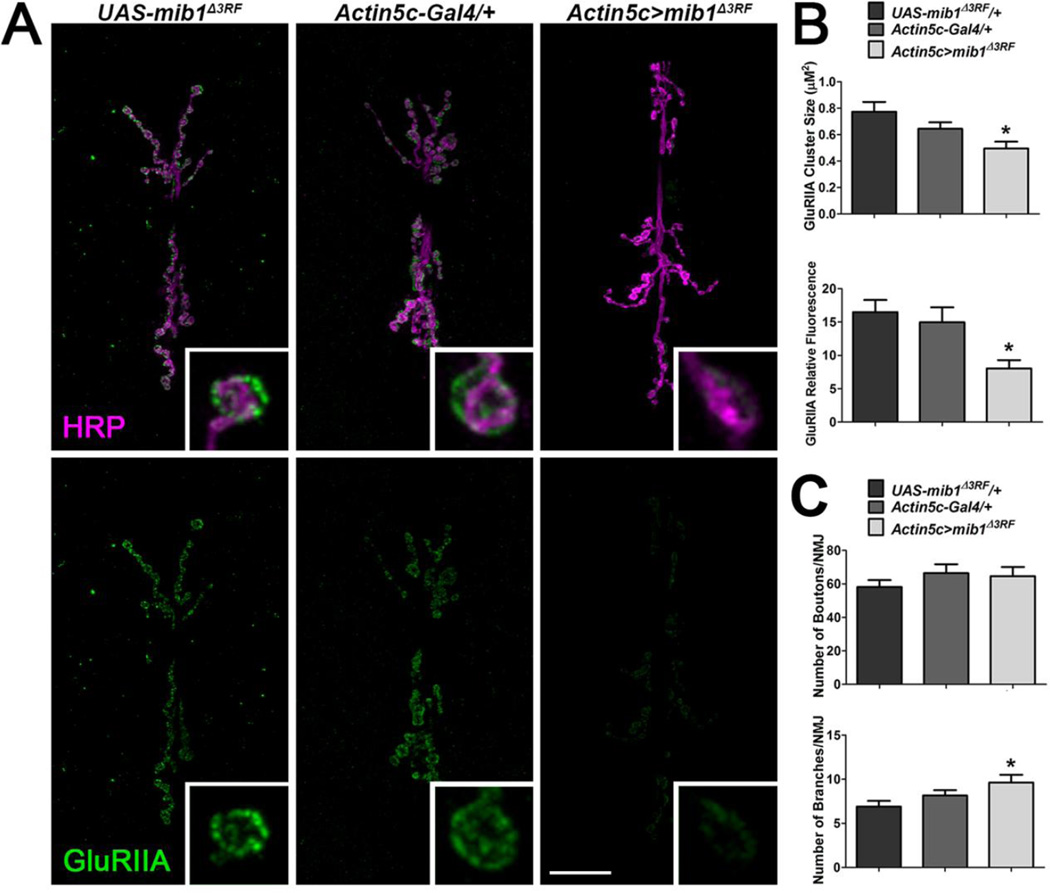
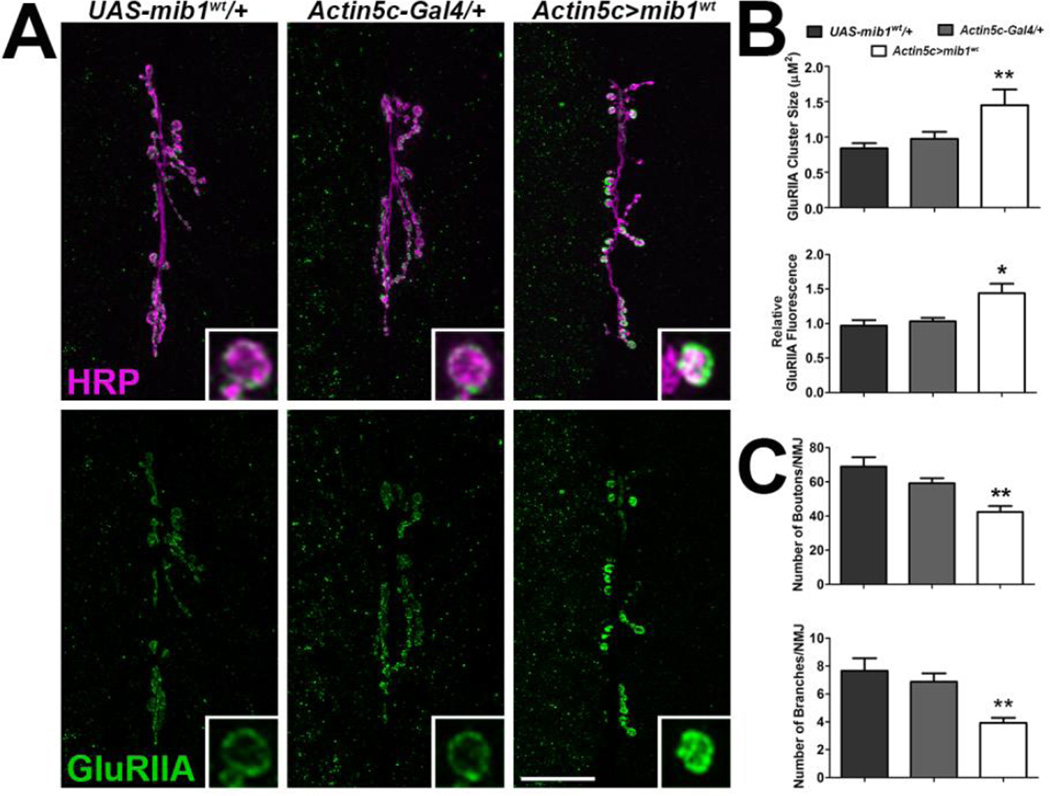
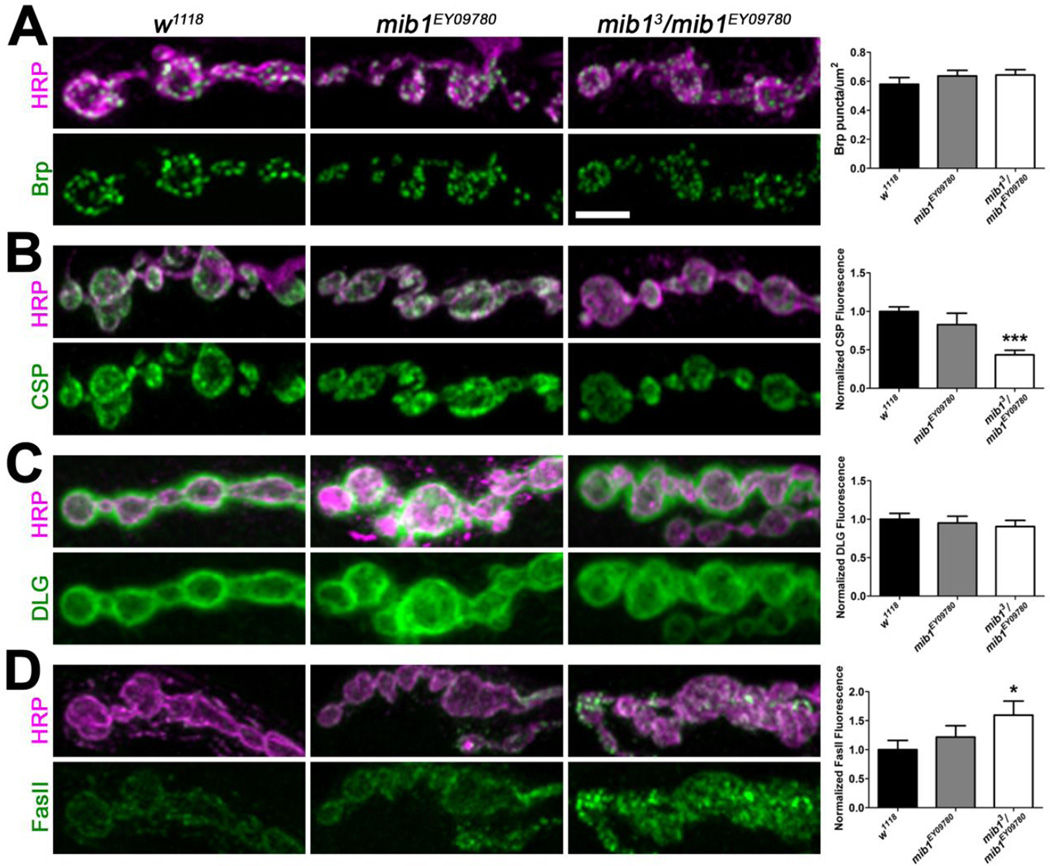
The postsynaptic density (PSD) is a protein-rich network important for the localization of postsynaptic glutamate receptors (GluRs) and for signaling downstream of these receptors. Although hundreds of PSD proteins have been identified, many are functionally uncharacterized. We conducted a reverse genetic screen for mutations that affected GluR localization using Drosophila genes that encode homologs of mammalian PSD proteins. 42.8% of the mutants analyzed exhibited a significant change in GluR localization at the third instar larval neuromuscular junction (NMJ), a model synapse that expresses homologs of AMPA receptors. We identified the E3 ubiquitin ligase, Mib1, which promotes Notch signaling, as a regulator of synaptic GluR localization. Mib1 positively regulates the localization of the GluR subunits GluRIIA, GluRIIB, and GluRIIC. Mutations in mib1 and ubiquitous expression of Mib1 that lacks its ubiquitin ligase activity result in the loss of synaptic GluRIIA-containing receptors. In contrast, overexpression of Mib1 in all tissues increases postsynaptic levels of GluRIIA. Cellular levels of Mib1 are also important for the structure of the presynaptic motor neuron. While deficient Mib1 signaling leads to overgrowth of the NMJ, ubiquitous overexpression of Mib1 results in a reduction in the number of presynaptic motor neuron boutons and branches. These synaptic changes may be secondary to attenuated glutamate release from the presynaptic motor neuron in mib1 mutants as mib1 mutants exhibit significant reductions in the vesicle-associated protein cysteine string protein and in the frequency of spontaneous neurotransmission.
突触后致密区(PSD)是一个富含蛋白质的网络,对突触后谷氨酸受体(GluRs)的定位以及这些受体下游的信号传导至关重要。尽管已鉴定出数百种PSD蛋白,但许多蛋白的功能仍未明确。我们利用编码哺乳动物PSD蛋白同源物的果蝇基因,对影响GluR定位的突变进行了反向遗传筛选。在分析的突变体中,42.8%在三龄幼虫神经肌肉接头(NMJ)处的GluR定位出现了显著变化,NMJ是一个表达AMPA受体同源物的模型突触。我们鉴定出促进Notch信号传导的E3泛素连接酶Mib1是突触GluR定位的调节因子。Mib1正向调节GluR亚基GluRIIA、GluRIIB和GluRIIC的定位。mib1中的突变以及缺乏泛素连接酶活性的Mib1的普遍表达导致含突触GluRIIA的受体丢失。相反,在所有组织中过表达Mib1会增加突触后GluRIIA的水平。Mib1的细胞水平对突触前运动神经元的结构也很重要。虽然Mib1信号缺陷会导致NMJ过度生长,但Mib1的普遍过表达会导致突触前运动神经元终扣和分支数量减少。这些突触变化可能继发于mib1突变体中突触前运动神经元谷氨酸释放减弱,因为mib1突变体中囊泡相关蛋白半胱氨酸串蛋白和自发神经传递频率显著降低。