Wang Manyu, Chen Pei-Yi, Wang Chien-Hsiang, Lai Tzu-Ting, Tsai Pei-I, Cheng Ying-Ju, Kao Hsiu-Hua, Chien Cheng-Ting
Institute of Molecular Medicine, National Taiwan University, Taipei, Taiwan.
Institute of Molecular Biology, Academia Sinica, Taipei, Taiwan.
PLoS Genet. 2016 Oct 13;12(10):e1006362. doi: 10.1371/journal.pgen.1006362. eCollection 2016 Oct.
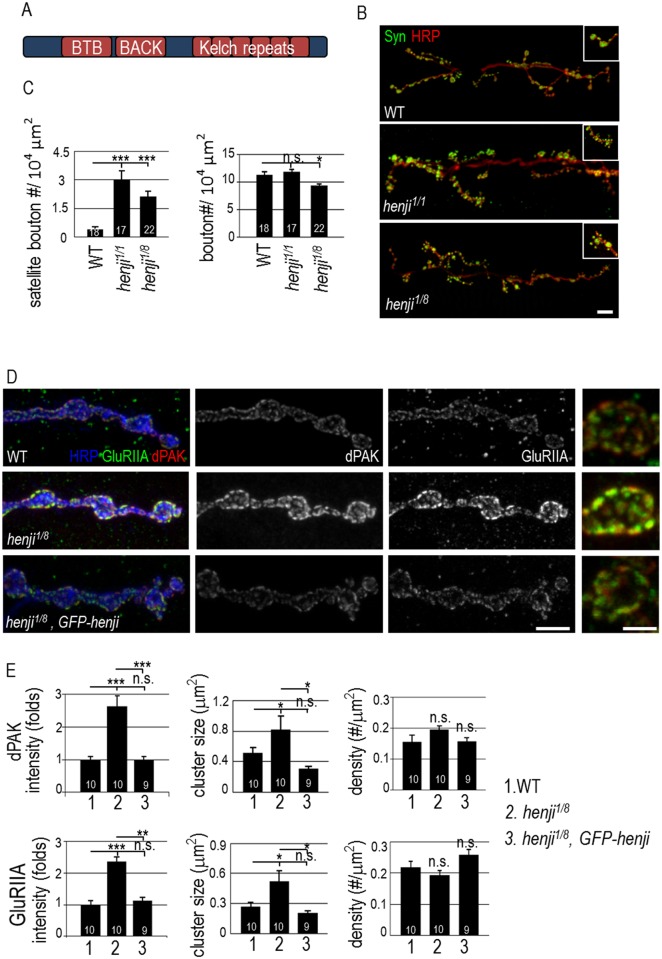
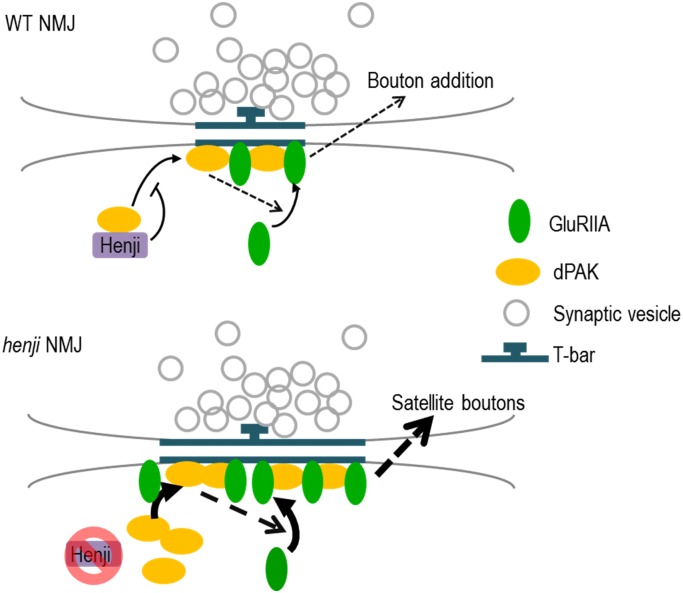
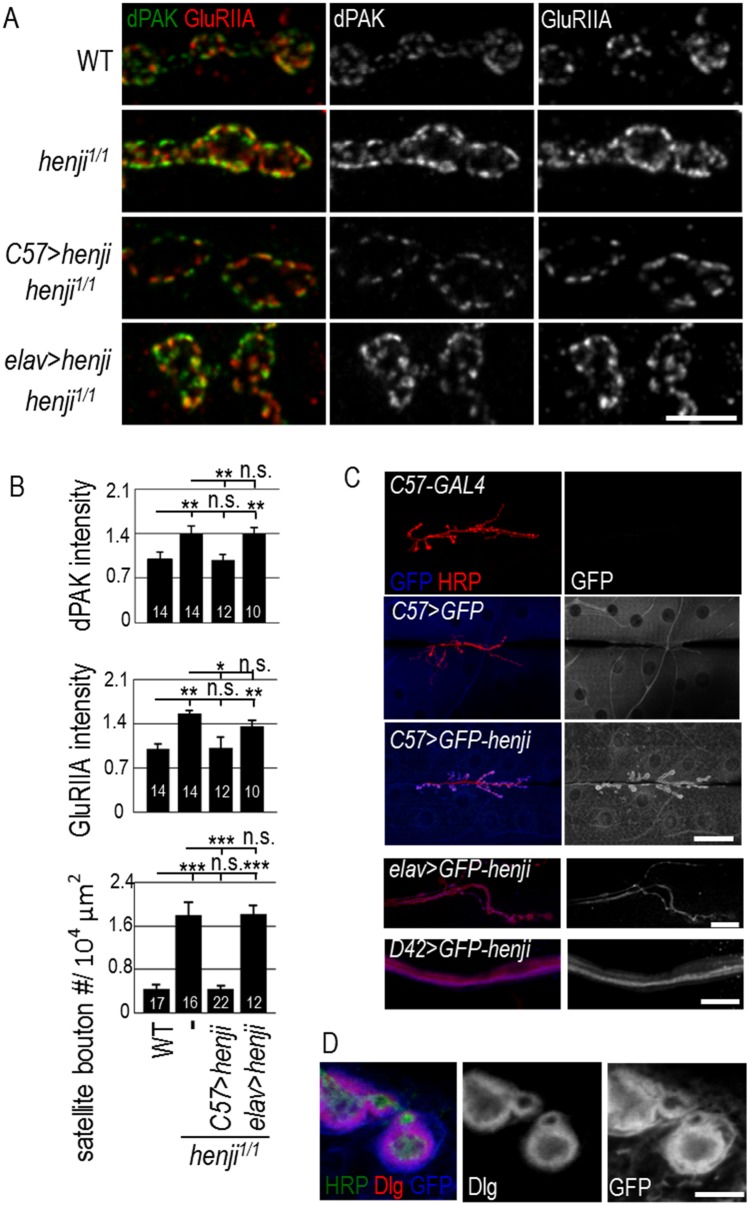
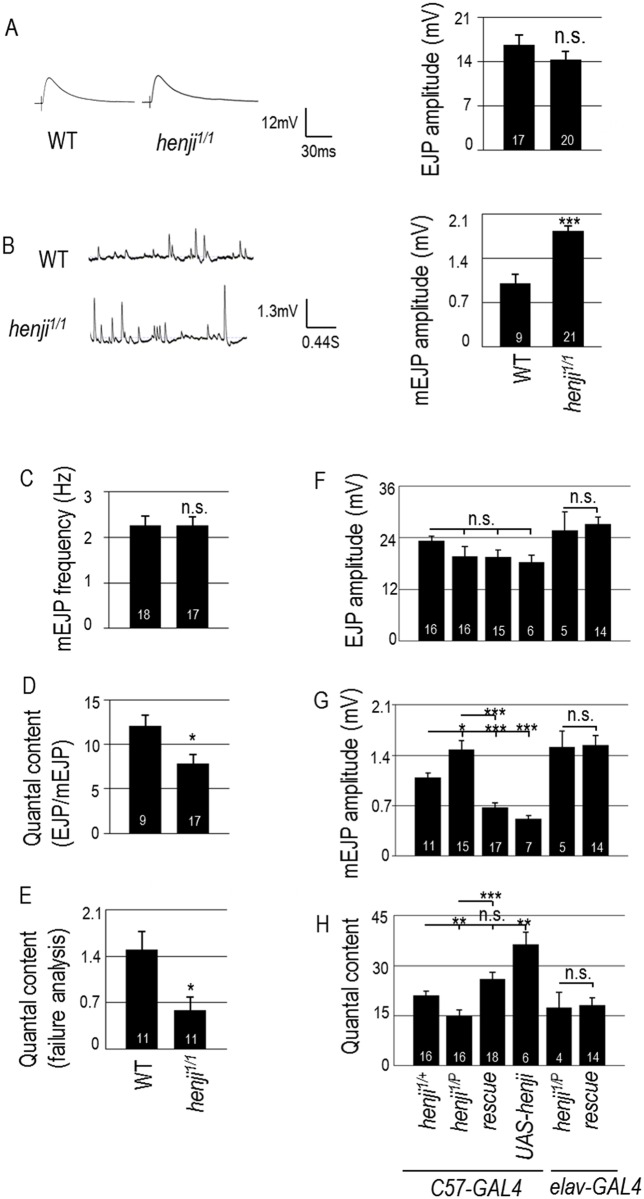
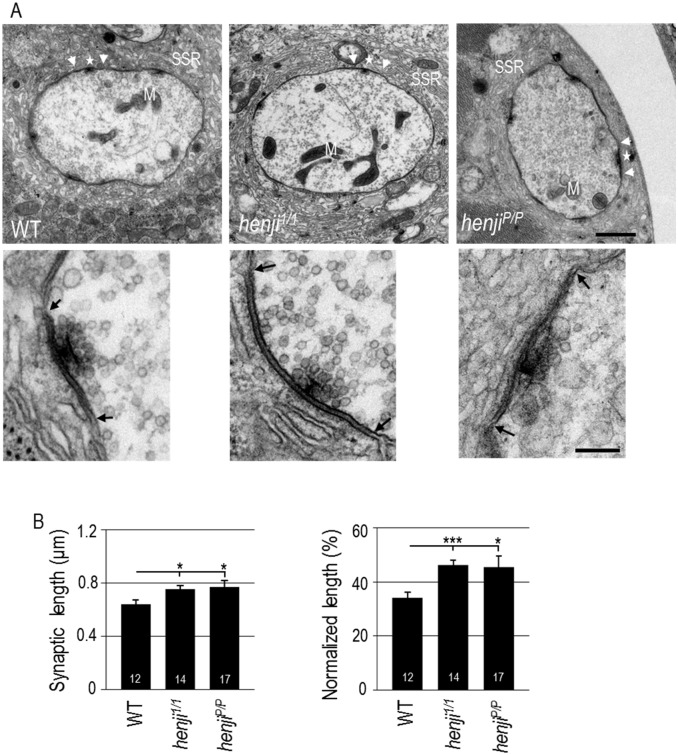
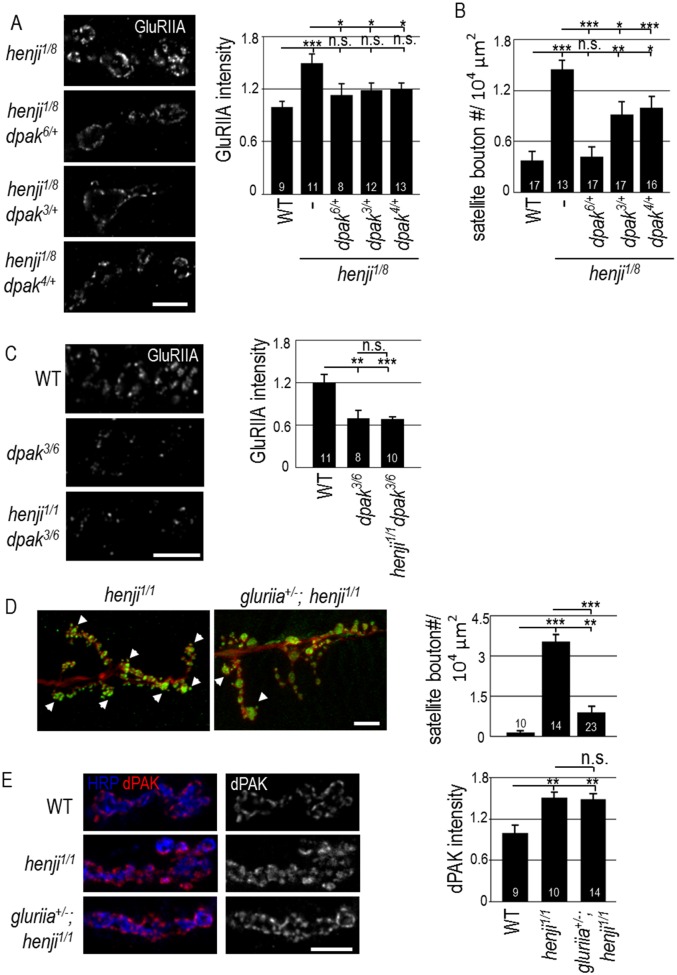
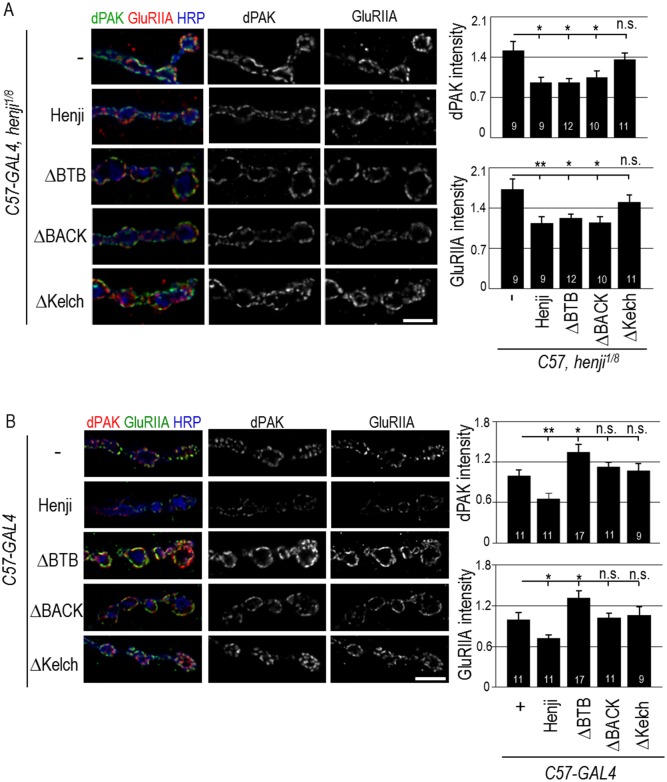
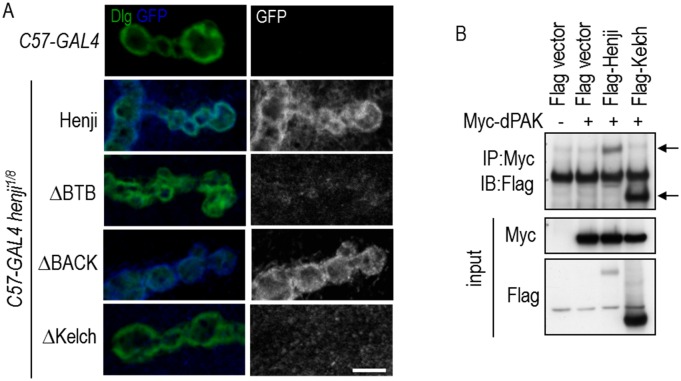
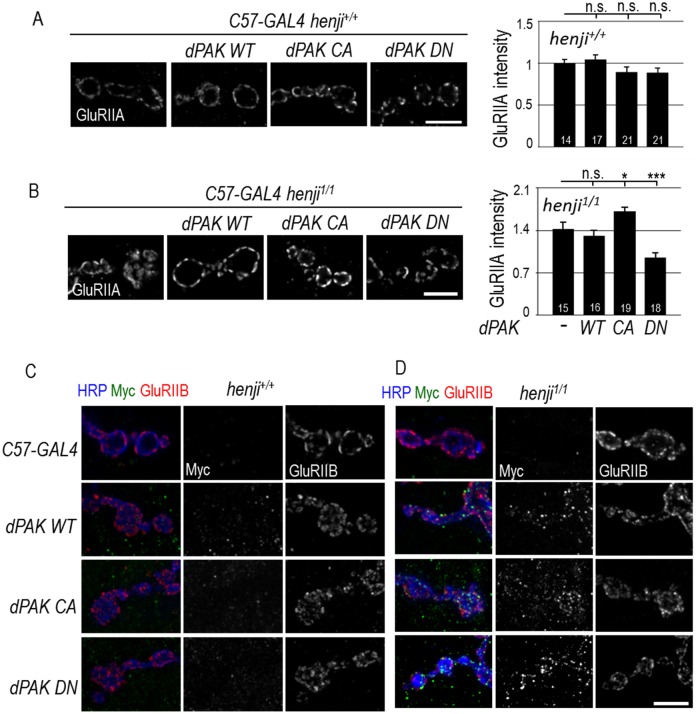
In response to environmental and physiological changes, the synapse manifests plasticity while simultaneously maintains homeostasis. Here, we analyzed mutant synapses of henji, also known as dbo, at the Drosophila neuromuscular junction (NMJ). In henji mutants, NMJ growth is defective with appearance of satellite boutons. Transmission electron microscopy analysis indicates that the synaptic membrane region is expanded. The postsynaptic density (PSD) houses glutamate receptors GluRIIA and GluRIIB, which have distinct transmission properties. In henji mutants, GluRIIA abundance is upregulated but that of GluRIIB is not. Electrophysiological results also support a GluR compositional shift towards a higher IIA/IIB ratio at henji NMJs. Strikingly, dPAK, a positive regulator for GluRIIA synaptic localization, accumulates at the henji PSD. Reducing the dpak gene dosage suppresses satellite boutons and GluRIIA accumulation at henji NMJs. In addition, dPAK associated with Henji through the Kelch repeats which is the domain essential for Henji localization and function at postsynapses. We propose that Henji acts at postsynapses to restrict both presynaptic bouton growth and postsynaptic GluRIIA abundance by modulating dPAK.
为响应环境和生理变化,突触表现出可塑性,同时维持内稳态。在此,我们分析了果蝇神经肌肉接头(NMJ)处henji(也称为dbo)的突变突触。在henji突变体中,NMJ生长存在缺陷,出现卫星突触小体。透射电子显微镜分析表明突触膜区域扩大。突触后致密区(PSD)含有具有不同传递特性的谷氨酸受体GluRIIA和GluRIIB。在henji突变体中,GluRIIA丰度上调,但GluRIIB丰度未上调。电生理结果也支持henji NMJ处GluR组成向更高的IIA/IIB比率转变。引人注目的是,dPAK是GluRIIA突触定位的正向调节因子,在henji的PSD处积累。降低dpak基因剂量可抑制henji NMJ处的卫星突触小体和GluRIIA积累。此外,dPAK通过Kelch重复序列与Henji相关联,Kelch重复序列是Henji在突触后定位和功能所必需的结构域。我们提出,Henji通过调节dPAK在突触后发挥作用,限制突触前突触小体生长和突触后GluRIIA丰度。