Berger Mel, Baldwin William M, Jordan Stanley C
1 Medical Research Strategy, CSL Behring LLC, King of Prussia, PA. 2 Department of Immunology, Lerner Research Institute, Cleveland Clinic, Cleveland, OH. 3 Cedars-Sinai Medical Center, Los Angeles, CA.
Transplantation. 2016 Jul;100(7):1415-24. doi: 10.1097/TP.0000000000000995.
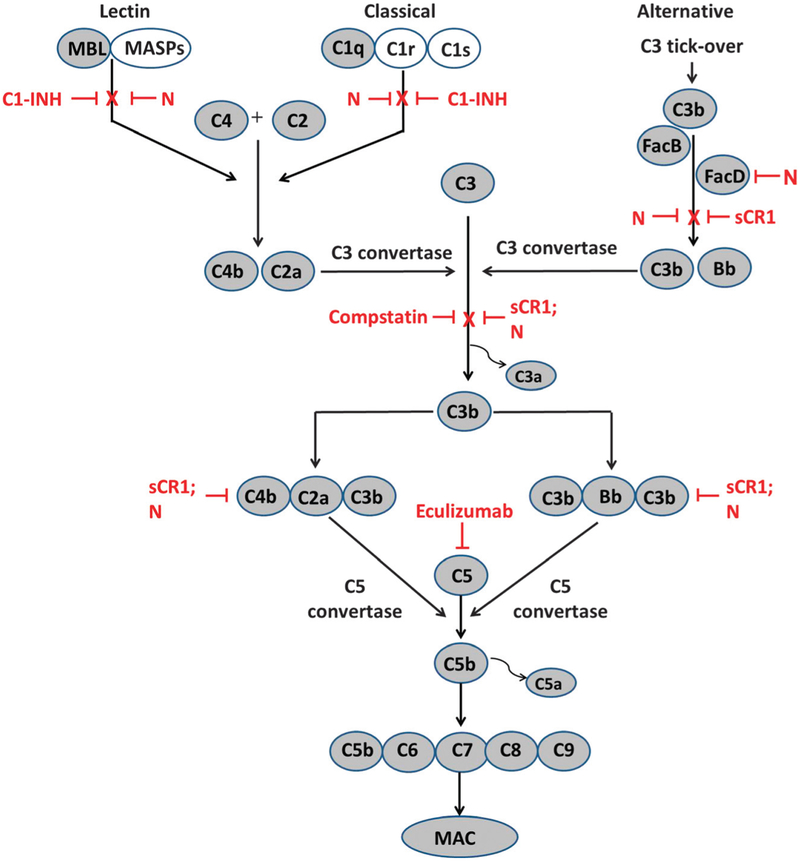
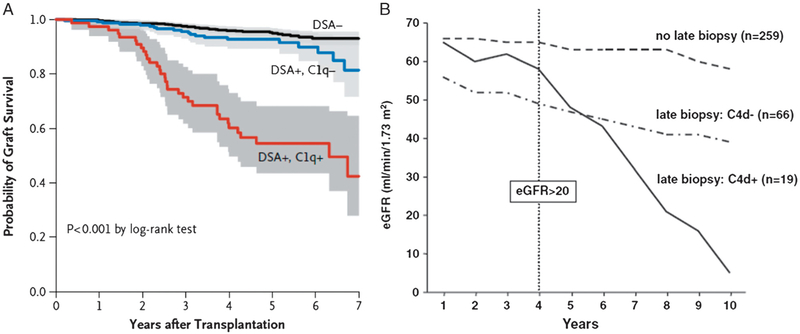
Complement is a major contributor to inflammation and graft injury. This system is especially important in ischemia-reperfusion injury/delayed graft function as well as in acute and chronic antibody-mediated rejection (AMR). The latter is increasingly recognized as a major cause of late graft loss, for which we have few effective therapies. C1 inhibitor (C1-INH) regulates several pathways which contribute to both acute and chronic graft injuries. However, C1-INH spares the alternative pathway and the membrane attack complex (C5-9) so innate antibacterial defenses remain intact. Plasma-derived C1-INH has been used to treat hereditary angioedema for more than 30 years with excellent safety. Studies with C1-INH in transplant recipients are limited, but have not revealed any unique toxicity or serious adverse events attributed to the protein. Extensive data from animal and ex vivo models suggest that C1-INH ameliorates ischemia-reperfusion injury. Initial clinical studies suggest this effect may allow transplantation of donor organs which are now discarded because the risk of primary graft dysfunction is considered too great. Although the incidence of severe early AMR is declining, accumulating evidence strongly suggests that complement is an important mediator of chronic AMR, a major cause of late graft loss. Thus, C1-INH may also be helpful in preserving function of established grafts. Early clinical studies in transplantation suggest significant beneficial effects of C1-INH with minimal toxicity. Recent results encourage continued investigation of this already-available therapeutic agent.
补体是炎症和移植物损伤的主要促成因素。该系统在缺血再灌注损伤/移植器官延迟功能以及急性和慢性抗体介导的排斥反应(AMR)中尤为重要。后者日益被认为是晚期移植物丢失的主要原因,而针对这一情况我们几乎没有有效的治疗方法。C1抑制剂(C1-INH)可调节多种导致急性和慢性移植物损伤的途径。然而,C1-INH不影响替代途径和膜攻击复合物(C5-9),因此天然抗菌防御功能保持完好。血浆来源的C1-INH已用于治疗遗传性血管性水肿30多年,安全性良好。在移植受者中使用C1-INH的研究有限,但尚未发现该蛋白有任何独特的毒性或严重不良事件。来自动物和体外模型的大量数据表明,C1-INH可改善缺血再灌注损伤。初步临床研究表明,这种作用可能使目前因原发性移植物功能障碍风险被认为过高而被丢弃的供体器官得以移植。尽管严重早期AMR的发生率正在下降,但越来越多的证据有力地表明,补体是慢性AMR的重要介质,慢性AMR是晚期移植物丢失的主要原因。因此,C1-INH可能也有助于维持已建立的移植物的功能。移植领域的早期临床研究表明,C1-INH具有显著的有益作用且毒性极小。近期结果鼓励继续对这种已有的治疗药物进行研究。