Meadows Danielle N, Bahous Renata H, Best Ana F, Rozen Rima
Department of Human Genetics, McGill University, McGill University Health Center, Montreal, Quebec, Canada.
Department of Mathematics and Statistics, McGill University, Montreal, Quebec, Canada.
PLoS One. 2015 Nov 24;10(11):e0143738. doi: 10.1371/journal.pone.0143738. eCollection 2015.
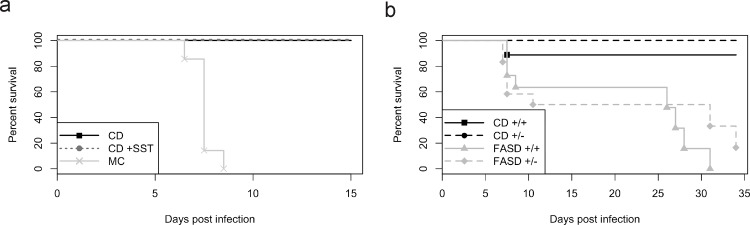
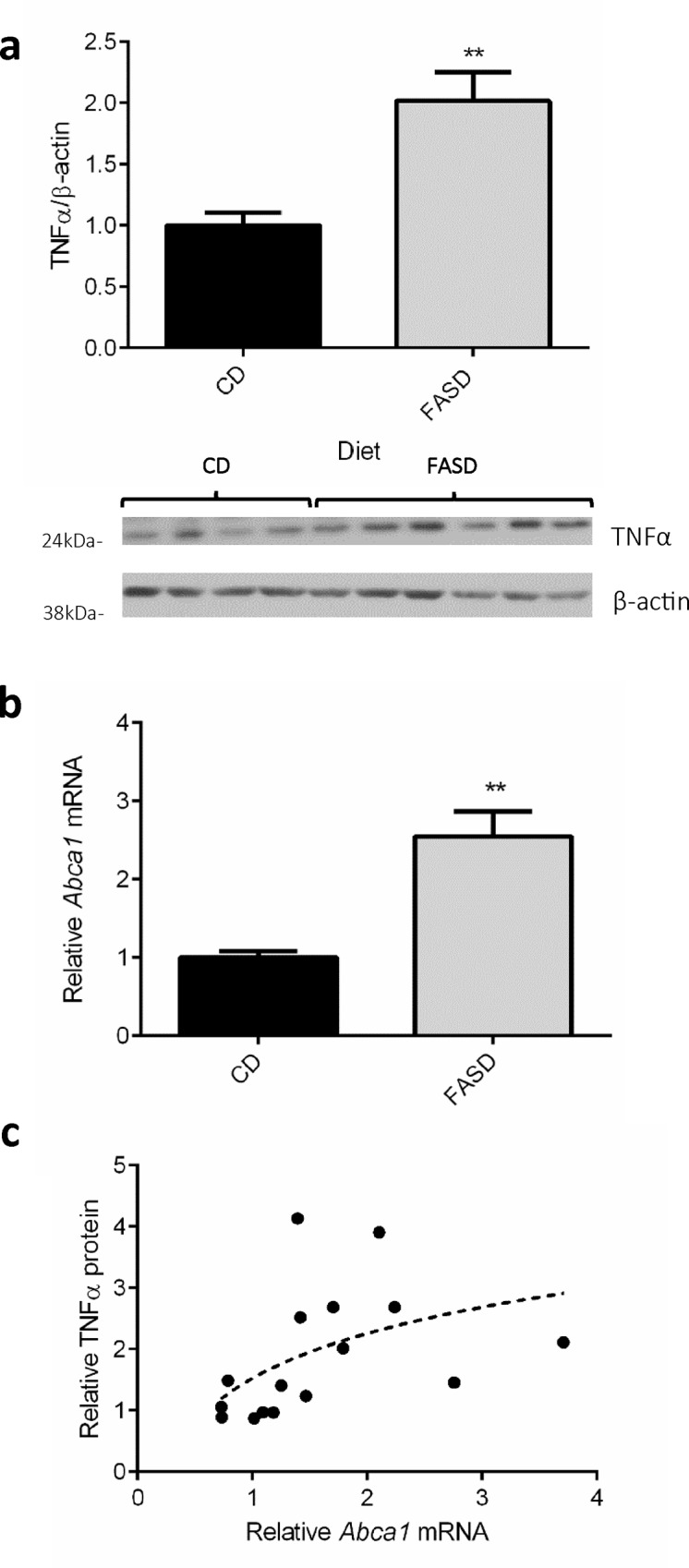
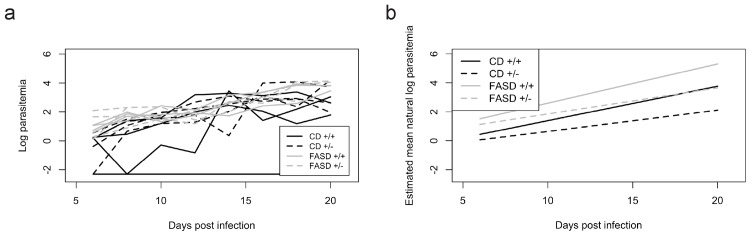
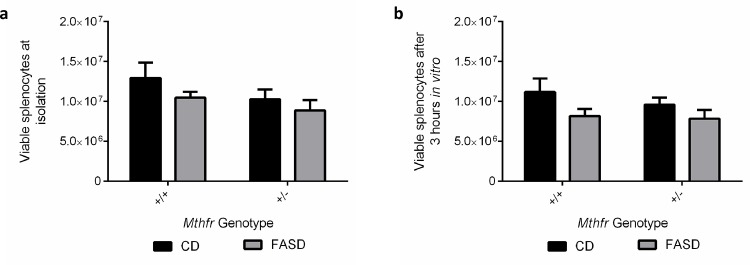
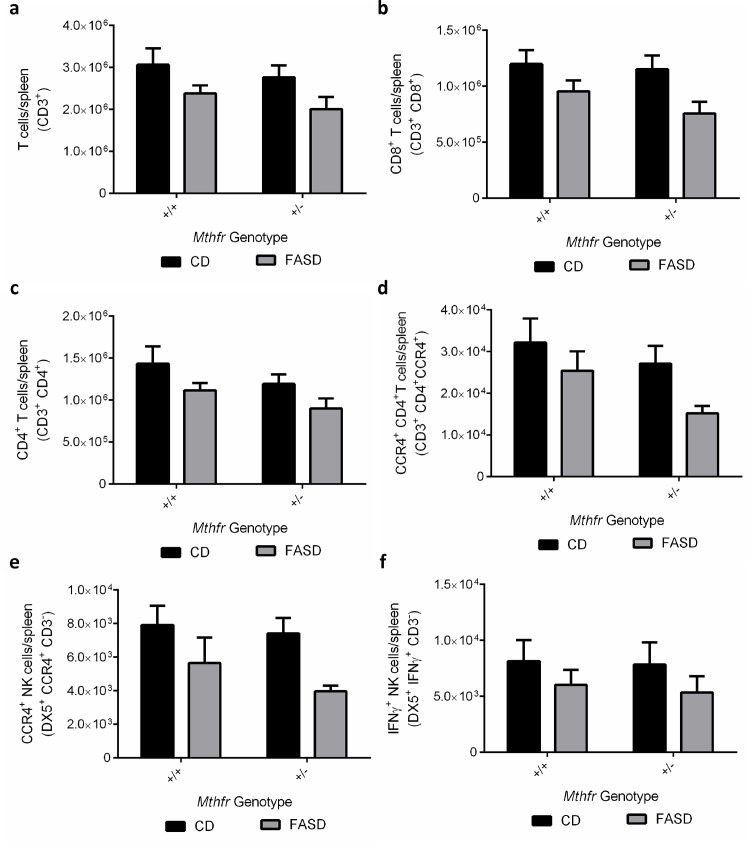
Malaria is a significant global health issue, with nearly 200 million cases in 2013 alone. Parasites obtain folate from the host or synthesize it de novo. Folate consumption has increased in many populations, prompting concerns regarding potential deleterious consequences of higher intake. The impact of high dietary folate on the host's immune function and response to malaria has not been examined. Our goal was to determine whether high dietary folate would affect response to malarial infection in a murine model of cerebral malaria. Mice were fed control diets (CD, recommended folate level for rodents) or folic acid-supplemented diets (FASD, 10x recommended level) for 5 weeks before infection with Plasmodium berghei ANKA. Survival, parasitemia, numbers of immune cells and other infection parameters were assessed. FASD mice had reduced survival (p<0.01, Cox proportional hazards) and higher parasitemia (p< 0.01, joint model of parasitemia and survival) compared with CD mice. FASD mice had lower numbers of splenocytes, total T cells, and lower numbers of specific T and NK cell sub-populations, compared with CD mice (p<0.05, linear mixed effects). Increased brain TNFα immunoreactive protein (p<0.01, t-test) and increased liver Abca1 mRNA (p<0.01, t-test), a modulator of TNFα, were observed in FASD mice; these variables correlated positively (rs = 0.63, p = 0.01). Bcl-xl/Bak mRNA was increased in liver of FASD mice (p<0.01, t-test), suggesting reduced apoptotic potential. We conclude that high dietary folate increases parasite replication, disturbs the immune response and reduces resistance to malaria in mice. These findings have relevance for malaria-endemic regions, when considering anti-folate anti-malarials, food fortification or vitamin supplementation programs.
疟疾是一个重大的全球健康问题,仅在2013年就有近2亿病例。疟原虫从宿主获取叶酸或从头合成叶酸。许多人群的叶酸摄入量增加,这引发了对较高摄入量潜在有害后果的担忧。高膳食叶酸对宿主免疫功能和疟疾反应的影响尚未得到研究。我们的目标是确定高膳食叶酸是否会影响脑型疟疾小鼠模型对疟疾感染的反应。在感染伯氏疟原虫ANKA之前,将小鼠喂食对照饮食(CD,啮齿动物推荐叶酸水平)或补充叶酸的饮食(FASD,推荐水平的10倍)5周。评估存活率、寄生虫血症、免疫细胞数量和其他感染参数。与CD小鼠相比,FASD小鼠的存活率降低(p<0.01,Cox比例风险模型),寄生虫血症更高(p<0.01,寄生虫血症和存活率联合模型)。与CD小鼠相比,FASD小鼠的脾细胞、总T细胞数量以及特定T细胞和NK细胞亚群数量更低(p<0.05,线性混合效应)。在FASD小鼠中观察到脑肿瘤坏死因子α免疫反应蛋白增加(p<0.01,t检验)以及肝脏Abca1 mRNA增加(p<0.01,t检验),Abca1是肿瘤坏死因子α的调节剂;这些变量呈正相关(rs = 0.63,p = 0.01)。FASD小鼠肝脏中的Bcl-xl/Bak mRNA增加(p<0.01,t检验),表明凋亡潜力降低。我们得出结论,高膳食叶酸会增加小鼠体内寄生虫的复制,干扰免疫反应并降低对疟疾的抵抗力。在考虑抗叶酸抗疟药、食品强化或维生素补充计划时,这些发现与疟疾流行地区相关。