Department of Comparative Biosciences, University of Wisconsin-Madison, Madison, Wisconsin.
Morgridge Institute for Research, Madison, Wisconsin.
Prostate. 2019 Feb;79(2):183-194. doi: 10.1002/pros.23723. Epub 2018 Oct 8.
Serum folate concentrations in the United States have risen since dietary folic acid fortification was first mandated in 1998. Although maternal folic acid offers protection against neural tube defects in conceptuses, its impact on other organ systems and life stages have not been fully examined. Here, we used a mouse model to investigate the impact of a Folic acid (FA) enriched diet on prostate homeostasis and response to androgen deprivation.
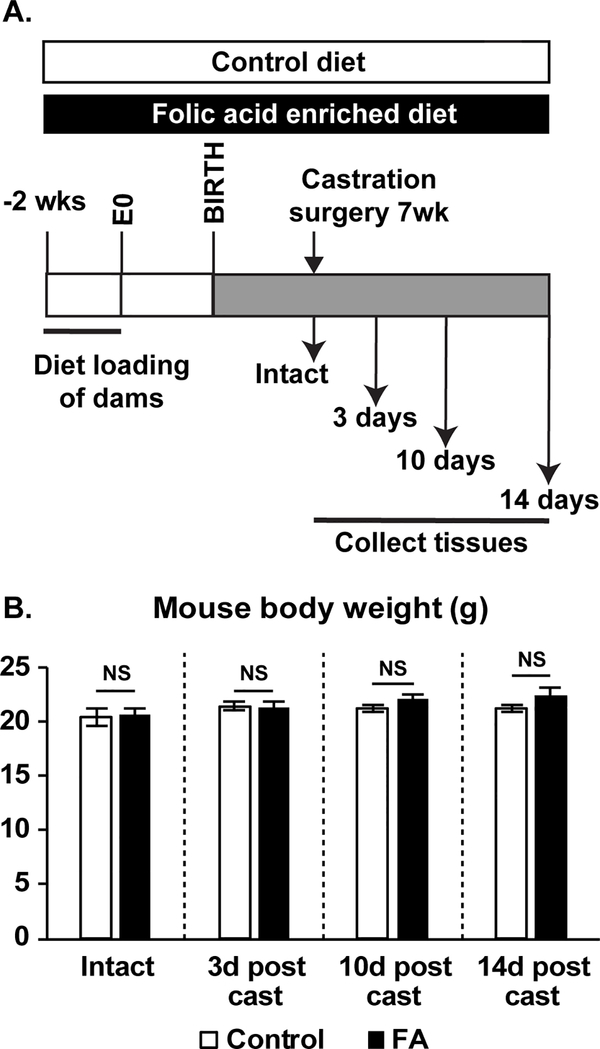
Male mice were fed a control diet (4 mg FA/kg feed) or a folic acid supplemented diet (24 mg FA/kg feed) beginning at conception and continuing through early adulthood, when mice were castrated.
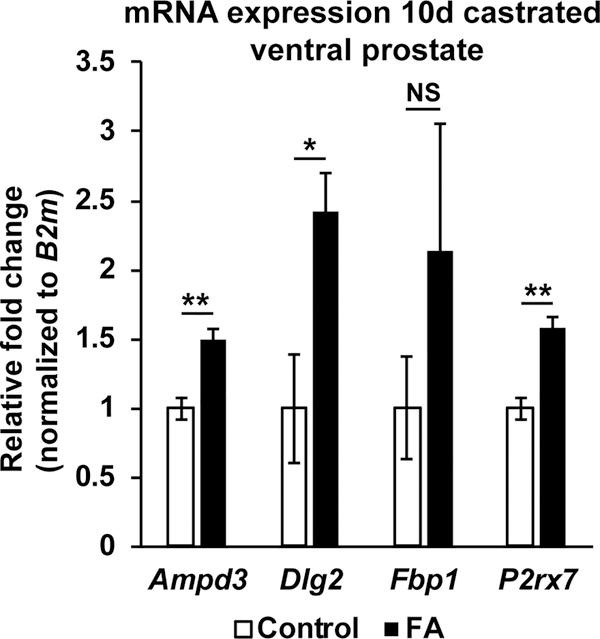
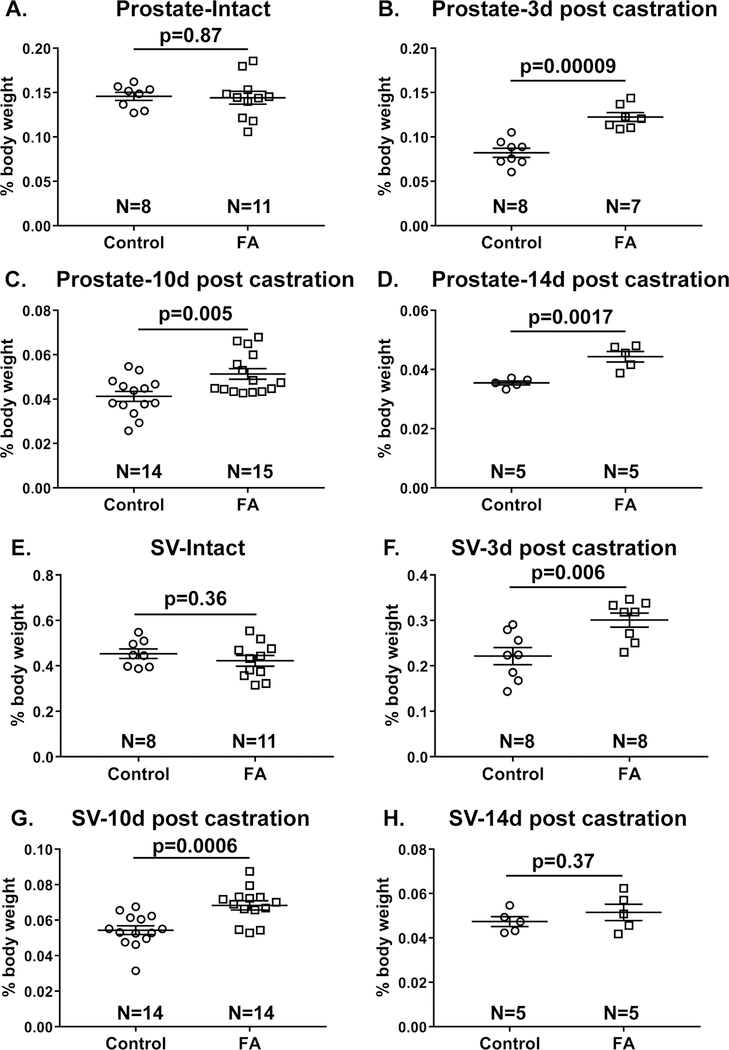
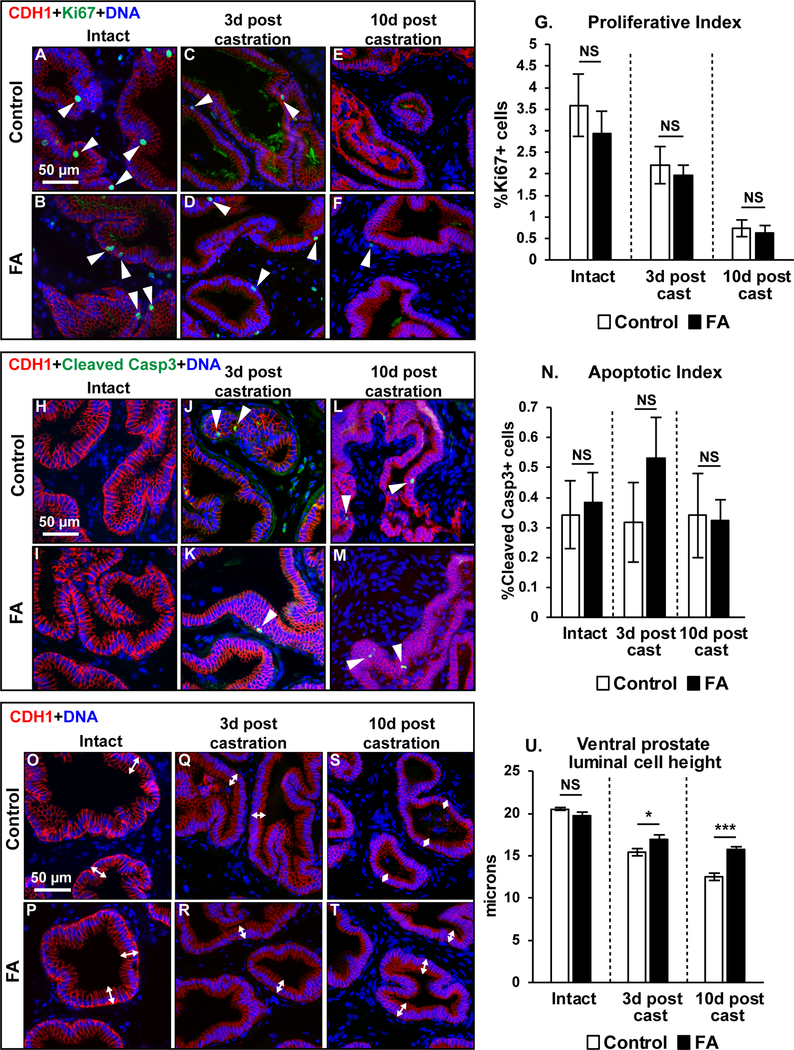
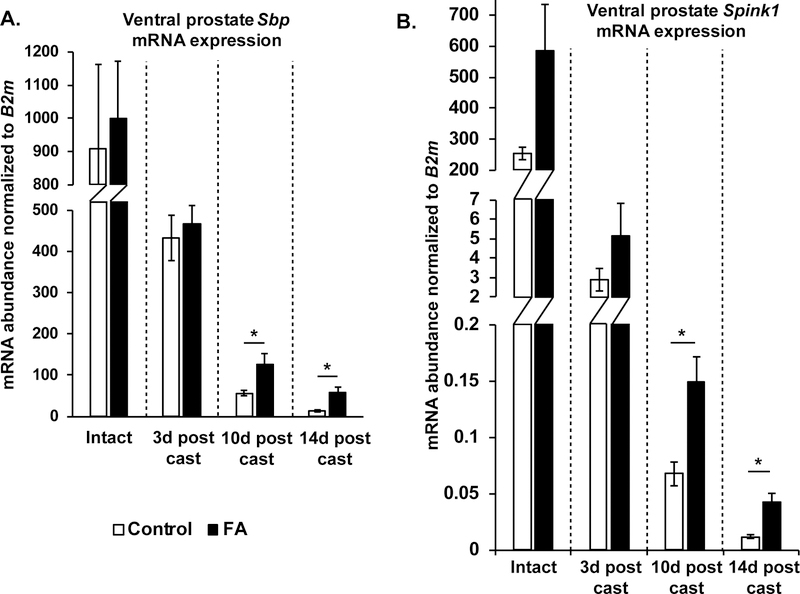
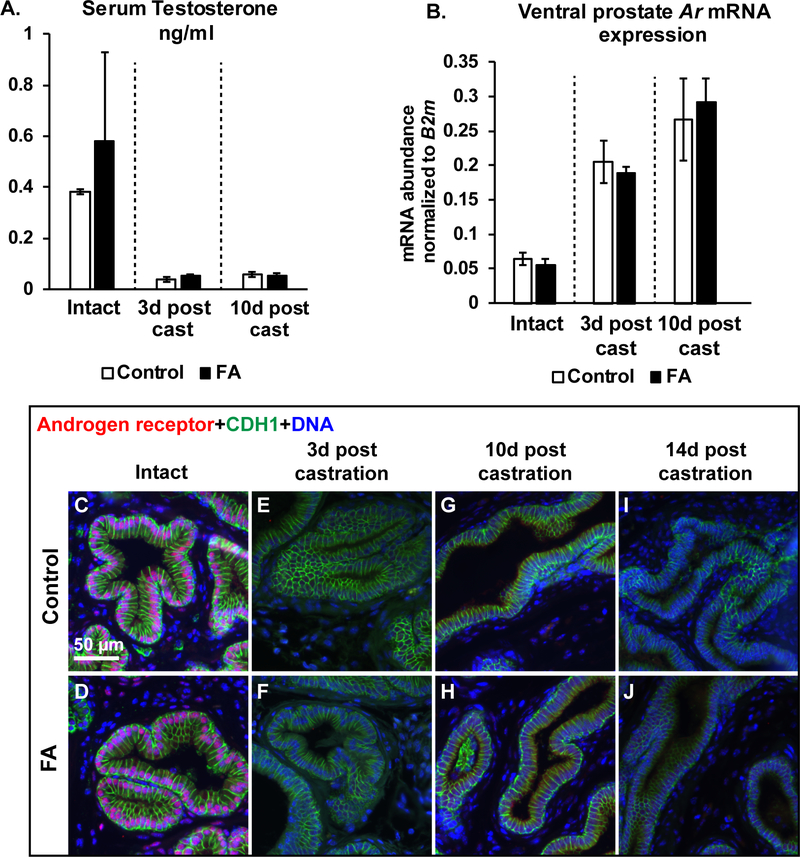
We made the surprising observation that dietary FA supplementation confers partial resistance to castration-mediated prostate involution. At 3, 10, and 14 days post-castration, FA enriched diet fed mice had larger prostates as assessed by wet weight, taller prostatic luminal epithelial cells, and more abundant RNAs encoding prostate secretory proteins than castrated control diet fed mice. Diet did not significantly affect prostate weights of intact mice or serum testosterone concentrations of castrated mice. RNA-Seq analysis revealed that the FA enriched diet was associated with a unique prostate gene expression signature, affecting several signaling and metabolic pathways.
Continuous exposure to a FA enriched diet slows prostate involution in response to androgen deprivation. Prostates from FA diet mice have increased secretory gene expression and increased luminal cell heights. The influence of dietary FA supplementation on the prostate response to androgen deprivation raises a future need to consider how dietary folic acid supplementation affects efficacy of androgen-reducing therapies for treating prostate disease.
自 1998 年首次强制实施膳食叶酸强化以来,美国的血清叶酸浓度有所上升。虽然母体叶酸可以预防胚胎神经管缺陷,但它对其他器官系统和生命阶段的影响尚未得到充分研究。在这里,我们使用小鼠模型来研究富含叶酸的饮食对前列腺稳态和对雄激素剥夺的反应的影响。
雄性小鼠从受孕开始并持续到成年早期(即接受去势手术时),分别喂食对照饮食(含 4mg FA/kg 饲料)或叶酸补充饮食(含 24mg FA/kg 饲料)。
我们惊讶地发现,饮食中补充叶酸可部分抵抗去势介导的前列腺退化。在去势后 3、10 和 14 天,与去势对照饮食喂养的小鼠相比,富含叶酸的饮食喂养的小鼠的前列腺重量更大,前列腺腔上皮细胞更高,编码前列腺分泌蛋白的 RNA 更丰富。饮食并未显著影响未去势小鼠的前列腺重量或去势小鼠的血清睾丸酮浓度。RNA-Seq 分析显示,富含叶酸的饮食与独特的前列腺基因表达特征相关,影响了几个信号和代谢途径。
持续暴露于富含叶酸的饮食可减缓雄激素剥夺引起的前列腺退化。富含叶酸的饮食的小鼠的前列腺具有更高的分泌基因表达和更高的腔上皮细胞高度。饮食中叶酸补充对前列腺对雄激素剥夺的反应的影响提出了一个未来的需求,即需要考虑膳食叶酸补充如何影响用于治疗前列腺疾病的雄激素降低疗法的疗效。