Minson Sarah E, Brooks Benjamin A, Glennie Craig L, Murray Jessica R, Langbein John O, Owen Susan E, Heaton Thomas H, Iannucci Robert A, Hauser Darren L
U.S. Geological Survey, Menlo Park, CA 94025, USA. ; California Institute of Technology, Pasadena, CA 91106, USA.
U.S. Geological Survey, Menlo Park, CA 94025, USA.
Sci Adv. 2015 Apr 10;1(3):e1500036. doi: 10.1126/sciadv.1500036. eCollection 2015 Apr.
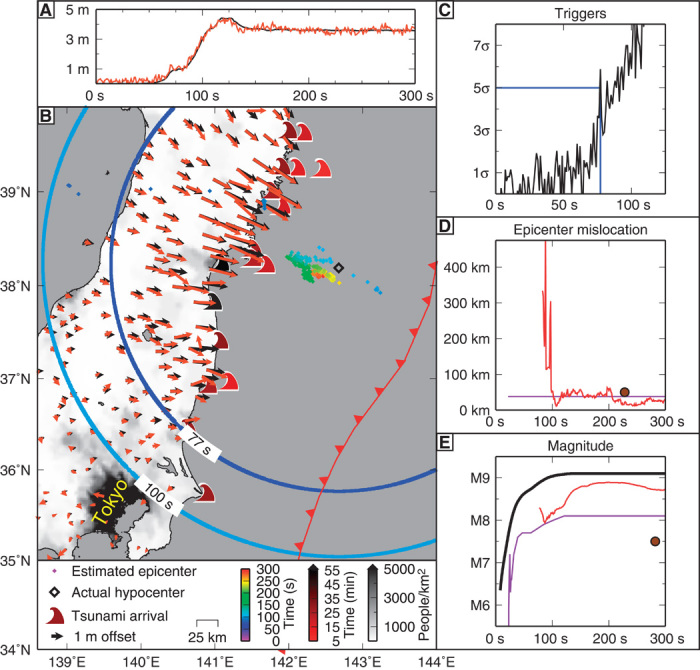
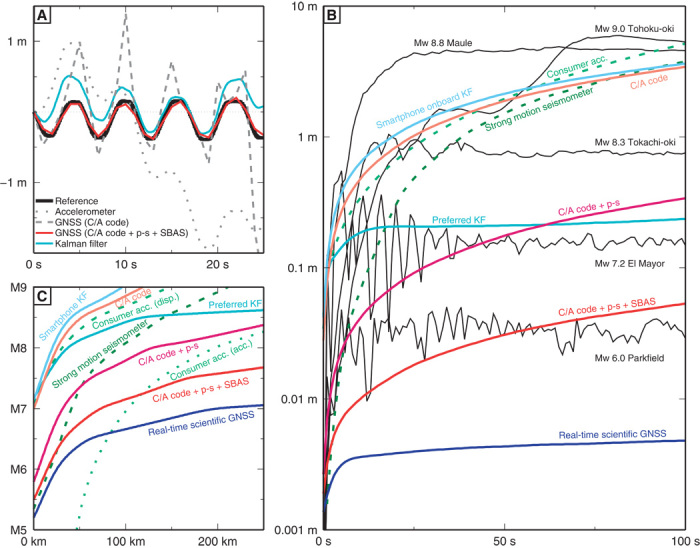
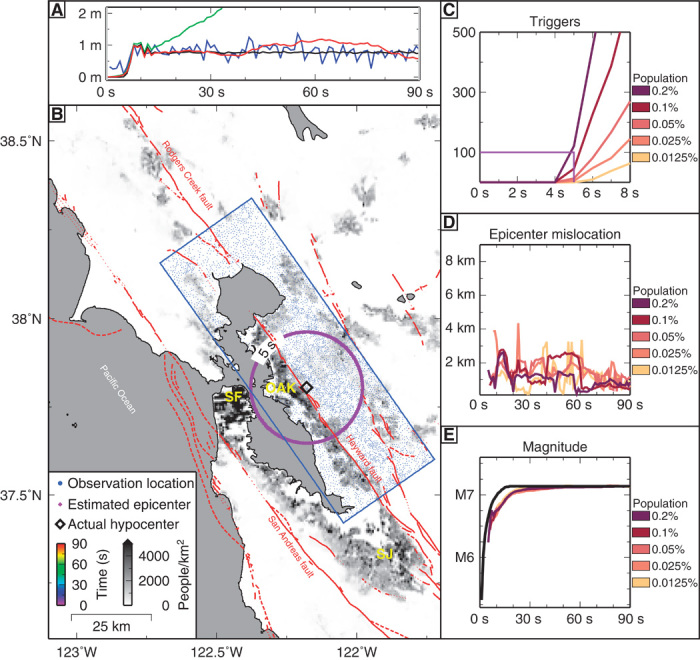
Earthquake early warning (EEW) can reduce harm to people and infrastructure from earthquakes and tsunamis, but it has not been implemented in most high earthquake-risk regions because of prohibitive cost. Common consumer devices such as smartphones contain low-cost versions of the sensors used in EEW. Although less accurate than scientific-grade instruments, these sensors are globally ubiquitous. Through controlled tests of consumer devices, simulation of an M w (moment magnitude) 7 earthquake on California's Hayward fault, and real data from the M w 9 Tohoku-oki earthquake, we demonstrate that EEW could be achieved via crowdsourcing.
地震早期预警(EEW)可以减少地震和海啸对人员和基础设施造成的损害,但由于成本过高,在大多数高地震风险地区尚未实施。智能手机等普通消费设备包含地震早期预警中使用的低成本传感器版本。尽管这些传感器不如科学级仪器精确,但在全球范围内随处可见。通过对消费设备的控制测试、对加利福尼亚州海沃德断层发生的M w(矩震级)7级地震的模拟以及来自M w 9级东北冲地震的真实数据,我们证明了可以通过众包实现地震早期预警。