Hoffmann Michele M, Molina-Mendiola Carlos, Nelson Alfreda D, Parks Christopher A, Reyes Edwin E, Hansen Michael J, Rajagopalan Govindarajan, Pease Larry R, Schrum Adam G, Gil Diana
Department of Immunology, Mayo Clinic College of Medicine, 200 First Street SW, Rochester, MN 55905, USA.
Department of Immunology, Mayo Clinic College of Medicine, 200 First Street SW, Rochester, MN 55905, USA. ; Department of Statistics, Polytechnic University of Catalonia, Barcelona 08034, Spain.
Sci Adv. 2015 Oct 2;1(9):e1500415. doi: 10.1126/sciadv.1500415. eCollection 2015 Oct.
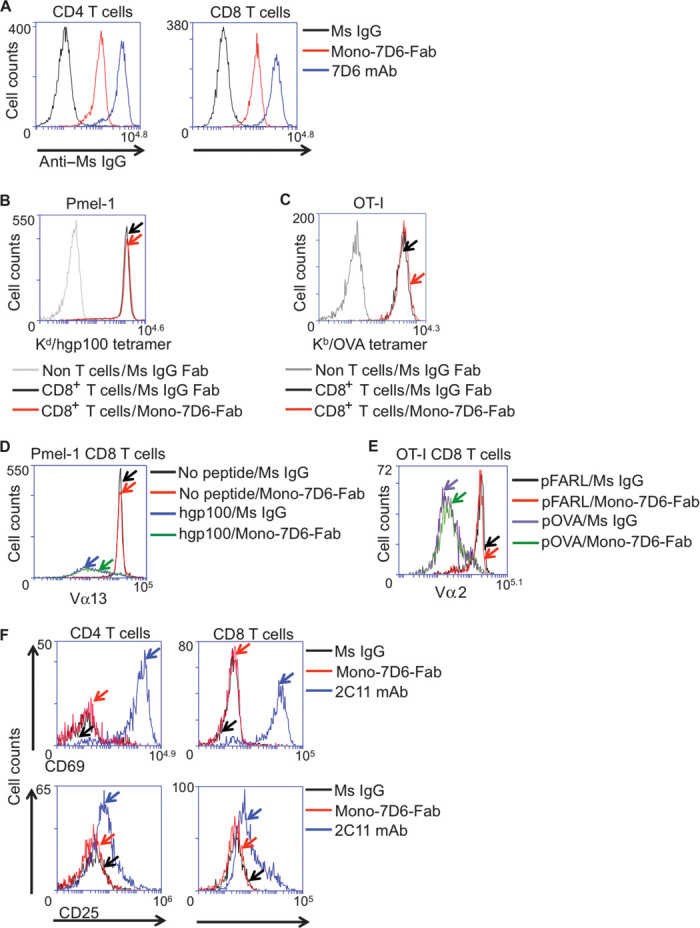
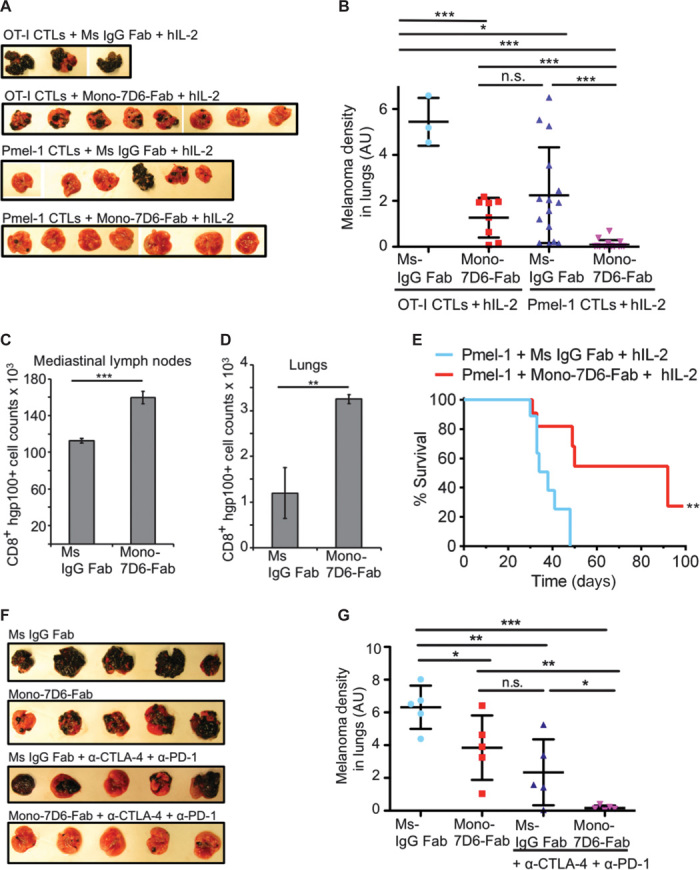
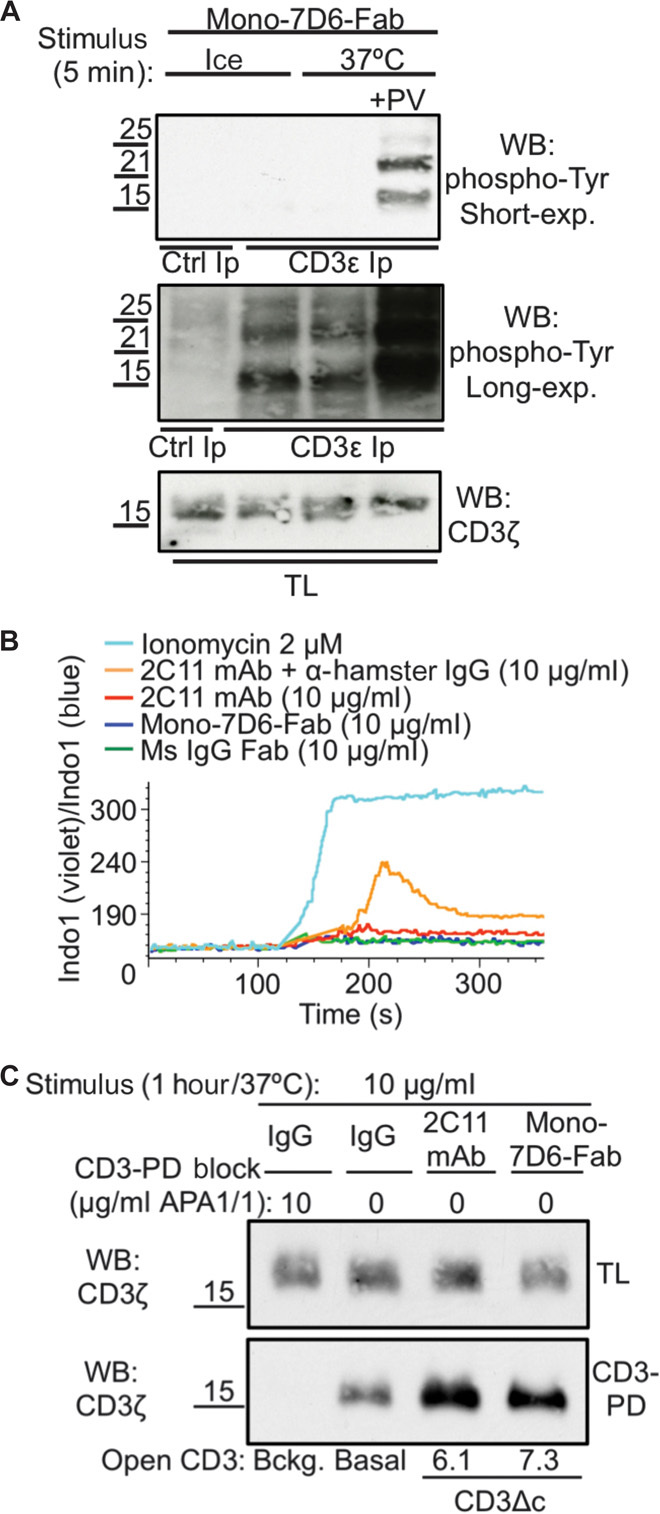
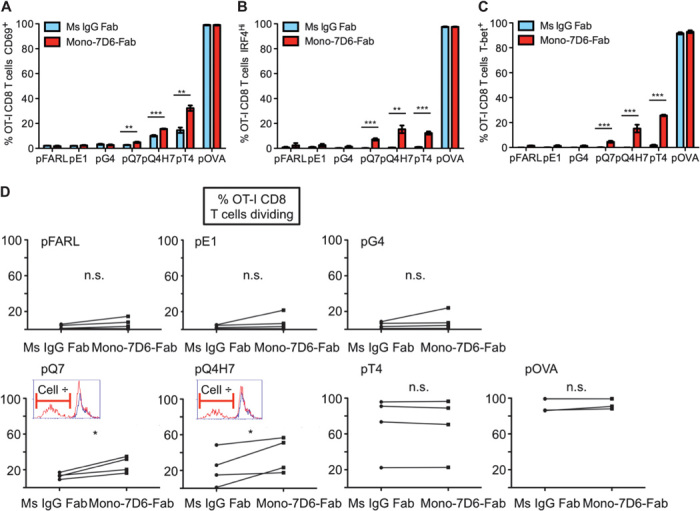
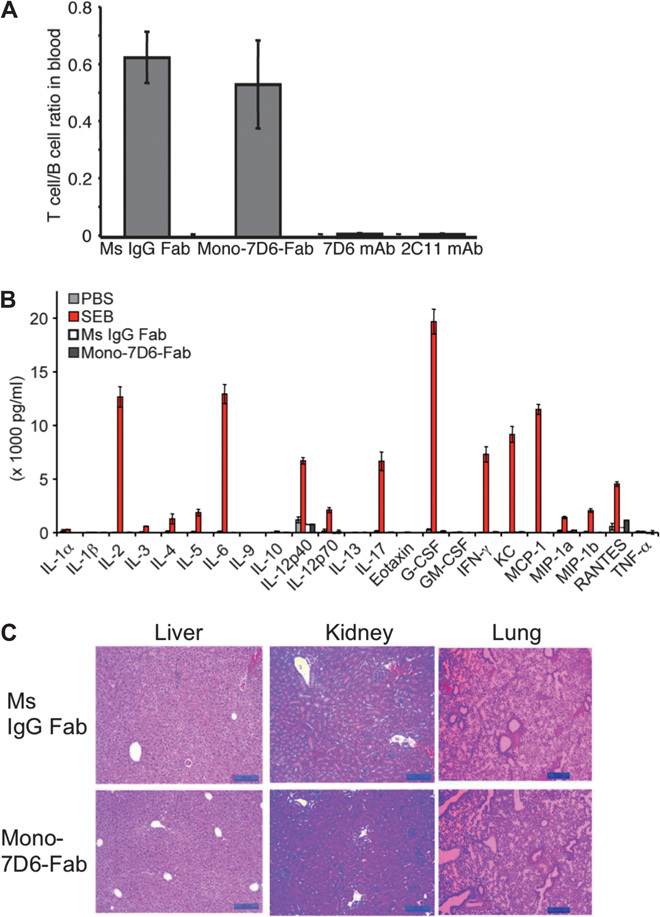
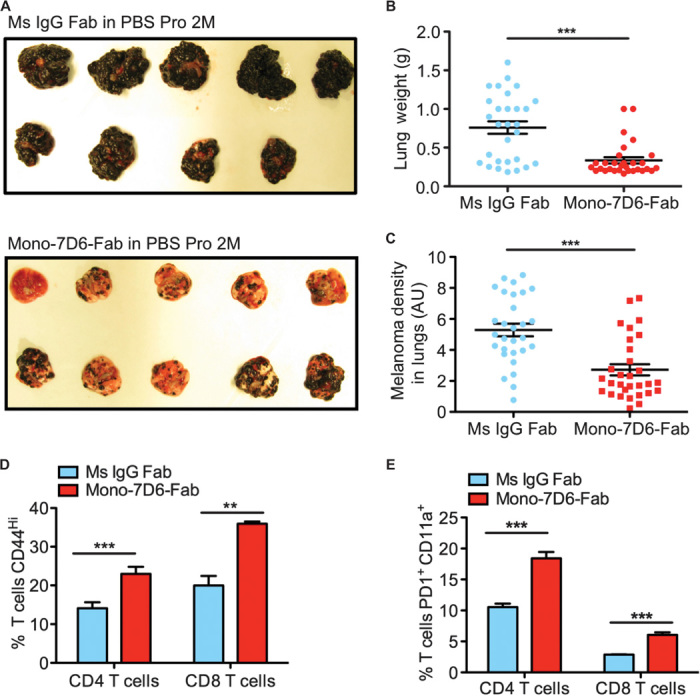
Adaptive immunity is mediated by antigen receptors that can induce weak or strong immune responses depending on the nature of the antigen that is bound. In T lymphocytes, antigen recognition triggers signal transduction by clustering T cell receptor (TCR)/CD3 multiprotein complexes. In addition, it hypothesized that biophysical changes induced in TCR/CD3 that accompany receptor engagement may contribute to signal intensity. Nonclustering monovalent TCR/CD3 engagement is functionally inert despite the fact that it may induce changes in conformational arrangement or in the flexibility of receptor subunits. We report that the intrinsically inert monovalent engagement of TCR/CD3 can specifically enhance physiologic T cell responses to weak antigens in vitro and in vivo without stimulating antigen-unengaged T cells and without interrupting T cell responses to strong antigens, an effect that we term as "co-potentiation." We identified Mono-7D6-Fab, which biophysically altered TCR/CD3 when bound and functionally enhanced immune reactivity to several weak antigens in vitro, including a gp100-derived peptide associated with melanoma. In vivo, Mono-7D6-Fab induced T cell antigen-dependent therapeutic responses against melanoma lung metastases, an effect that synergized with other anti-melanoma immunotherapies to significantly improve outcome and survival. We conclude that Mono-7D6-Fab directly co-potentiated TCR/CD3 engagement by weak antigens and that such concept can be translated into an immunotherapeutic design. The co-potentiation principle may be applicable to other receptors that could be regulated by otherwise inert compounds whose latent potency is only invoked in concert with specific physiologic ligands.
适应性免疫由抗原受体介导,抗原受体可根据所结合抗原的性质诱导微弱或强烈的免疫反应。在T淋巴细胞中,抗原识别通过聚集T细胞受体(TCR)/CD3多蛋白复合物触发信号转导。此外,据推测,TCR/CD3中伴随受体结合而诱导的生物物理变化可能有助于信号强度。尽管非聚集性单价TCR/CD3结合可能会诱导构象排列或受体亚基灵活性的变化,但在功能上是无活性的。我们报告称,TCR/CD3的内在无活性单价结合可在体外和体内特异性增强对弱抗原的生理性T细胞反应,而不会刺激未结合抗原的T细胞,也不会中断T细胞对强抗原的反应,我们将这种效应称为“协同增强”。我们鉴定出了Mono-7D6-Fab,它在结合时会在生物物理上改变TCR/CD3,并在体外功能上增强对几种弱抗原的免疫反应性,包括与黑色素瘤相关的gp100衍生肽。在体内,Mono-7D6-Fab诱导了针对黑色素瘤肺转移的T细胞抗原依赖性治疗反应,这种效应与其他抗黑色素瘤免疫疗法协同作用,显著改善了治疗结果和生存率。我们得出结论,Mono-7D6-Fab直接协同增强了弱抗原对TCR/CD3的结合,并且这种概念可以转化为一种免疫治疗设计。协同增强原理可能适用于其他受体,这些受体可能由原本无活性的化合物调节,其潜在效力只有在与特定生理配体协同作用时才会发挥出来。