Roşca Dragoş-Adrian, Fernandez-Cestau Julio, Morris James, Wright Joseph A, Bochmann Manfred
School of Chemistry, University of East Anglia, Norwich NR4 7TJ, UK.
Sci Adv. 2015 Oct 16;1(9):e1500761. doi: 10.1126/sciadv.1500761. eCollection 2015 Oct.
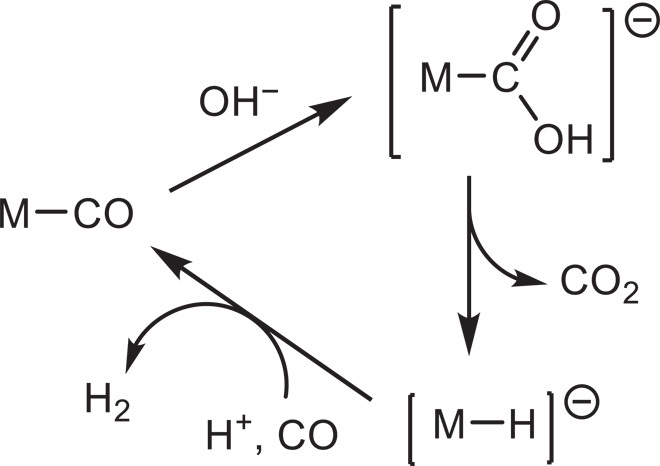
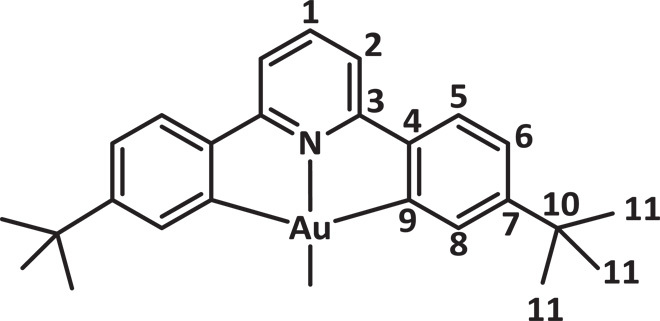
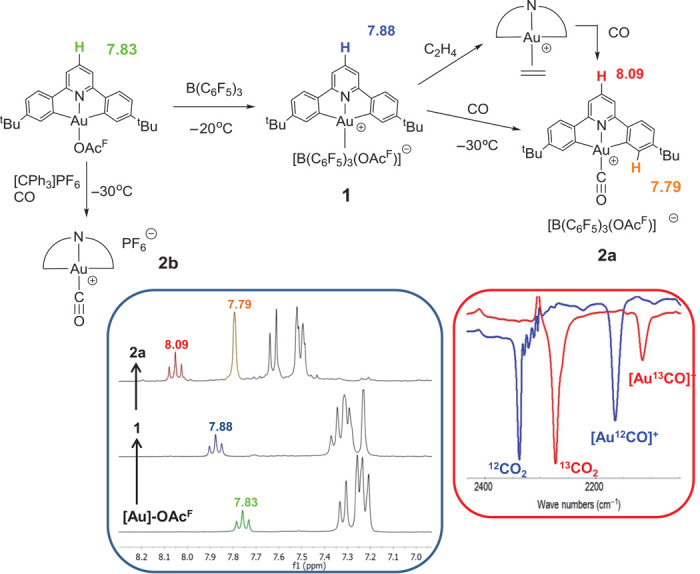
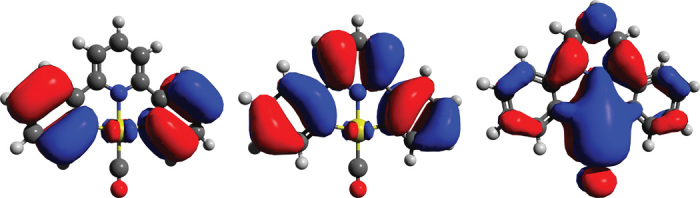
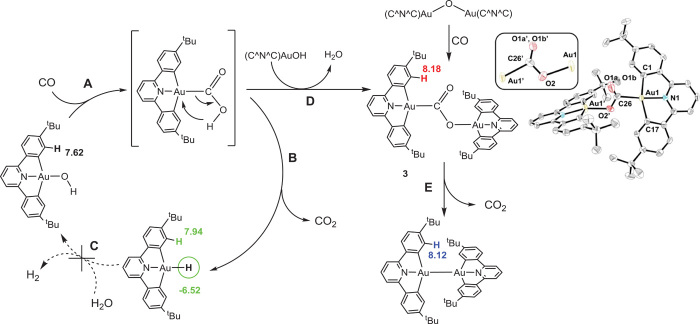
The water-gas shift (WGS) reaction is an important process for the generation of hydrogen. Heterogeneous gold catalysts exhibit good WGS activity, but the nature of the active site, the oxidation state, and competing reaction mechanisms are very much matters of debate. Homogeneous gold WGS systems that could shed light on the mechanism are conspicuous by their absence: gold(I)-CO is inactive and gold(III)-CO complexes were unknown. We report the synthesis of the first example of an isolable CO complex of Au(III). Its reactivity demonstrates fundamental differences between the CO adducts of the neighboring d (8) ions Pt(II) and Au(III): whereas Pt(II)-CO is stable to moisture, Au(III)-CO compounds are extremely susceptible to nucleophilic attack and show WGS reactivity at low temperature. The key to understanding these dramatic differences is the donation/back-donation ratio of the M-CO bond: gold-CO shows substantially less back-bonding than Pt-CO, irrespective of closely similar ν(CO) frequencies. Key WGS intermediates include the gold-CO2 complex [(C^N^C)Au]2(μ-CO2), which reductively eliminates CO2. The species identified here are in accord with Au(III) as active species and a carboxylate WGS mechanism.
水煤气变换(WGS)反应是制氢的重要过程。多相金催化剂表现出良好的WGS活性,但活性位点的性质、氧化态和竞争反应机制仍存在很大争议。能够阐明该机制的均相金WGS体系却明显缺失:金(I)-CO无活性,而金(III)-CO配合物尚属未知。我们报道了首例可分离的金(III)CO配合物的合成。其反应活性表明相邻d(8)离子铂(II)和金(III)的CO加合物之间存在根本差异:铂(II)-CO对水分稳定,而金(III)-CO化合物极易受到亲核攻击,并在低温下表现出WGS反应活性。理解这些显著差异的关键在于M-CO键的给予/反馈给予比率:无论ν(CO)频率极为相似,金-CO的反馈键合明显少于铂-CO。关键的WGS中间体包括金-CO2配合物[(C^N^C)Au]2(μ-CO2),它能还原消除CO2。此处鉴定出的物种与金(III)作为活性物种以及羧酸盐WGS机制相符。