Shao Yong, Li Jin-Xiu, Ge Ri-Li, Zhong Li, Irwin David M, Murphy Robert W, Zhang Ya-Ping
State Key Laboratory of Genetic Resources and Evolution, Kunming Institute of Zoology, the Chinese Academy of Sciences, Kunming 650223, China.
Kunming College of Life Science, University of the Chinese Academy of Sciences, Kunming 650204, China.
Sci Rep. 2015 Nov 25;5:17262. doi: 10.1038/srep17262.
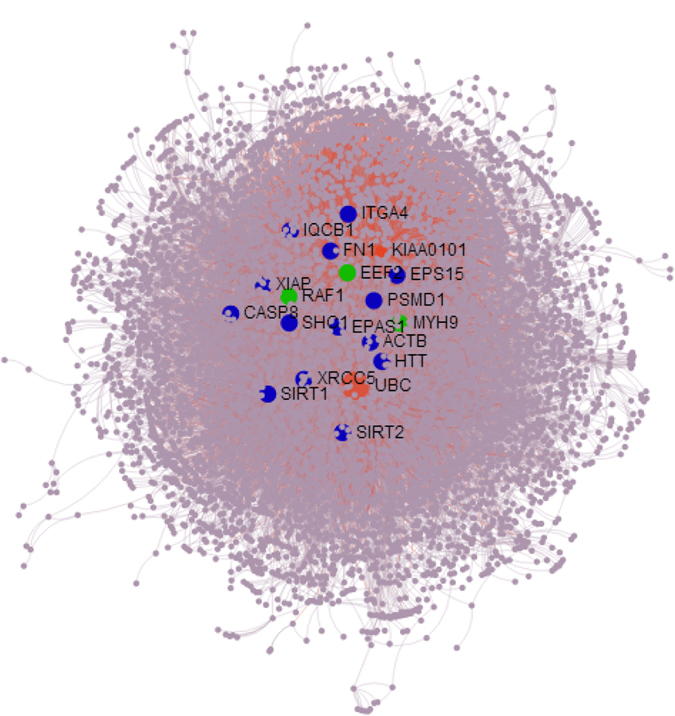
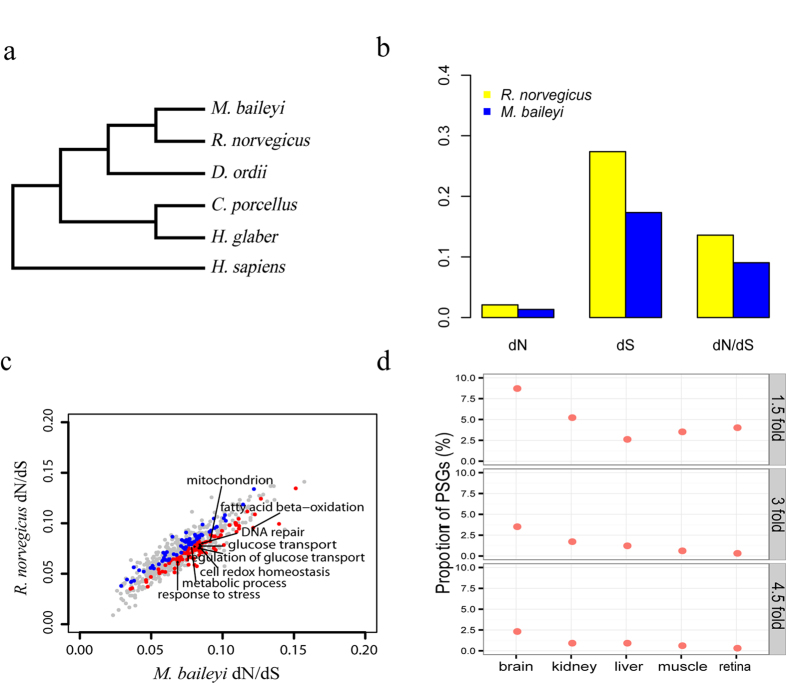
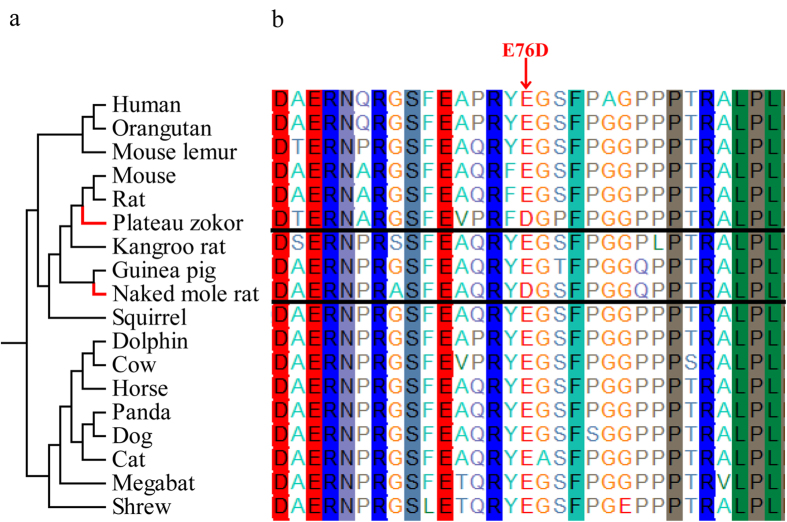
The plateau zokor (Myospalax baileyi) spends its entire life underground in sealed burrows. Confronting limited oxygen and high carbon dioxide concentrations, and complete darkness, they epitomize a successful physiological adaptation. Here, we employ transcriptome sequencing to explore the genetic underpinnings of their adaptations to this unique habitat. Compared to Rattus norvegicus, genes belonging to GO categories related to energy metabolism (e.g. mitochondrion and fatty acid beta-oxidation) underwent accelerated evolution in the plateau zokor. Furthermore, the numbers of positively selected genes were significantly enriched in the gene categories involved in ATPase activity, blood vessel development and respiratory gaseous exchange, functional categories that are relevant to adaptation to high altitudes. Among the 787 genes with evidence of parallel evolution, and thus identified as candidate genes, several GO categories (e.g. response to hypoxia, oxygen homeostasis and erythrocyte homeostasis) are significantly enriched, are two genes, EPAS1 and AJUBA, involved in the response to hypoxia, where the parallel evolved sites are at positions that are highly conserved in sequence alignments from multiple species. Thus, accelerated evolution of GO categories, positive selection and parallel evolution at the molecular level provide evidences to parse the genetic adaptations of the plateau zokor for living in high-elevation burrows.
高原鼢鼠(Myospalax baileyi)一生都生活在封闭洞穴的地下。面对有限的氧气和高浓度的二氧化碳,以及完全黑暗的环境,它们是成功生理适应的典范。在此,我们采用转录组测序来探索它们适应这种独特栖息地的遗传基础。与褐家鼠相比,属于与能量代谢相关的基因本体(GO)类别的基因(如线粒体和脂肪酸β-氧化)在高原鼢鼠中经历了加速进化。此外,正选择基因的数量在参与ATP酶活性、血管发育和呼吸气体交换的基因类别中显著富集,这些功能类别与适应高海拔环境相关。在787个有平行进化证据并因此被鉴定为候选基因的基因中,几个基因本体类别(如对缺氧的反应、氧稳态和红细胞稳态)显著富集,有两个基因,即EPAS1和AJUBA,参与对缺氧的反应,其中平行进化位点位于来自多个物种的序列比对中高度保守的位置。因此,基因本体类别的加速进化、正选择和分子水平的平行进化为解析高原鼢鼠适应高海拔洞穴生活的遗传适应性提供了证据。