Castro Mauro A A, de Santiago Ines, Campbell Thomas M, Vaughn Courtney, Hickey Theresa E, Ross Edith, Tilley Wayne D, Markowetz Florian, Ponder Bruce A J, Meyer Kerstin B
Bioinformatics and Systems Biology Laboratory, Federal University of Paraná (UFPR), Polytechnic Center, Curitiba, Brazil.
Cancer Research UK Cambridge Institute, University of Cambridge, Li Ka Shing Centre, Cambridge, UK.
Nat Genet. 2016 Jan;48(1):12-21. doi: 10.1038/ng.3458. Epub 2015 Nov 30.
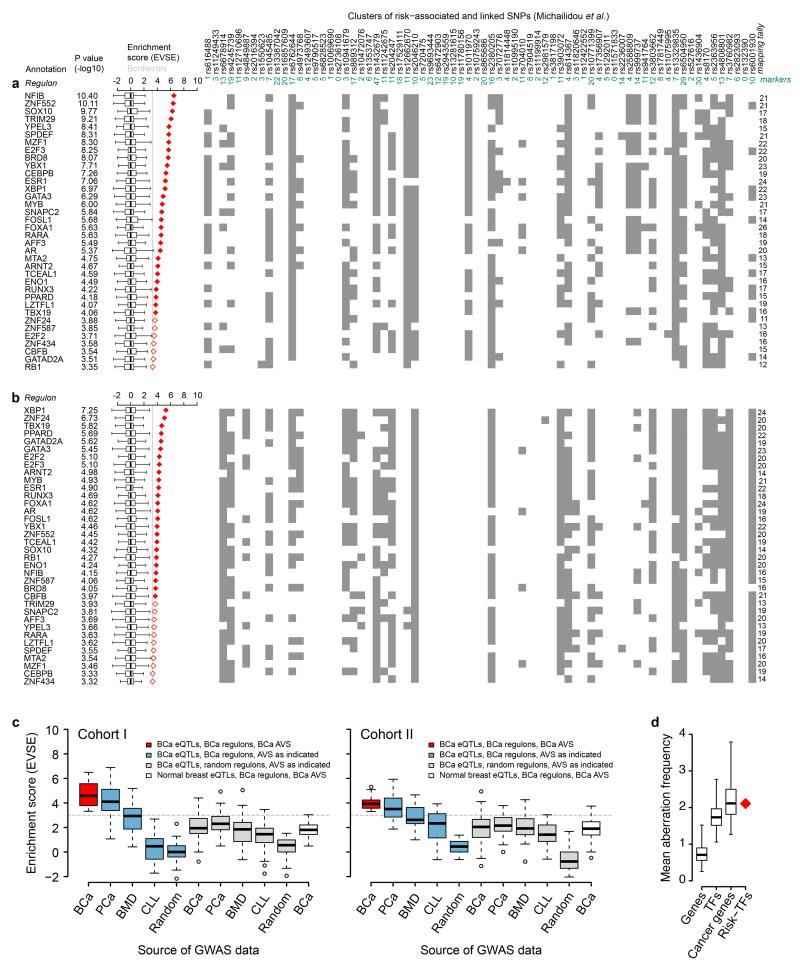
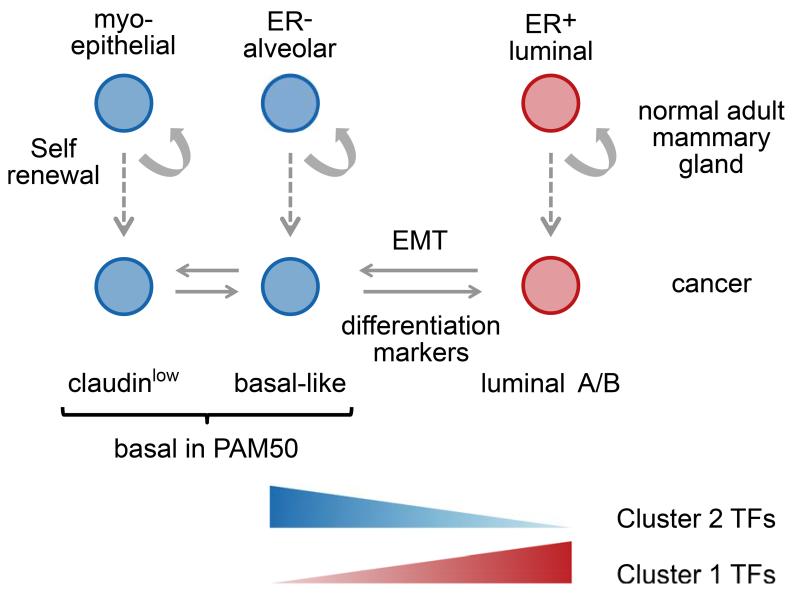
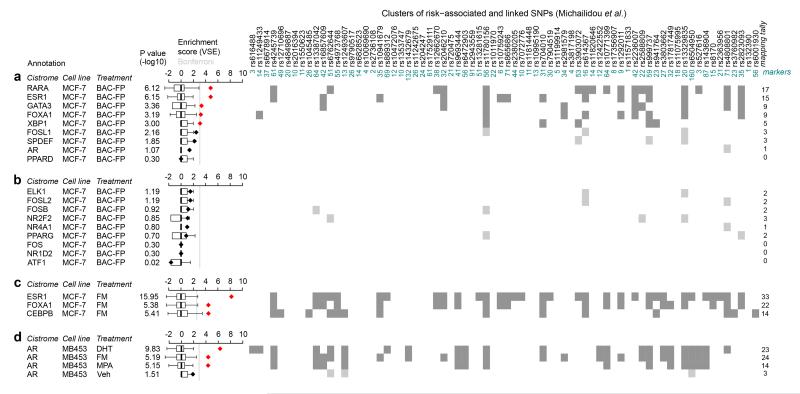
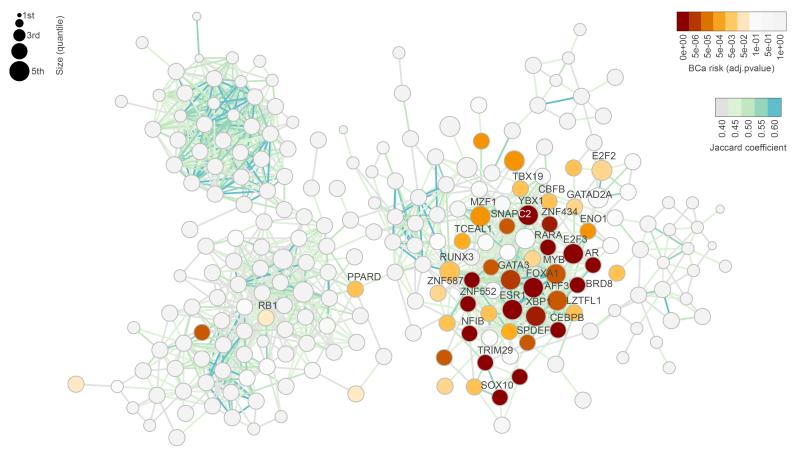
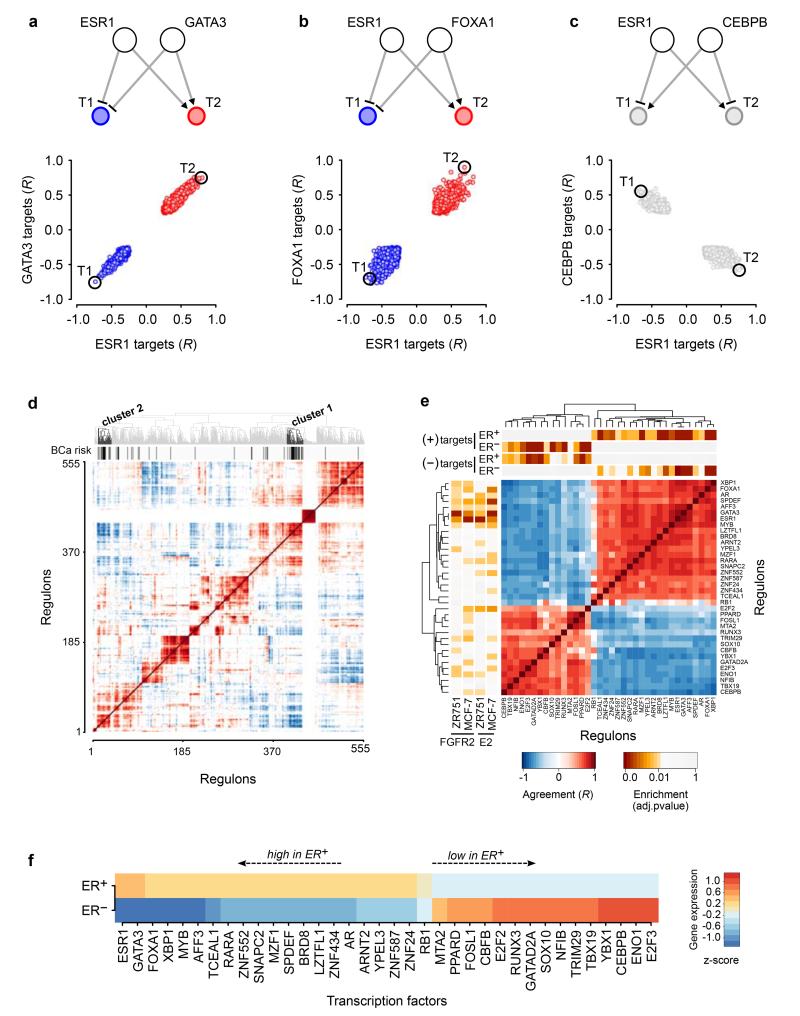
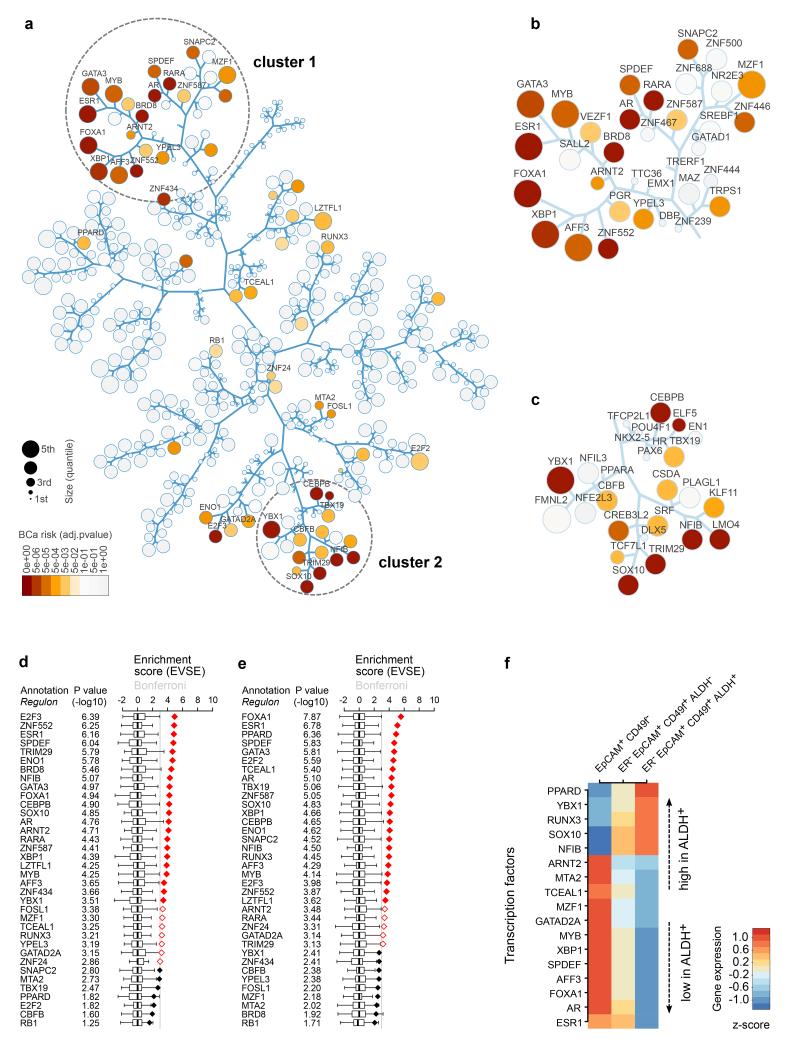
Genetic risk for breast cancer is conferred by a combination of multiple variants of small effect. To better understand how risk loci might combine, we examined whether risk-associated genes share regulatory mechanisms. We created a breast cancer gene regulatory network comprising transcription factors and groups of putative target genes (regulons) and asked whether specific regulons are enriched for genes associated with risk loci via expression quantitative trait loci (eQTLs). We identified 36 overlapping regulons that were enriched for risk loci and formed a distinct cluster within the network, suggesting shared biology. The risk transcription factors driving these regulons are frequently mutated in cancer and lie in two opposing subgroups, which relate to estrogen receptor (ER)(+) luminal A or luminal B and ER(-) basal-like cancers and to different luminal epithelial cell populations in the adult mammary gland. Our network approach provides a foundation for determining the regulatory circuits governing breast cancer, to identify targets for intervention, and is transferable to other disease settings.
乳腺癌的遗传风险是由多种效应较小的变异组合而成的。为了更好地理解风险位点是如何组合的,我们研究了风险相关基因是否共享调控机制。我们创建了一个乳腺癌基因调控网络,该网络由转录因子和假定的靶基因(调控子)组组成,并通过表达数量性状位点(eQTL)询问特定调控子是否富含与风险位点相关的基因。我们鉴定出36个重叠的调控子,这些调控子富含风险位点,并在网络中形成一个独特的簇,表明存在共同的生物学特性。驱动这些调控子的风险转录因子在癌症中经常发生突变,位于两个相对的亚组中,这两个亚组与雌激素受体(ER)(+)管腔A型或管腔B型以及ER(-)基底样癌有关,也与成年乳腺中不同的管腔上皮细胞群体有关。我们的网络方法为确定调控乳腺癌的调控回路、识别干预靶点提供了基础,并且可以应用于其他疾病情况。