Cifuentes Federico F, Valenzuela Rodrigo H, Contreras Héctor R, Castellón Enrique A
Laboratory of Molecular and Cellular Andrology, Physiology and Biophysics Program, Institute of Biomedical Sciences, Faculty of Medicine, University of Chile, Santiago 8380453, Chile ; Department of Animal Pathology, Faculty of Veterinary and Animal Sciences, University of Chile, Santiago 8820808, Chile.
Laboratory of Molecular and Cellular Andrology, Physiology and Biophysics Program, Institute of Biomedical Sciences, Faculty of Medicine, University of Chile, Santiago 8380453, Chile.
Oncol Lett. 2015 Oct;10(4):2142-2148. doi: 10.3892/ol.2015.3522. Epub 2015 Jul 22.
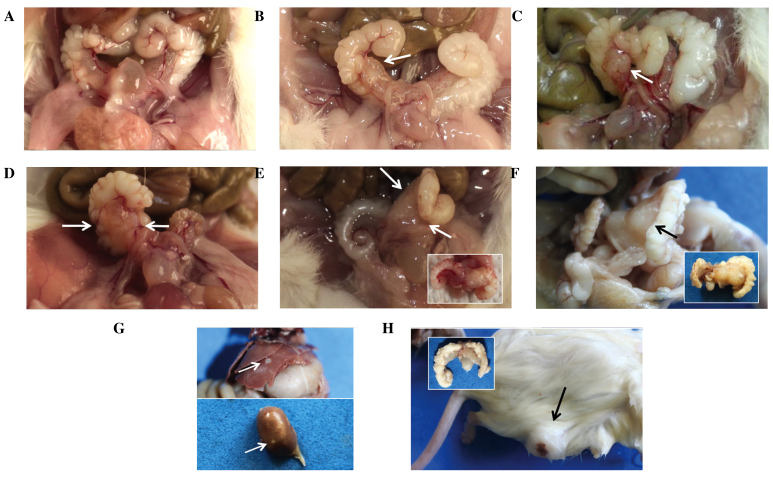
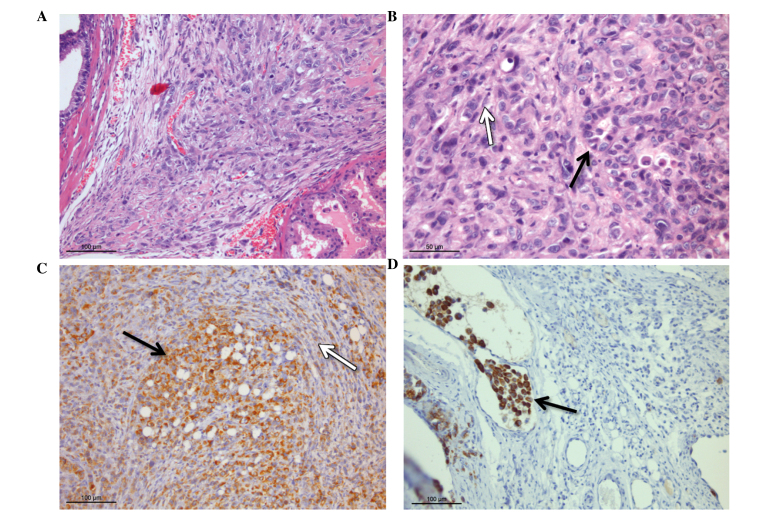
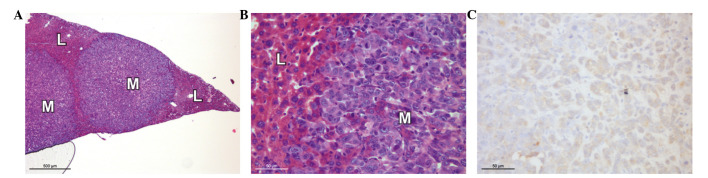
Prostate cancer is one of the most prevalent oncological diseases in males worldwide, and the mortalities resulting from this type of cancer are mainly due to metastasis. The most common models for the study of metastasis are transgenic and immunocompromised mice, which enable the study of the metastatic process in a controlled way by the injection of prostate cancer cells into the mice. In the present study, NOD-SCIDγ mice were injected orthotopically with PC3 cells in the anterior prostate in order to establish a metastatic model. The results demonstrated the development and growth of a primary tumor that preceded the formation of micrometastases in the lung, liver and pancreas, followed by macrometastases in the liver. This model adequately represents the dynamics of the metastatic process, and may be useful for novel therapeutic assays and post-surgical relapse studies.
前列腺癌是全球男性中最常见的肿瘤疾病之一,这种癌症导致的死亡主要归因于转移。研究转移的最常见模型是转基因和免疫缺陷小鼠,通过将前列腺癌细胞注射到小鼠体内,能够以可控方式研究转移过程。在本研究中,将PC3细胞原位注射到NOD-SCIDγ小鼠的前列腺前部,以建立转移模型。结果表明,在肺、肝和胰腺形成微转移之前,原发性肿瘤先发展和生长,随后在肝脏形成大转移。该模型充分代表了转移过程的动态变化,可能对新型治疗试验和术后复发研究有用。