Murakata Yoshiko, Fujimaki Tetsuo, Yamada Yoshiji
Department of Human Functional Genomics, Life Science Research Center, Mie University, Tsu, Mie 514-8507, Japan ; Department of Medical Genomics and Proteomics, Institute of Basic Sciences, Graduate School of Medicine, Mie University, Tsu, Mie 514-8507, Japan.
Department of Cardiovascular Medicine, Inabe General Hospital, Inabe, Mie 511-0428, Japan.
Biomed Rep. 2015 Nov;3(6):767-777. doi: 10.3892/br.2015.505. Epub 2015 Aug 5.
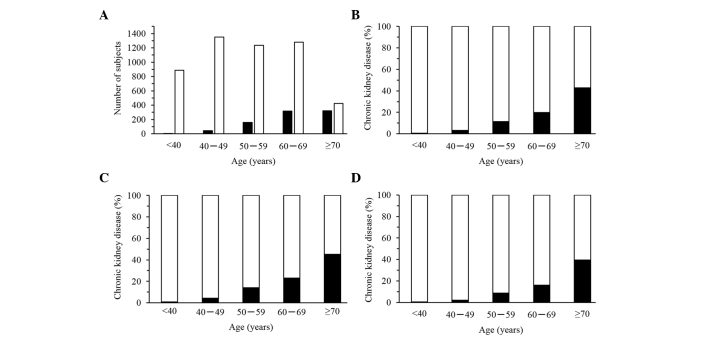
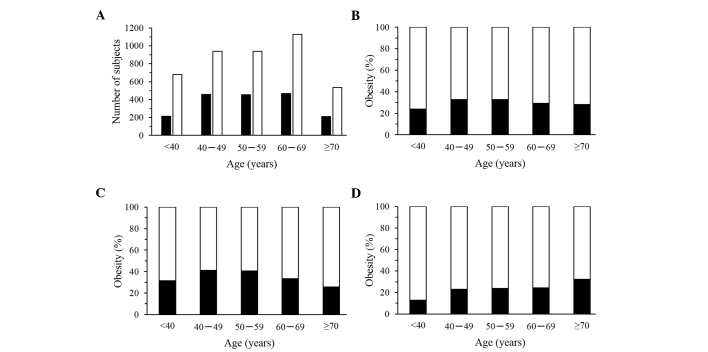
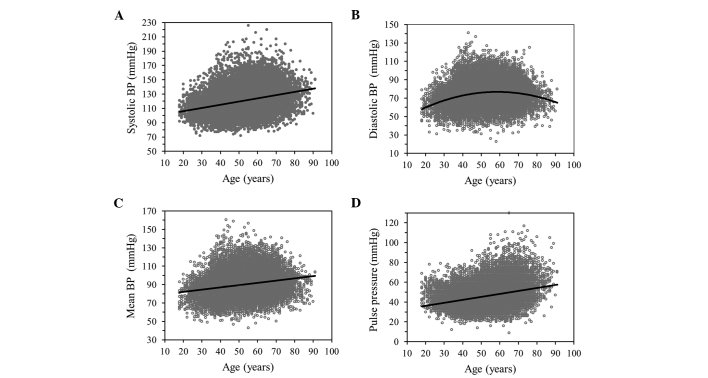
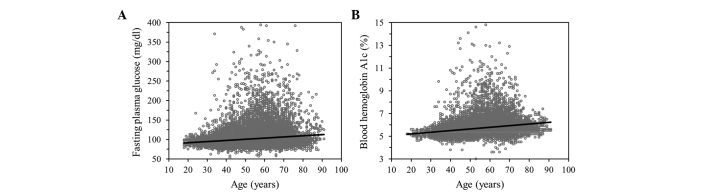
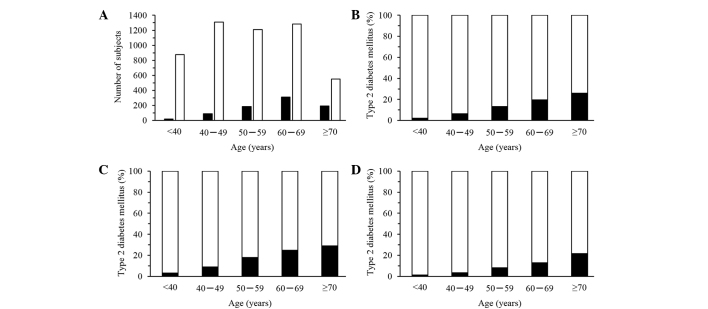
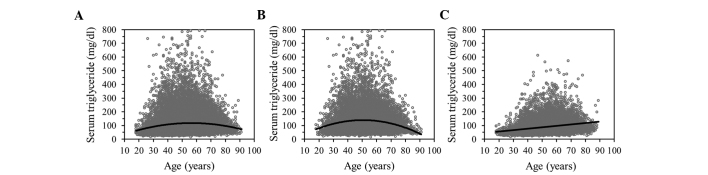
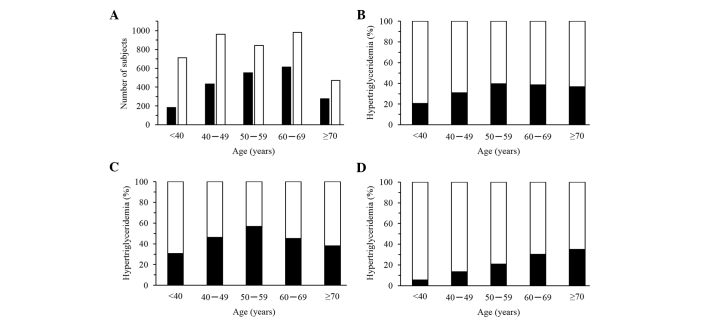
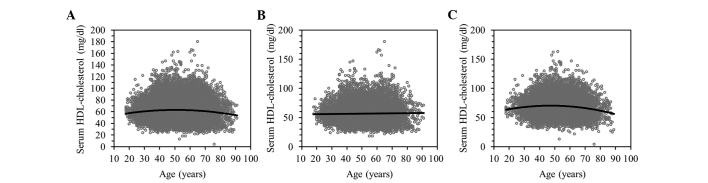
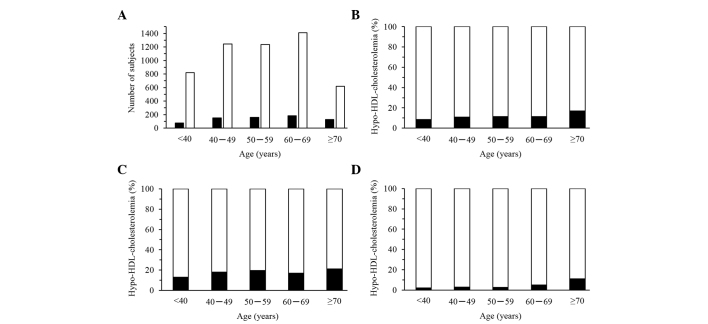
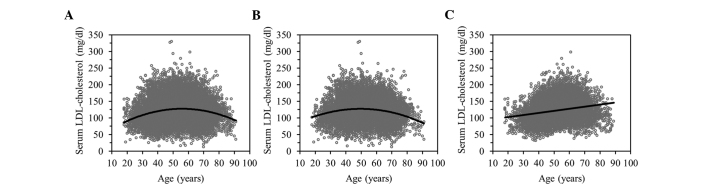
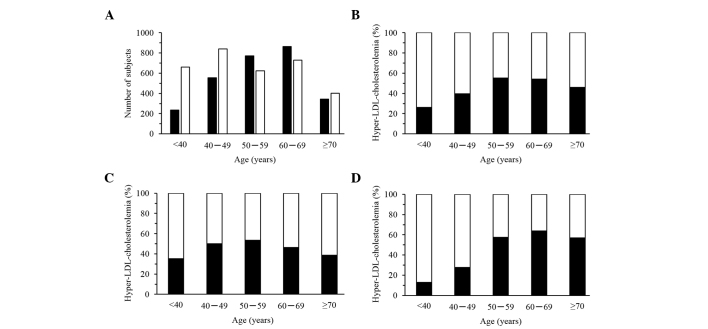
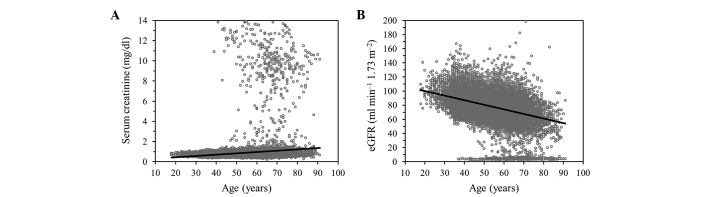
The aim of the present study was to clarify the age-related changes in 13 clinical parameters and their associations with common complex diseases. Study subjects comprised 6,027 community-dwelling individuals who were recruited to a population-based longitudinal genetic epidemiological study. Bonferroni's correction was applied to compensate for multiple comparisons of association and P<0.0011 was considered statistically significant. Body mass index and waist circumference increased with age up to ~50 years and decreased thereafter in men, whereas the two parameters increased linearly with age in women. The prevalence of obesity was highest (41.1%) in men aged 40-49 years, after which it decreased with age. The prevalence of obesity in women increased with age to ≤32.2% in those aged ≥70 years. Systolic and mean blood pressure (BP), as well as pulse pressure, increased linearly with age in all subjects, whereas diastolic BP increased with age up to ~60 years and subsequently decreased. The prevalence of hypertension increased with age to ≤69.9 or 68.5% at age ≥70 years in men and women, respectively. The fasting plasma glucose level, blood hemoglobin A content and the prevalence of type 2 diabetes mellitus increased gradually with age in men and women. The serum triglyceride concentration increased with age up to ~50 years and decreased thereafter in men, whereas it increased linearly with age in women. The prevalence of hypertriglyceridemia increased to a peak of 56.8% at age 50-59 years and subsequently decreased in men, whereas in women it increased with age to ≤34.9% at ≥70 years. The serum high-density lipoprotein (HDL)-cholesterol concentration increased with age up to ~50 years and decreased thereafter in women. The prevalence of hypo-HDL-cholesterolemia increased gradually with age in women. The serum concentration of low-density lipoprotein (LDL)-cholesterol increased with age up to ~50 years and subsequently declined in men, whereas it increased linearly with age in women. The prevalence of hyper-LDL-cholesterolemia increased with age to ≤53.4% at 50-59 years in men and ≤63.9% at 60-69 years in women and it decreased thereafter in the two genders. The serum creatinine concentration and the estimated glomerular filtration rate increased or decreased linearly with age, respectively. The prevalence of chronic kidney disease (CKD) increased with age to ≤45.1 or 39.6% at ≥70 years in men and women, respectively. Therefore, these results indicate that 13 clinical parameters, as well as the prevalence of obesity, hypertension, type 2 diabetes mellitus, dyslipidemia and CKD, were significantly associated with age. They may therefore prove informative for the prevention of these diseases and contribute to the achievement of a healthy long life and successful aging.
本研究的目的是阐明13项临床参数与年龄相关的变化及其与常见复杂疾病的关联。研究对象包括6027名社区居民,他们被纳入一项基于人群的纵向遗传流行病学研究。采用Bonferroni校正来补偿关联的多重比较,P<0.0011被认为具有统计学意义。男性的体重指数和腰围在50岁左右之前随年龄增加,之后下降,而女性的这两个参数随年龄呈线性增加。肥胖患病率在40-49岁男性中最高(41.1%),此后随年龄下降。女性肥胖患病率随年龄增加,在70岁及以上女性中≤32.2%。收缩压、平均血压以及脉压在所有受试者中均随年龄呈线性增加,而舒张压在60岁左右之前随年龄增加,随后下降。高血压患病率随年龄增加,在70岁及以上男性和女性中分别≤69.9%或68.5%。男性和女性的空腹血糖水平、血红蛋白A含量以及2型糖尿病患病率均随年龄逐渐增加。男性血清甘油三酯浓度在50岁左右之前随年龄增加,之后下降,而女性则随年龄呈线性增加。高甘油三酯血症患病率在男性50-59岁时升至峰值56.8%,随后下降,而女性则随年龄增加,在70岁及以上时≤34.9%。女性血清高密度脂蛋白(HDL)胆固醇浓度在50岁左右之前随年龄增加,之后下降。女性低HDL胆固醇血症患病率随年龄逐渐增加。男性血清低密度脂蛋白(LDL)胆固醇浓度在50岁左右之前随年龄增加,随后下降,而女性则随年龄呈线性增加。高LDL胆固醇血症患病率在男性50-59岁时随年龄增加至≤53.4%,在女性60-69岁时随年龄增加至≤63.9%,此后在两性中均下降。血清肌酐浓度和估计肾小球滤过率分别随年龄呈线性增加或下降。慢性肾脏病(CKD)患病率随年龄增加,在70岁及以上男性和女性中分别≤45.1%或39.6%。因此,这些结果表明,13项临床参数以及肥胖、高血压、2型糖尿病、血脂异常和CKD的患病率均与年龄显著相关。因此,它们可能对预防这些疾病具有指导意义,并有助于实现健康长寿和成功老龄化。