Sherman Marc S, Lorenz Kim, Lanier M Hunter, Cohen Barak A
Computational and Molecular Biophysics, Washington University in St. Louis, St. Louis, MO, United States. ; Center for Genome Sciences, Department of Genetics, Washington University in St. Louis, St. Louis, MO, United States.
Center for Genome Sciences, Department of Genetics, Washington University in St. Louis, St. Louis, MO, United States.
Cell Syst. 2015 Nov 25;1(5):315-325. doi: 10.1016/j.cels.2015.10.011.
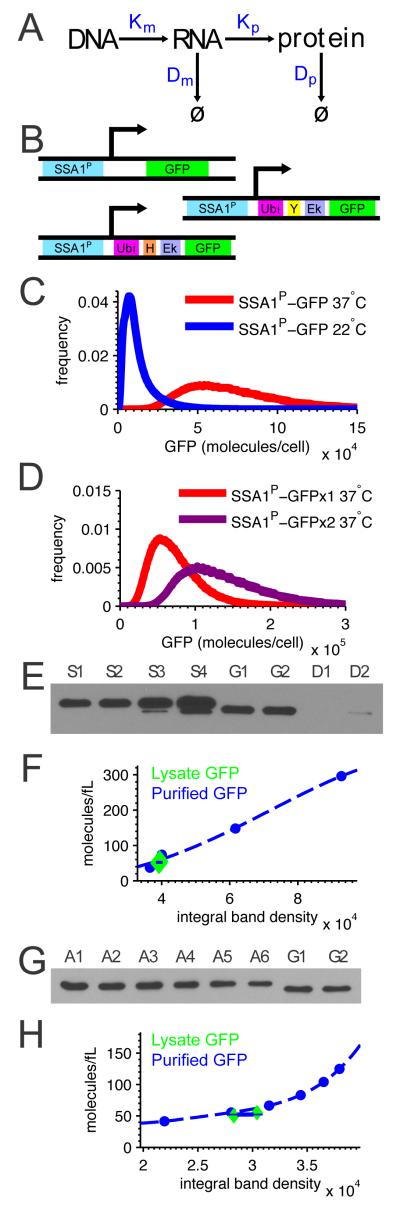
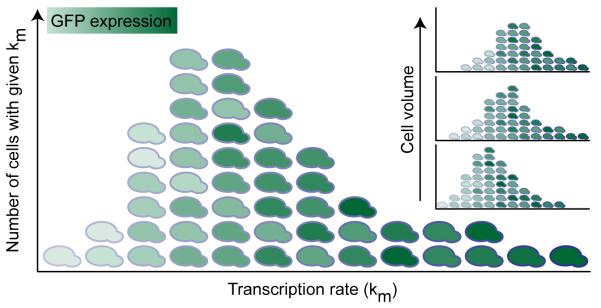
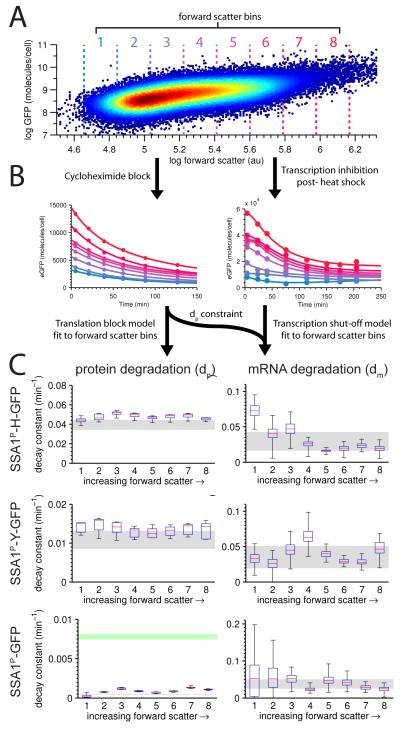
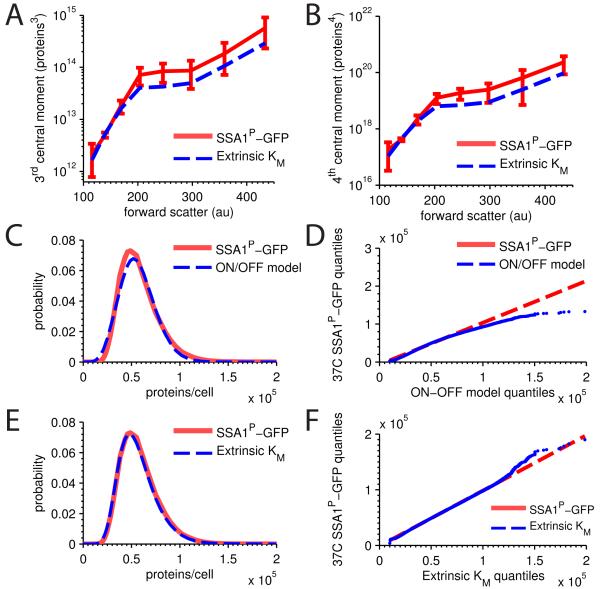
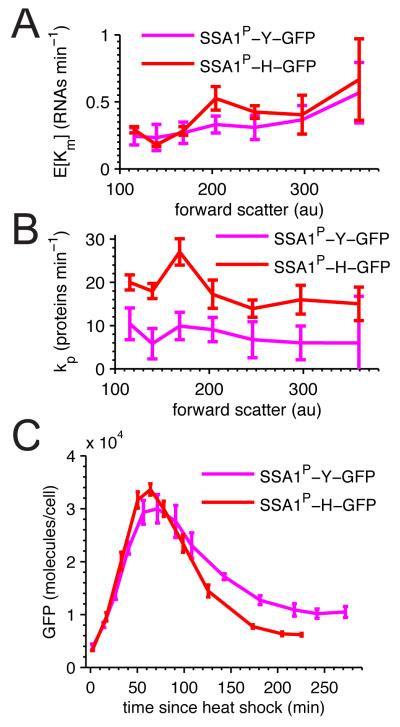
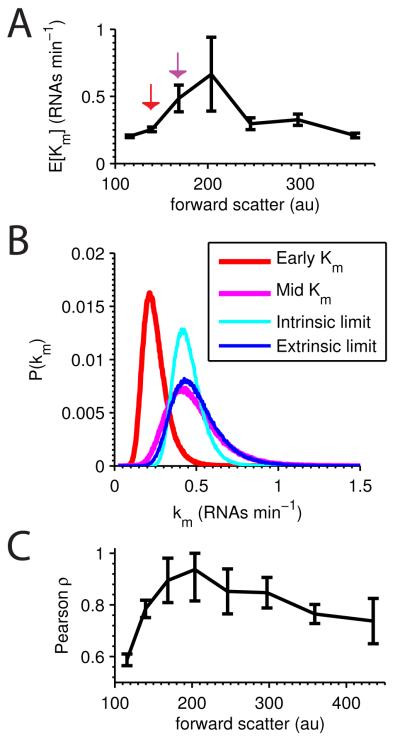
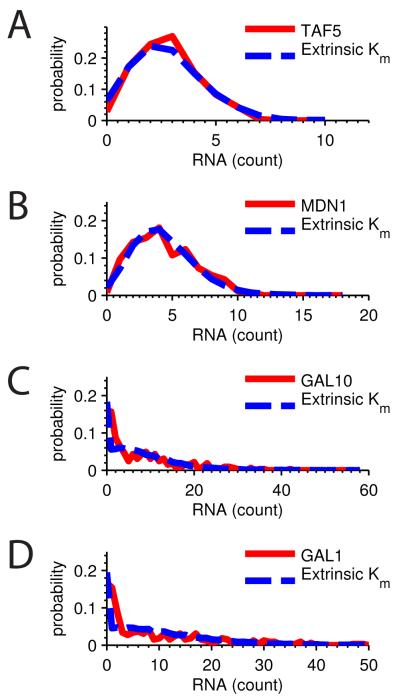
Random fluctuations in gene expression lead to wide cell-to-cell differences in RNA and protein counts. Most efforts to understand stochastic gene expression focus on local (intrinisic) fluctuations, which have an exact theoretical representation. However, no framework exists to model global (extrinsic) mechanisms of stochasticity. We address this problem by dissecting the sources of stochasticity that influence the expression of a yeast heat shock gene, SSA1. Our observations suggest that extrinsic stochasticity does not influence every step of gene expression, but rather arises specifically from cell-to-cell differences in the propensity to transcribe RNA. This led us to propose a framework for stochastic gene expression where transcription rates vary globally in combination with local, gene-specific fluctuations in all steps of gene expression. The proposed model better explains total expression stochasticity than the prevailing ON-OFF model and offers transcription as the specific mechanism underlying correlated fluctuations in gene expression.
基因表达中的随机波动导致细胞间RNA和蛋白质数量存在广泛差异。大多数理解随机基因表达的努力都集中在局部(内在)波动上,这种波动有精确的理论表述。然而,目前还没有用于模拟随机性全局(外在)机制的框架。我们通过剖析影响酵母热休克基因SSA1表达的随机性来源来解决这个问题。我们的观察结果表明,外在随机性并不影响基因表达的每一步,而是具体源于转录RNA倾向的细胞间差异。这使我们提出了一个随机基因表达框架,其中转录速率在全局范围内变化,同时结合基因表达所有步骤中的局部、基因特异性波动。与普遍的开-关模型相比,所提出的模型能更好地解释总表达随机性,并将转录作为基因表达相关波动的具体潜在机制。