Kuroda Kengo, Kiyono Tohru, Isogai Emiko, Masuda Mizuki, Narita Moe, Okuno Katsuya, Koyanagi Yukako, Fukuda Tomokazu
Graduate School of Agricultural Science, Tohoku University, 1-1 Tsutsumidori-Amamiyamachi, Aoba-ku, Sendai, Miyagi, Japan.
Division of Carcinogenesis and Cancer Prevention, National Cancer Center Research Institute, 5-1-1 Tsukiji, Chuo-ku, Tokyo, Japan.
PLoS One. 2015 Dec 1;10(12):e0143473. doi: 10.1371/journal.pone.0143473. eCollection 2015.
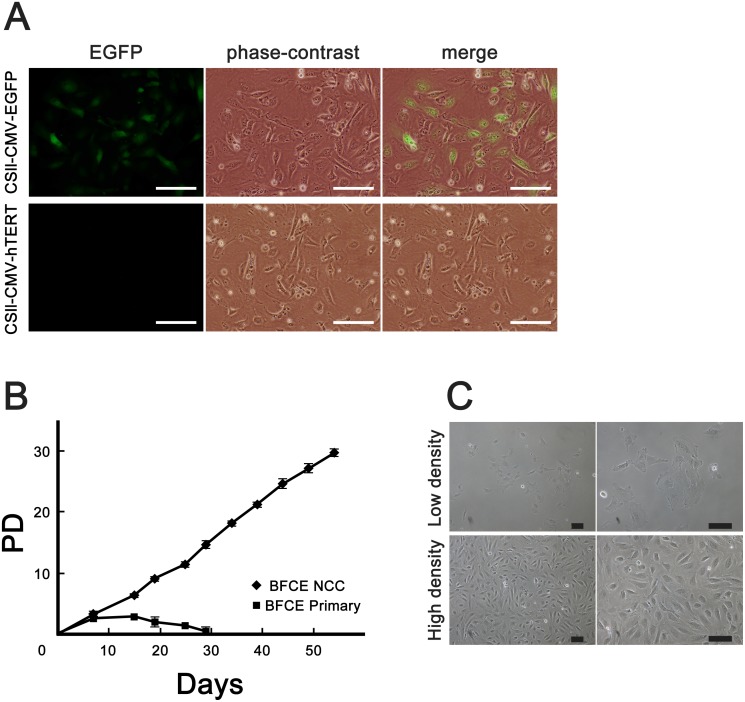
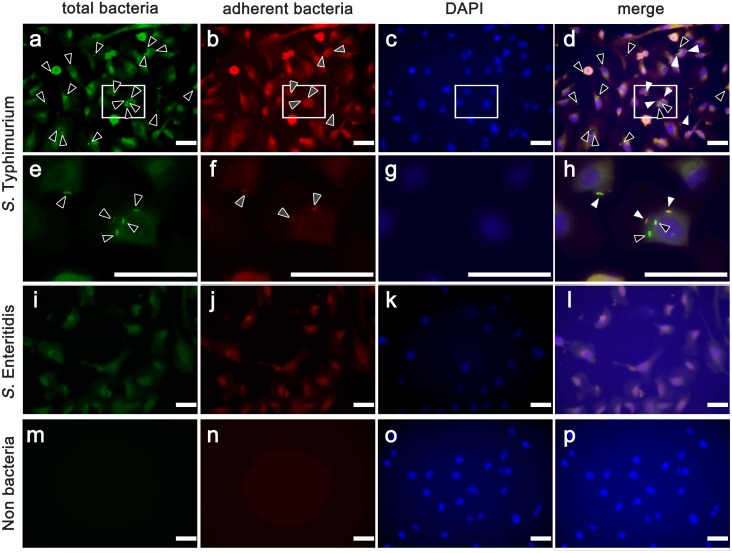
Cattle are the economically important animals in human society. They are essential for the production of livestock products such as milk and meats. The production efficiency of livestock products is negatively impacted by infection with zoonotic pathogens. To prevent and control infectious diseases, it is important to understand the interaction between cattle tissue and pathogenic bacteria. In this study, we established an in vitro infection model of an immortalized bovine colon-derived epithelial cell line by transducing the cells with lentiviral vectors containing genes encoding cell cycle regulators cyclin D1, mutant cyclin dependent kinase 4 (CDK4), and human telomerase reverse transcriptase (TERT). The established cell line showed continuous cell proliferation, expression of epithelial markers, and an intact karyotype, indicating that the cells maintained their original nature as colon-derived epithelium. Furthermore, we exposed the established cell line to two strains of Salmonella enterica and EHEC. Interestingly, S. Typhimurium showed higher affinity for the established cell line and invaded the cytoplasm than S. Enteritidis. Quantitative RT-PCR revealed that gene expression of Toll-like receptor 1 (TLR1), TLR 2 and TLR 3, whereas TLR 4, 5 and 6 were not detectable in established cells. Our established immortalized colon-derived epithelial cell should be a useful tool for studies evaluating the molecular mechanisms underlying bacterial infection.
牛是人类社会中具有重要经济价值的动物。它们对于牛奶和肉类等畜产品的生产至关重要。人畜共患病原体感染会对畜产品的生产效率产生负面影响。为了预防和控制传染病,了解牛组织与病原菌之间的相互作用很重要。在本研究中,我们通过用含有编码细胞周期调节因子细胞周期蛋白D1、突变型细胞周期蛋白依赖性激酶4(CDK4)和人端粒酶逆转录酶(TERT)的基因的慢病毒载体转导细胞,建立了永生化牛结肠来源上皮细胞系的体外感染模型。所建立的细胞系显示出持续的细胞增殖、上皮标志物的表达以及完整的核型,表明这些细胞保持了其作为结肠来源上皮细胞的原始特性。此外,我们将所建立的细胞系暴露于两株肠炎沙门氏菌和肠出血性大肠杆菌。有趣的是,鼠伤寒沙门氏菌对所建立的细胞系表现出更高的亲和力,并且比肠炎沙门氏菌更易侵入细胞质。定量逆转录聚合酶链反应显示,Toll样受体1(TLR1)、TLR 2和TLR 3的基因表达存在,而在所建立的细胞中未检测到TLR 4、5和6。我们所建立的永生化结肠来源上皮细胞应该是评估细菌感染潜在分子机制研究的有用工具。