Ramani Vishnu C, Zhan Fenghuang, He Jianbo, Barbieri Paola, Noseda Alessandro, Tricot Guido, Sanderson Ralph D
Department of Pathology, University of Alabama at Birmingham, Birmingham, AL, USA.
Comprehensive Cancer Center, University of Alabama at Birmingham, Birmingham, AL, USA.
Oncotarget. 2016 Jan 12;7(2):1598-607. doi: 10.18632/oncotarget.6408.
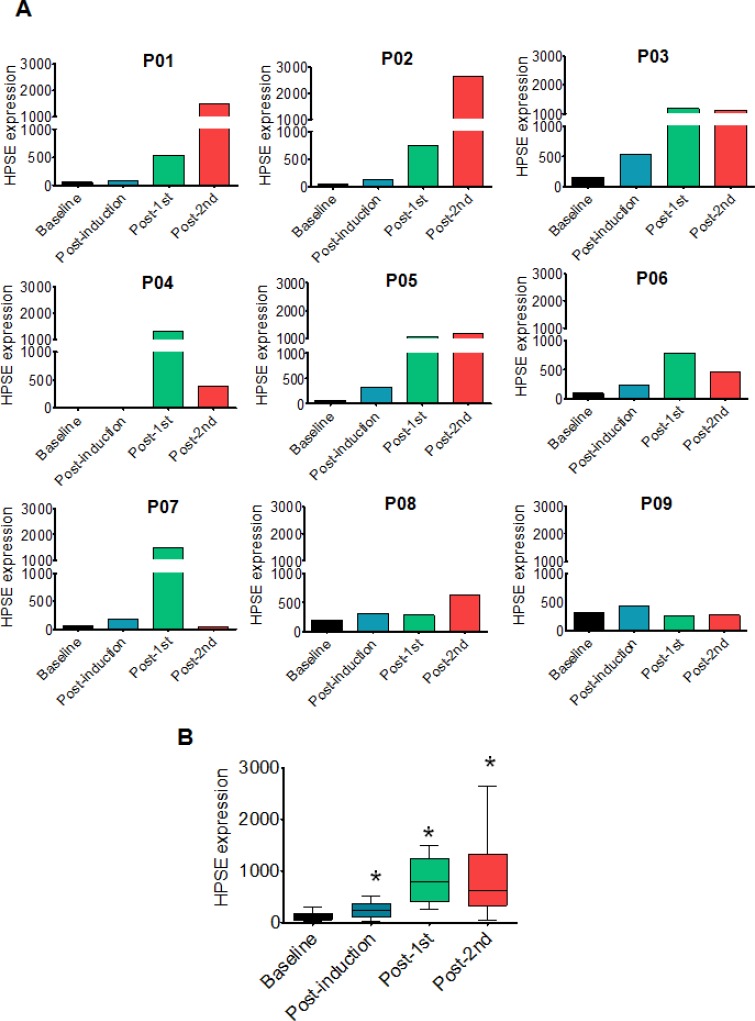
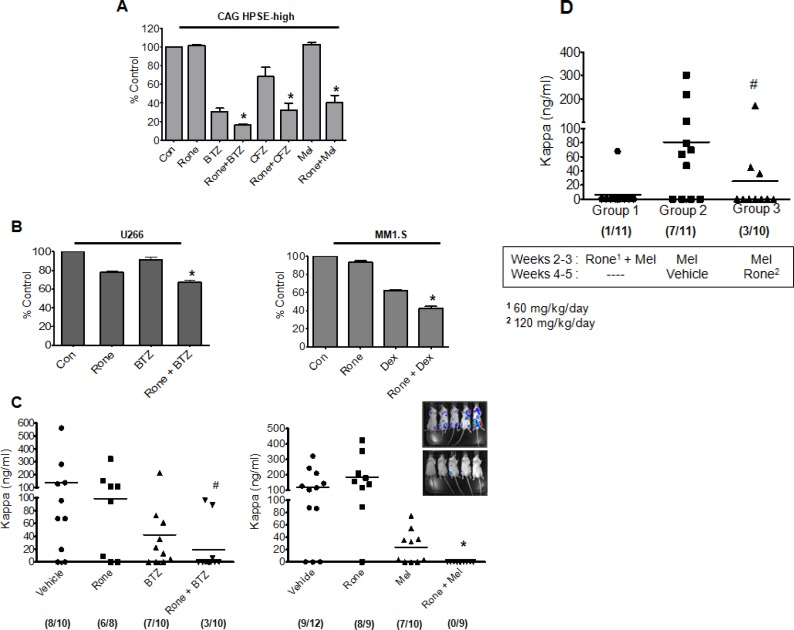
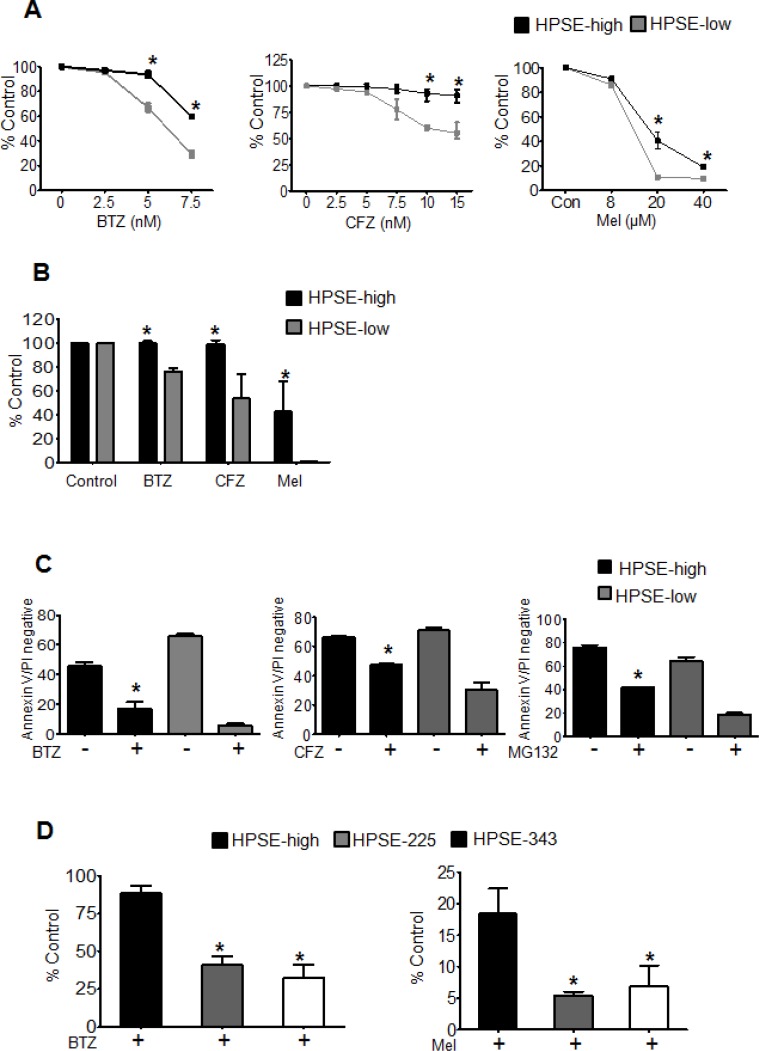
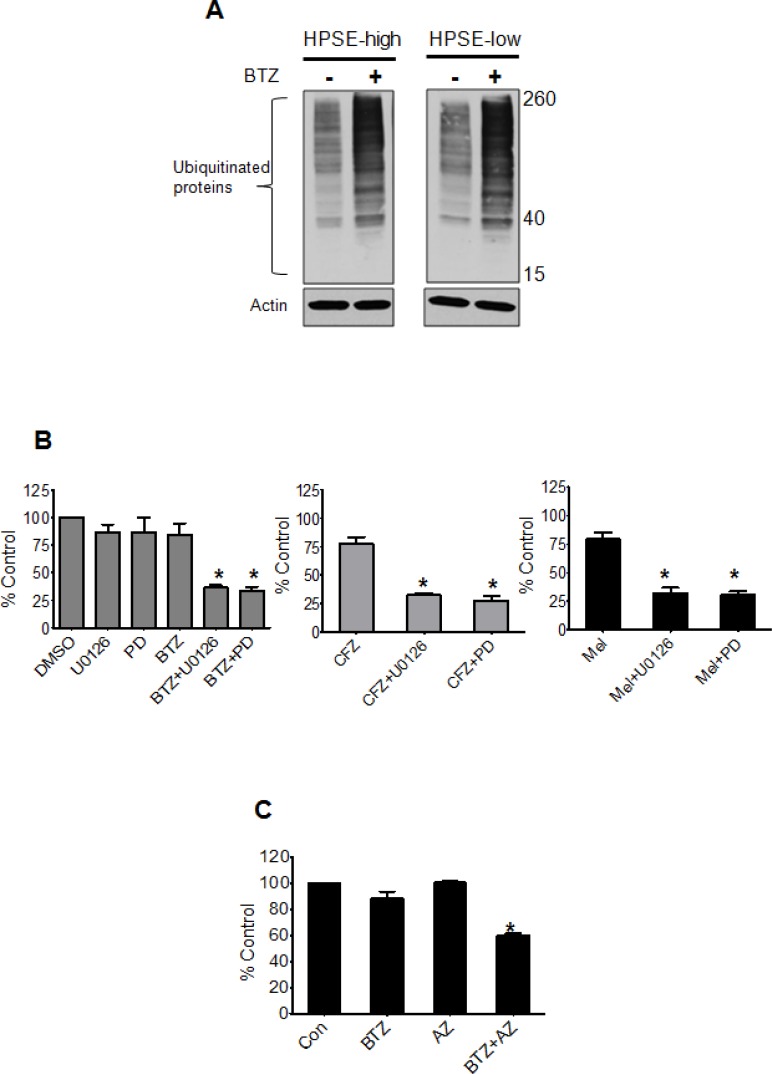
In most myeloma patients, even after several rounds of intensive therapy, drug resistant tumor cells survive and proliferate aggressively leading to relapse. In the present study, gene expression profiling of tumor cells isolated from myeloma patients after sequential rounds of chemotherapy, revealed for the first time that heparanase, a potent promoter of myeloma growth and progression, was elevated in myeloma cells that survived therapy. Based on this clinical data, we hypothesized that heparanase was involved in myeloma resistance to drug therapy. In several survival and viability assays, elevated heparanase expression promoted resistance of myeloma tumor cells to chemotherapy. Mechanistically, this enhanced survival was due to heparanase-mediated ERK signaling. Importantly, use of the heparanase inhibitor Roneparstat in combination with chemotherapy clearly diminished the growth of disseminated myeloma tumors in vivo. Moreover, use of Roneparstat either during or after chemotherapy diminished regrowth of myeloma tumors in vivo following therapy. These results provide compelling evidence that heparanase is a promising, novel target for overcoming myeloma resistance to therapy and that targeting heparanase has the potential to prevent relapse in myeloma and possibly other cancers.
在大多数骨髓瘤患者中,即使经过几轮强化治疗,耐药肿瘤细胞仍会存活并迅速增殖,导致疾病复发。在本研究中,对骨髓瘤患者经多轮化疗后分离出的肿瘤细胞进行基因表达谱分析,首次发现乙酰肝素酶(一种骨髓瘤生长和进展的强效促进因子)在治疗后存活的骨髓瘤细胞中表达升高。基于这一临床数据,我们推测乙酰肝素酶与骨髓瘤对药物治疗的耐药性有关。在多项生存和活力检测中,乙酰肝素酶表达升高促进了骨髓瘤肿瘤细胞对化疗的耐药性。从机制上讲,这种生存能力的增强是由于乙酰肝素酶介导的ERK信号传导。重要的是,将乙酰肝素酶抑制剂罗内帕司他与化疗联合使用,明显抑制了体内播散性骨髓瘤肿瘤的生长。此外,在化疗期间或化疗后使用罗内帕司他,可减少治疗后体内骨髓瘤肿瘤的再生长。这些结果提供了令人信服的证据,表明乙酰肝素酶是克服骨髓瘤治疗耐药性的一个有前景的新靶点,靶向乙酰肝素酶有可能预防骨髓瘤及其他可能癌症的复发。