Simon Timea, Tomuleasa Ciprian, Bojan Anca, Berindan-Neagoe Ioana, Boca Sanda, Astilean Simion
Nanobiophotonics and Laser Microspectroscopy Center, Interdisciplinary Research Institute on Bio-Nano-Sciences and Faculty of Physics, Babes-Bolyai University, T. Laurian 42, 400271, Cluj-Napoca, Romania.
Department of Hematology, Ion Chiricuta Oncology Institute, Bulevardul 21 Decembrie 1918 Nr 73, 400124, Cluj-Napoca, Romania.
Nanoscale Res Lett. 2015 Dec;10(1):466. doi: 10.1186/s11671-015-1154-2. Epub 2015 Dec 1.
Releasing drug molecules at the targeted location could increase the clinical outcome of a large number of anti-tumor treatments which require low systemic damage and low side effects. Nano-carriers of drugs show great potential for such task due to their capability of accumulating and releasing their payload specifically, at the tumor site.
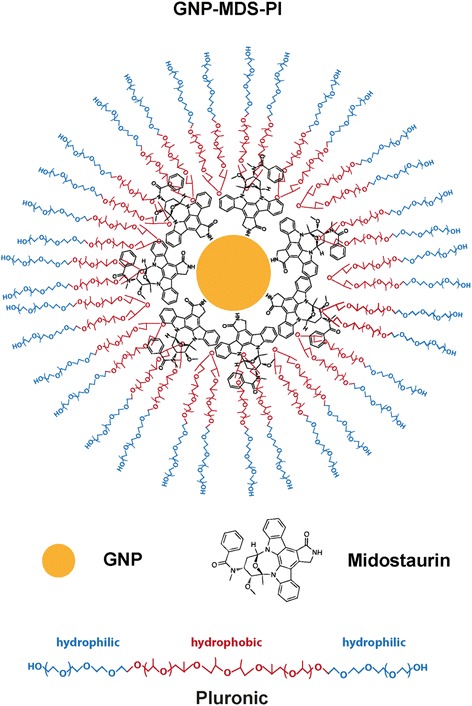
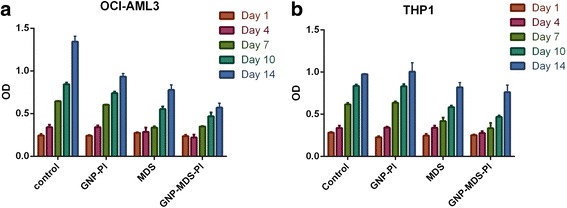
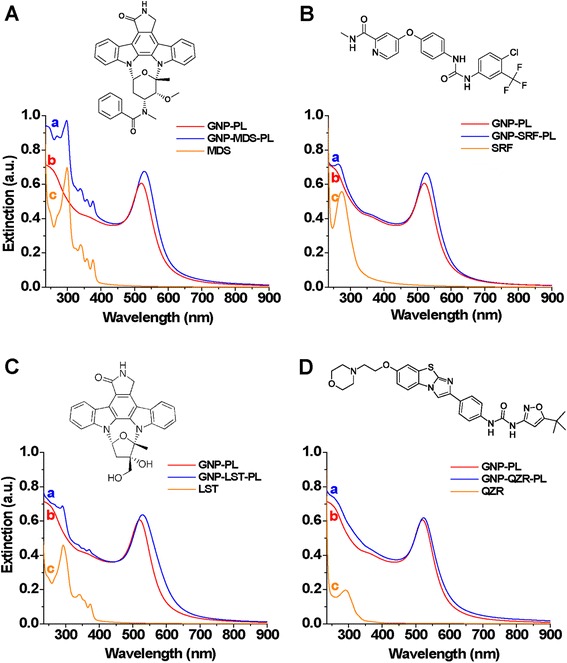
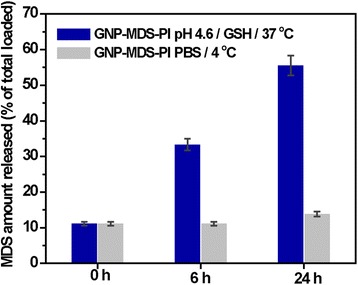
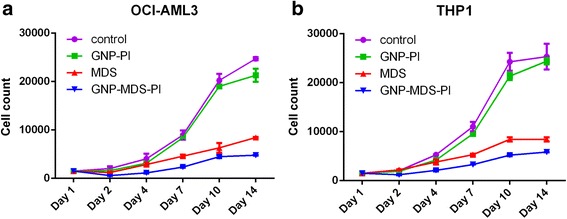
FLT3 inhibitor - gold nanoparticle conjugates were fabricated to serve as vehicles for the delivery of anti-tumor drugs. Lestaurtinib, midostaurin, sorafenib, and quizartinib were selected among the FLT3 inhibitor drugs that are currently used in clinics for the treatment of acute myeloid leukemia. The drugs were loaded onto nanoparticle surface using a conjugation strategy based on hydrophobic-hydrophobic interactions with the Pluronic co-polymer used as nanoparticle surface coating. Optical absorption characterization of the particles in solution showed that FLT3 inhibitor-incorporated gold nanoparticles were uniformly distributed and chemically stable regardless of the drug content. Drug loading study revealed a high drug content in the case of midostaurin drug which also showed increased stability. Drug release test in simulated cancer cell conditions demonstrated more than 56 % release of the entrapped drug, a result that correlates well with the superior cytotoxicity of the nano-conjugates comparatively with the free drug.
This is a pioneering study regarding the efficient loading of gold nanoparticles with selected FLT3 inhibitors. In vitro cytotoxicity assessment shows that FLT3-incorporated gold nanoparticles are promising candidates as vehicles for anti-tumor drugs and demonstrate superior therapeutic effect comparatively with the bare drugs.
在靶向位置释放药物分子可提高大量抗肿瘤治疗的临床疗效,这些治疗需要低全身损伤和低副作用。药物纳米载体因其能够在肿瘤部位特异性积累和释放其负载物而在这项任务中显示出巨大潜力。
制备了FLT3抑制剂 - 金纳米颗粒缀合物,用作抗肿瘤药物递送的载体。从目前临床上用于治疗急性髓性白血病的FLT3抑制剂药物中选择了来他替尼、米哚妥林、索拉非尼和奎扎替尼。使用基于与用作纳米颗粒表面涂层的普朗尼克共聚物的疏水 - 疏水相互作用的缀合策略将药物负载到纳米颗粒表面。溶液中颗粒的光吸收表征表明,无论药物含量如何,掺入FLT3抑制剂的金纳米颗粒均均匀分布且化学稳定。载药研究表明,米哚妥林药物的载药量高,其稳定性也有所提高。在模拟癌细胞条件下的药物释放试验表明,包封药物的释放率超过56%,这一结果与纳米缀合物相对于游离药物的优异细胞毒性密切相关。
这是一项关于用选定的FLT3抑制剂有效负载金纳米颗粒的开创性研究。体外细胞毒性评估表明,掺入FLT3的金纳米颗粒有望作为抗肿瘤药物的载体,并且与裸药相比具有优异的治疗效果。