Lombana T Noelle, Dillon Michael, Bevers Jack, Spiess Christoph
Department of Antibody Engineering, Genentech Research and Early Development, 1 DNA Way, South San Francisco, CA, 94080, USA.
Sci Rep. 2015 Dec 3;5:17488. doi: 10.1038/srep17488.
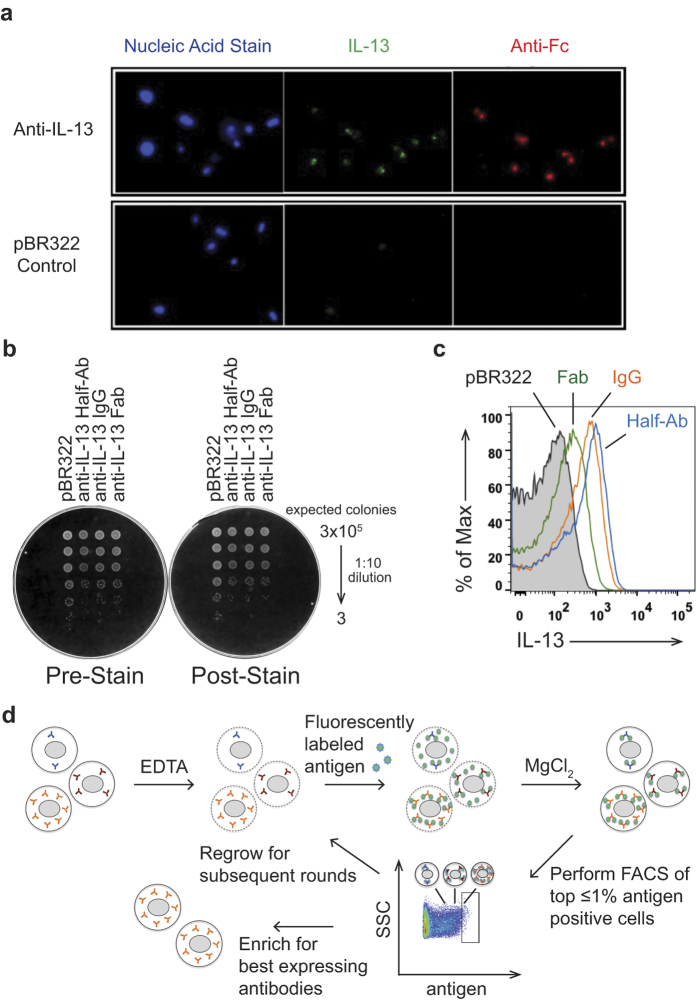
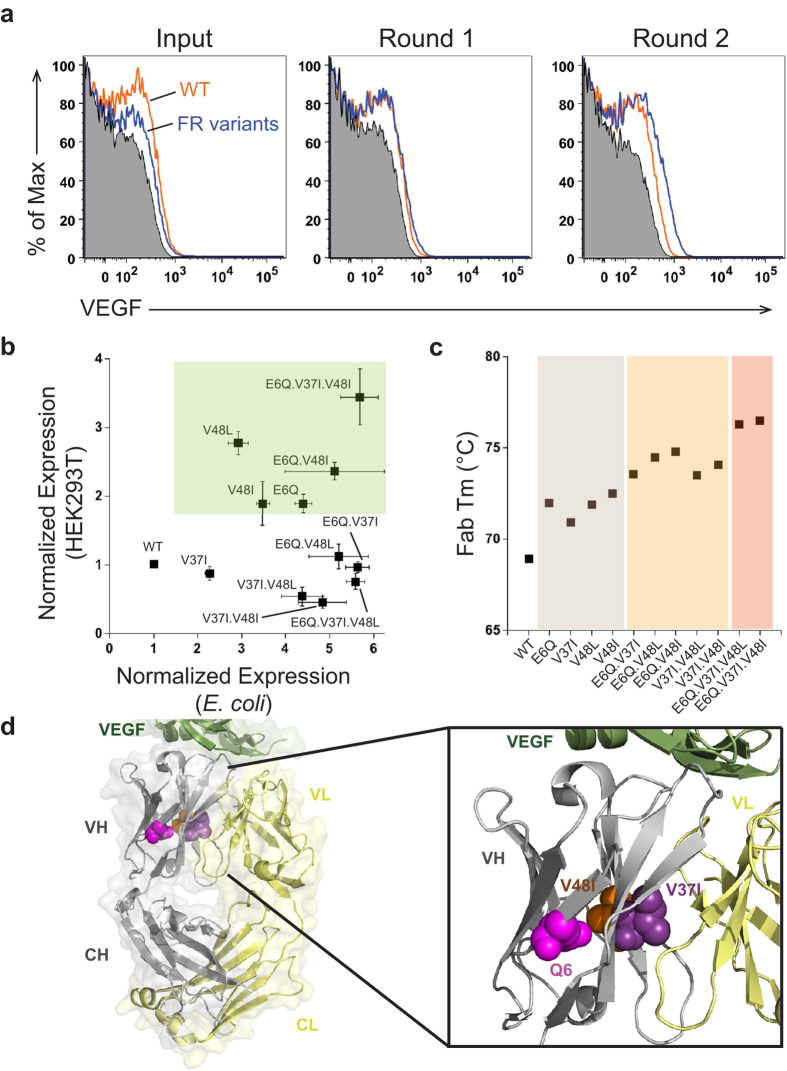
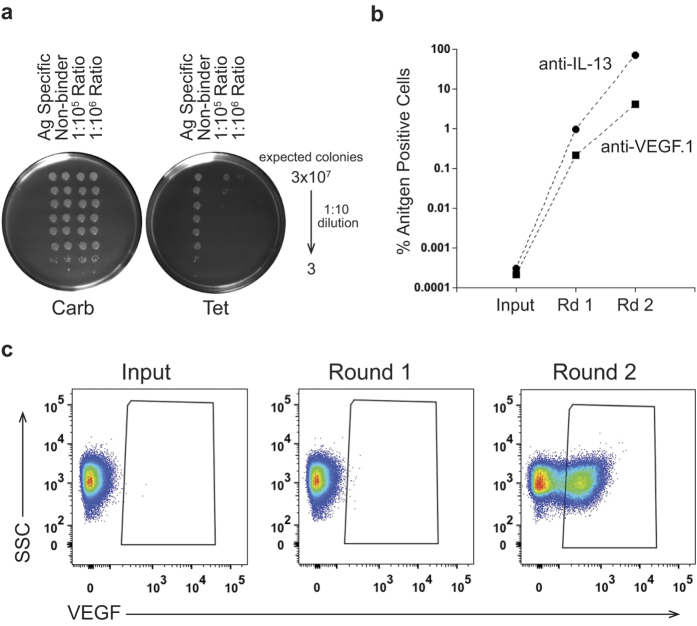
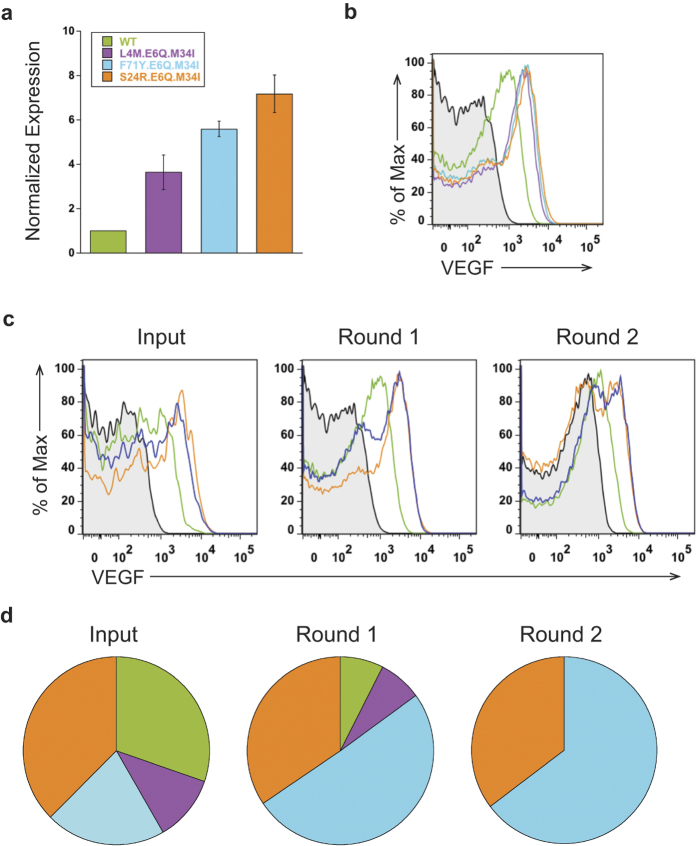
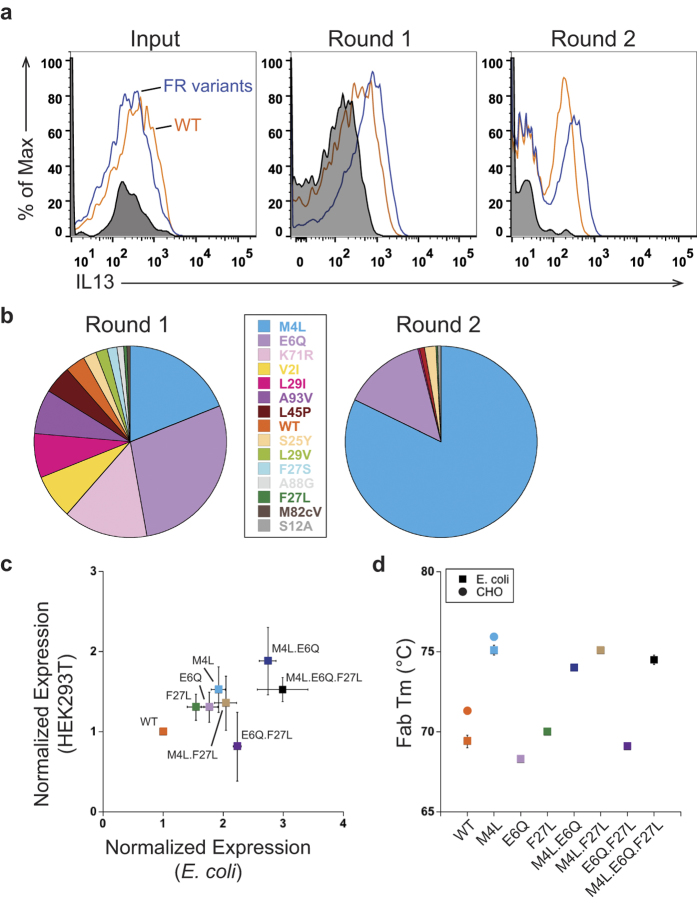
Rapid identification of residues that influence antibody expression and thermostability is often needed to move promising therapeutics into the clinic. To establish a method that can assess small expression differences, we developed a Bacterial Antibody Display (BAD) system that overcomes previous limitations, enabling the use of full-length formats for antibody and antigen in a live cell setting. We designed a unique library of individual framework variants using natural diversity introduced by somatic hypermutation, and screened half-antibodies for increased expression using BAD. We successfully identify variants that dramatically improve expression yields and in vitro thermostability of two therapeutically relevant antibodies in E. coli and mammalian cells. While we study antibody expression, bacterial display can now be expanded to examine the processes of protein folding and translocation. Additionally, our natural library design strategy could be applied during antibody humanization and library design for in vitro display methods to maintain expression and formulation stability.
为了将有前景的治疗性抗体推向临床,通常需要快速鉴定影响抗体表达和热稳定性的残基。为了建立一种能够评估微小表达差异的方法,我们开发了一种细菌抗体展示(BAD)系统,该系统克服了以往的局限性,能够在活细胞环境中使用全长形式的抗体和抗原。我们利用体细胞超突变引入的自然多样性设计了一个独特的个体框架变体文库,并使用BAD筛选半抗体以提高表达。我们成功地鉴定出了能够显著提高两种治疗相关抗体在大肠杆菌和哺乳动物细胞中的表达产量和体外热稳定性的变体。在我们研究抗体表达的同时,细菌展示现在可以扩展到研究蛋白质折叠和转运过程。此外,我们的天然文库设计策略可应用于抗体人源化和体外展示方法的文库设计过程中,以维持表达和制剂稳定性。