Tsutsui Kazuyoshi, Ubuka Takayoshi, Son You Lee, Bentley George E, Kriegsfeld Lance J
Laboratory of Integrative Brain Sciences, Department of Biology and Center for Medical Life Science, Waseda University , Tokyo , Japan.
Laboratory of Integrative Brain Sciences, Department of Biology and Center for Medical Life Science, Waseda University , Tokyo , Japan ; Brain Research Institute Monash Sunway of the Jeffrey Cheah School of Medicine and Health Sciences, Monash University Malaysia , Petaling Jaya , Malaysia.
Front Endocrinol (Lausanne). 2015 Nov 23;6:179. doi: 10.3389/fendo.2015.00179. eCollection 2015.
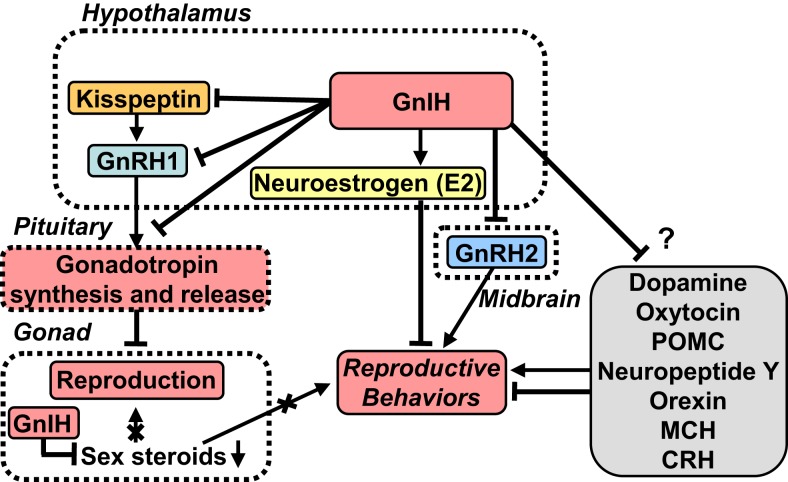
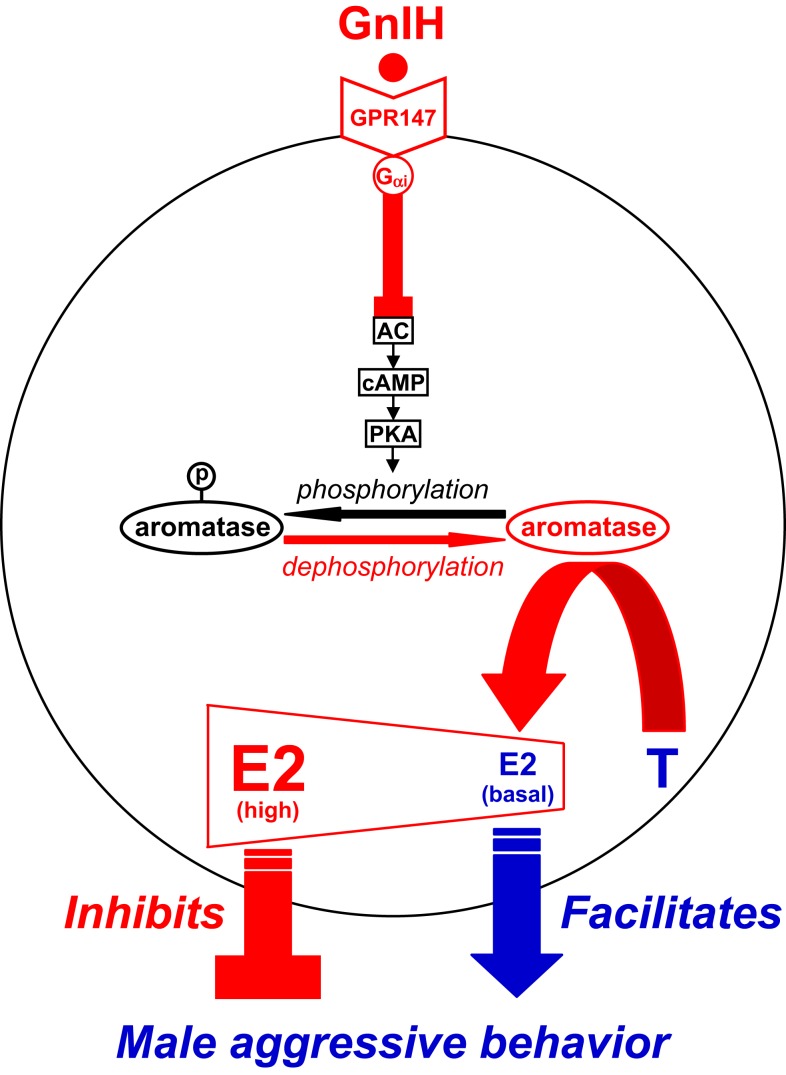
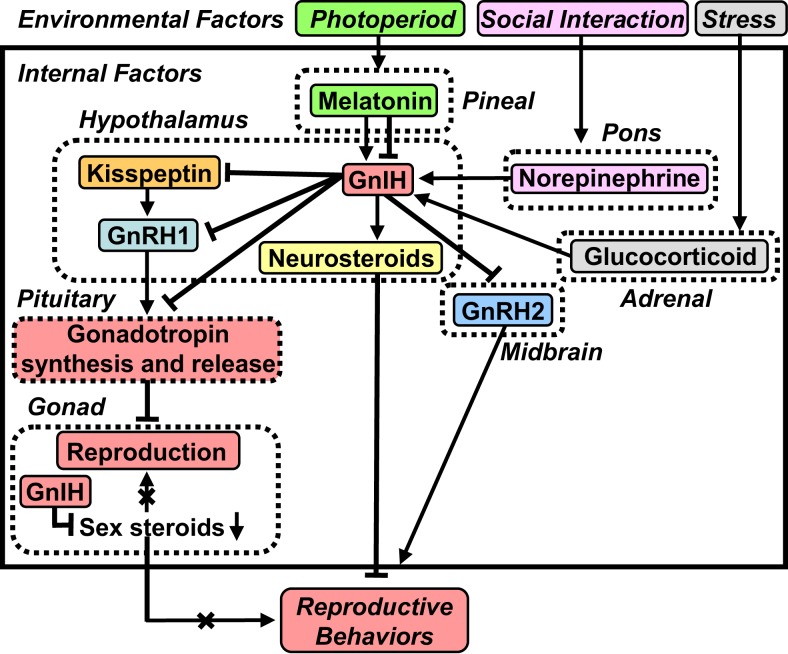
Since the discovery of gonadotropin-releasing hormone (GnRH) in mammals at the beginning of the 1970s, it was generally accepted that GnRH is the only hypothalamic neuropeptide regulating gonadotropin release in mammals and other vertebrates. In 2000, however, gonadotropin-inhibitory hormone (GnIH), a novel hypothalamic neuropeptide that actively inhibits gonadotropin release, was discovered in quail. Numerous studies over the past decade and a half have demonstrated that GnIH serves as a key player regulating reproduction across vertebrates, acting on the brain and pituitary to modulate reproductive physiology and behavior. In the latter case, recent evidence indicates that GnIH can regulate reproductive behavior through changes in neurosteroid, such as neuroestrogen, biosynthesis in the brain. This review summarizes the discovery of GnIH, and the contributions to GnIH research focused on its mode of action, regulation of biosynthesis, and how these findings advance our understanding of reproductive neuroendocrinology.
自20世纪70年代初在哺乳动物中发现促性腺激素释放激素(GnRH)以来,人们普遍认为GnRH是调节哺乳动物和其他脊椎动物促性腺激素释放的唯一下丘脑神经肽。然而,2000年,在鹌鹑中发现了促性腺激素抑制激素(GnIH),这是一种新型下丘脑神经肽,可有效抑制促性腺激素释放。在过去十五年中,大量研究表明,GnIH是调节脊椎动物繁殖的关键因子,作用于大脑和垂体,调节生殖生理和行为。在后一种情况下,最近的证据表明,GnIH可通过改变大脑中神经甾体(如神经雌激素)的生物合成来调节生殖行为。本综述总结了GnIH的发现,以及对GnIH研究的贡献,重点关注其作用方式、生物合成调节,以及这些发现如何推进我们对生殖神经内分泌学的理解。