Hirakawa Yuki, Bowman John L
School of Biological Sciences, Monash University Melbourne, VIC, Australia ; Institute of Transformative Bio-Molecules (WPI-ITbM), Nagoya University Nagoya, Japan.
School of Biological Sciences, Monash University Melbourne, VIC, Australia ; Section of Plant Biology, University of California, Davis Davis, CA, USA.
Front Plant Sci. 2015 Nov 26;6:1048. doi: 10.3389/fpls.2015.01048. eCollection 2015.
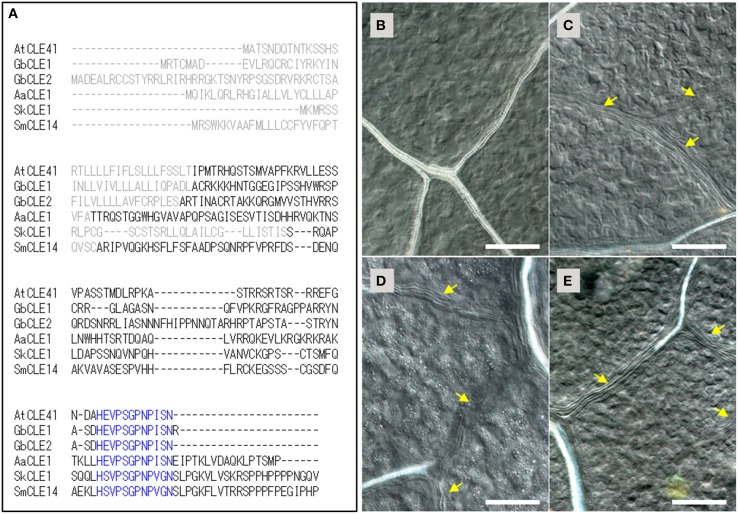
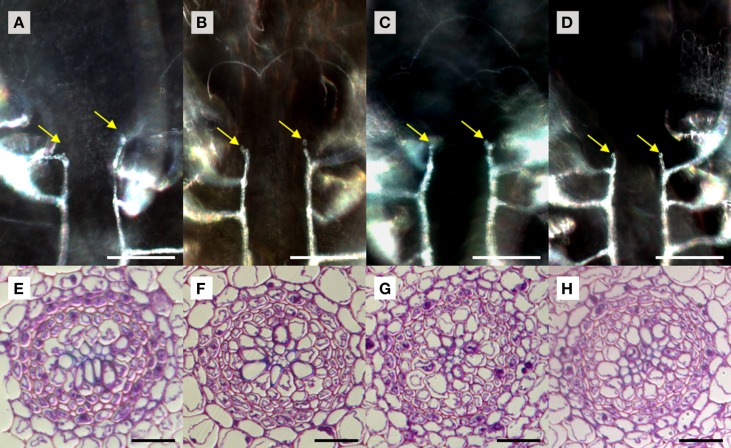
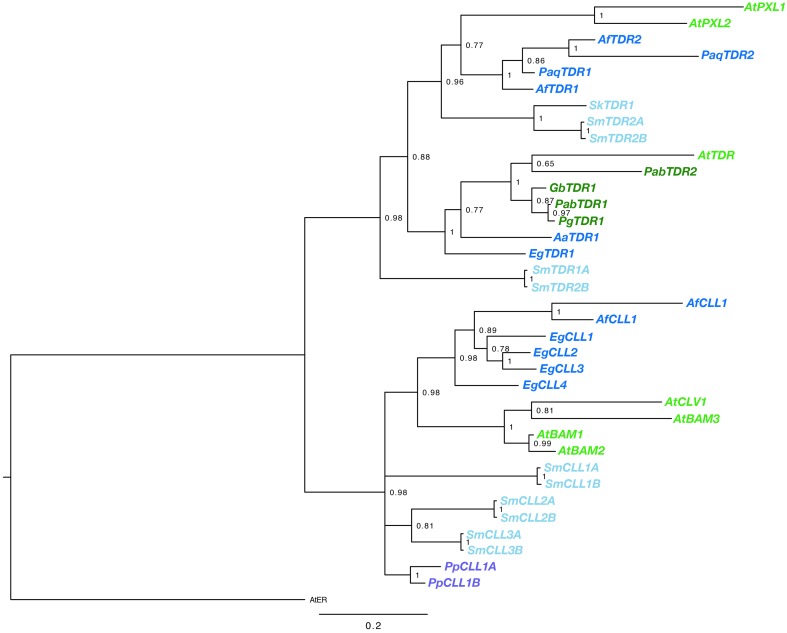
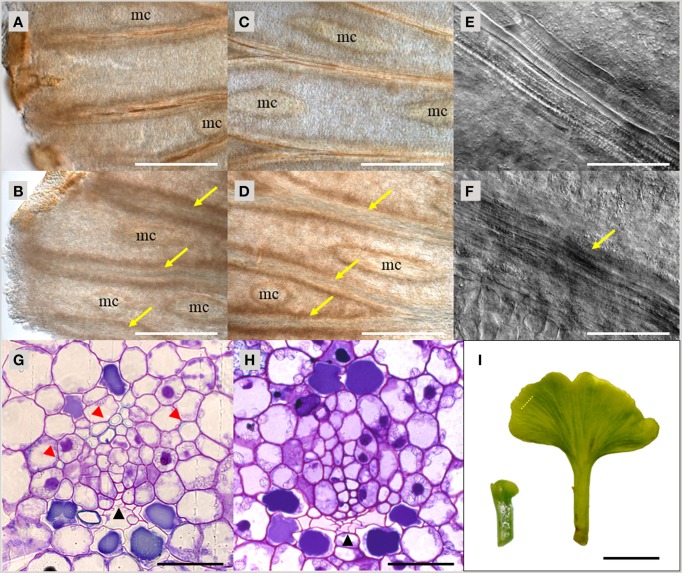
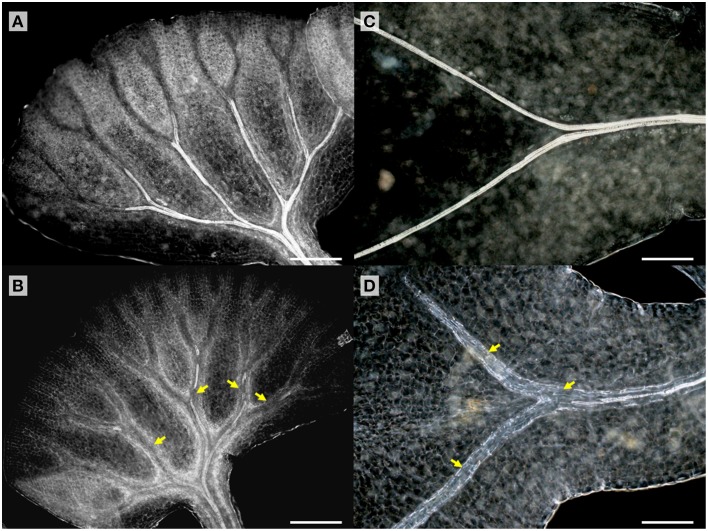
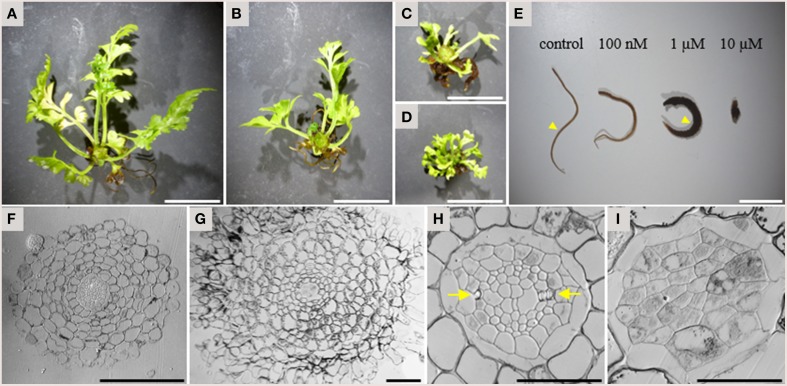
Peptide signals mediate a variety of cell-to-cell communication crucial for plant growth and development. During Arabidopsis thaliana vascular development, a CLE (CLAVATA3/EMBRYO SURROUNDING REGION-related) family peptide hormone, TDIF (tracheary element differentiation inhibitory factor), regulates procambial cell fate by its inhibitory activity on xylem differentiation. To address if this activity is conserved among vascular plants, we performed comparative analyses of TDIF signaling in non-flowering vascular plants (gymnosperms, ferns and lycophytes). We identified orthologs of TDIF/CLE as well as its receptor TDR/PXY (TDIF RECEPTOR/PHLOEM INTERCALATED WITH XYLEM) in Ginkgo biloba, Adiantum aethiopicum, and Selaginella kraussiana by RACE-PCR. The predicted TDIF peptide sequences in seed plants and ferns were identical to that of A. thaliana TDIF. We examined the effects of exogenous CLE peptide-motif sequences of TDIF in these species. We found that liquid culturing of dissected leaves or shoots was useful for examining TDIF activity during vascular development. TDIF treatment suppressed xylem/tracheary element differentiation of procambial cells in G. biloba and A. aethiopicum leaves. In contrast, neither TDIF nor putative endogenous TDIF inhibited xylem differentiation in developing shoots and rhizophores of S. kraussiana. These data suggest that activity of TDIF in vascular development is conserved among extant euphyllophytes. In addition to the conserved function, via liquid culturing of its bulbils, we found a novel inhibitory activity on root growth in the fern Asplenium × lucrosum suggesting lineage-specific co-option of peptide signaling occurred during the evolution of vascular plant organs.
肽信号介导了多种对植物生长和发育至关重要的细胞间通讯。在拟南芥维管发育过程中,一种CLE(CLAVATA3/胚珠周围区域相关)家族肽激素TDIF(管状分子分化抑制因子)通过其对木质部分化的抑制活性来调节原形成层细胞命运。为了探究这种活性在维管植物中是否保守,我们对非开花维管植物(裸子植物、蕨类植物和石松类植物)中的TDIF信号传导进行了比较分析。我们通过RACE-PCR在银杏、埃塞俄比亚铁线蕨和克氏卷柏中鉴定出了TDIF/CLE及其受体TDR/PXY(TDIF受体/与木质部相间的韧皮部)的直系同源物。种子植物和蕨类植物中预测的TDIF肽序列与拟南芥TDIF的序列相同。我们检测了这些物种中外源TDIF的CLE肽基序序列的作用。我们发现,对解剖后的叶片或茎进行液体培养,有助于检测维管发育过程中的TDIF活性。TDIF处理抑制了银杏和埃塞俄比亚铁线蕨叶片中原形成层细胞的木质部/管状分子分化。相比之下,TDIF和假定的内源性TDIF均未抑制克氏卷柏发育中的茎和根状茎的木质部分化。这些数据表明,TDIF在维管发育中的活性在现存的真叶植物中是保守的。除了这种保守功能外,通过对其珠芽进行液体培养,我们在蕨类植物亮叶铁角蕨中发现了一种对根生长的新抑制活性,这表明在维管植物器官的进化过程中发生了肽信号传导的谱系特异性选择。