Kang Xunlei, Kim Jaehyup, Deng Mi, John Samuel, Chen Heyu, Wu Guojin, Phan Hiep, Zhang Cheng Cheng
a Department of Physiology , University of Texas Southwestern Medical Center , Dallas , TX , USA.
Cell Cycle. 2016;15(1):25-40. doi: 10.1080/15384101.2015.1121324.
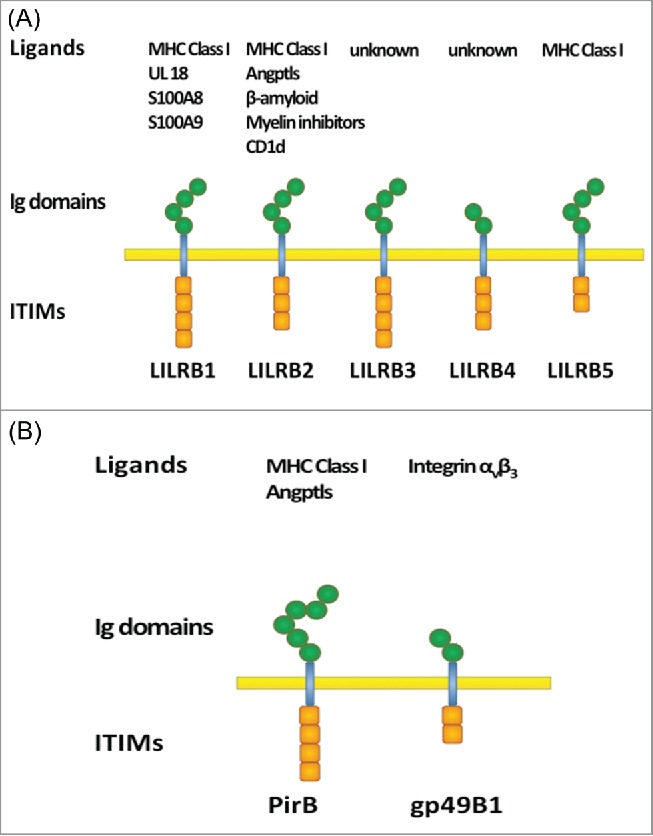
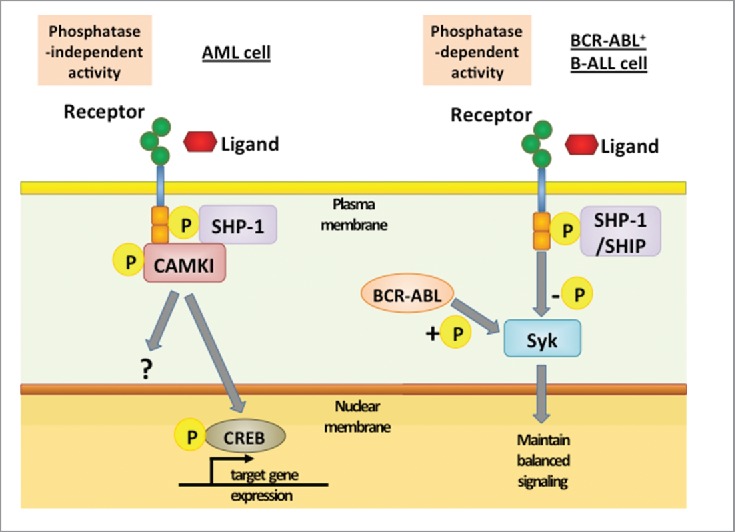
Inhibitory leukocyte immunoglobulin-like receptors (LILRBs 1-5) transduce signals via intracellular immunoreceptor tyrosine-based inhibitory motifs (ITIMs) that recruit protein tyrosine phosphatase non-receptor type 6 (PTPN6 or SHP-1), protein tyrosine phosphatase non-receptor type 11 (PTPN11 or SHP-2), or Src homology 2 domain-containing inositol phosphatase (SHIP), leading to negative regulation of immune cell activation. Certain of these receptors also play regulatory roles in neuronal activity and osteoclast development. The activation of LILRBs on immune cells by their ligands may contribute to immune evasion by tumors. Recent studies found that several members of LILRB family are expressed by tumor cells, notably hematopoietic cancer cells, and may directly regulate cancer development and relapse as well as the activity of cancer stem cells. LILRBs thus have dual concordant roles in tumor biology - as immune checkpoint molecules and as tumor-sustaining factors. Importantly, the study of knockout mice indicated that LILRBs do not affect hematopoiesis and normal development. Therefore LILRBs may represent ideal targets for tumor treatment. This review aims to summarize current knowledge on expression patterns, ligands, signaling, and functions of LILRB family members in the context of cancer development.
抑制性白细胞免疫球蛋白样受体(LILRB 1 - 5)通过细胞内基于免疫受体酪氨酸的抑制性基序(ITIM)转导信号,这些基序可募集非受体型蛋白酪氨酸磷酸酶6(PTPN6或SHP - 1)、非受体型蛋白酪氨酸磷酸酶11(PTPN11或SHP - 2)或含Src同源2结构域的肌醇磷酸酶(SHIP),从而对免疫细胞激活进行负调控。其中某些受体在神经元活动和破骨细胞发育中也发挥调节作用。其配体对免疫细胞上LILRB的激活可能有助于肿瘤的免疫逃逸。最近的研究发现,LILRB家族的几个成员由肿瘤细胞表达,尤其是造血癌细胞,并且可能直接调节癌症的发展和复发以及癌症干细胞的活性。因此,LILRB在肿瘤生物学中具有双重一致的作用——作为免疫检查点分子和肿瘤维持因子。重要的是,对基因敲除小鼠的研究表明,LILRB不影响造血和正常发育。因此,LILRB可能是肿瘤治疗的理想靶点。本综述旨在总结关于LILRB家族成员在癌症发展背景下的表达模式、配体、信号传导和功能的现有知识。