Rabbi S M F, Tighe Matthew, Delgado-Baquerizo Manuel, Cowie Annette, Robertson Fiona, Dalal Ram, Page Kathryn, Crawford Doug, Wilson Brian R, Schwenke Graeme, Mcleod Malem, Badgery Warwick, Dang Yash P, Bell Mike, O'Leary Garry, Liu De Li, Baldock Jeff
School of Environmental and Rural Science, University of New England (UNE), Armidale, NSW 2351, Australia.
Hawkesbury Institute for the Environment, University of Western Sydney, Richmond, NSW 2753, Australia.
Sci Rep. 2015 Dec 7;5:17866. doi: 10.1038/srep17866.
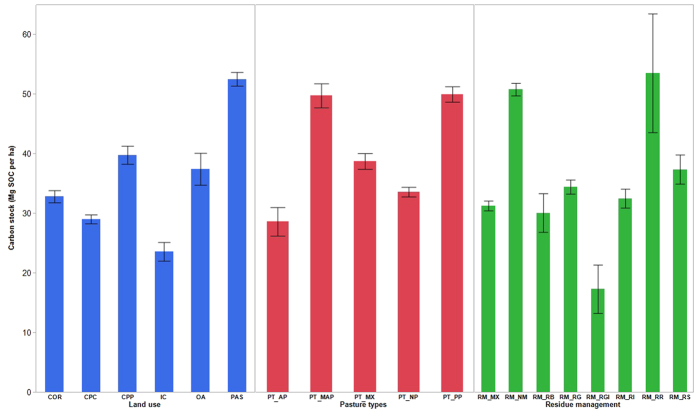
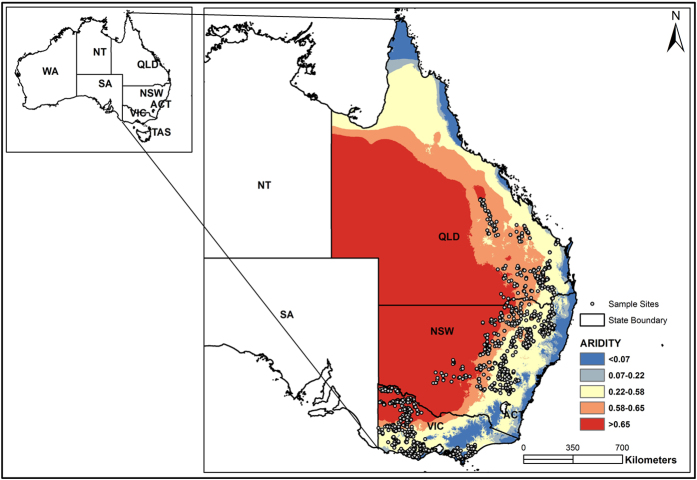
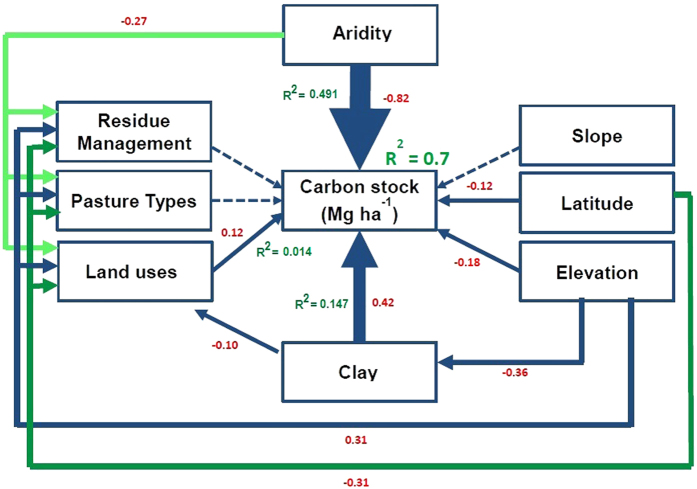
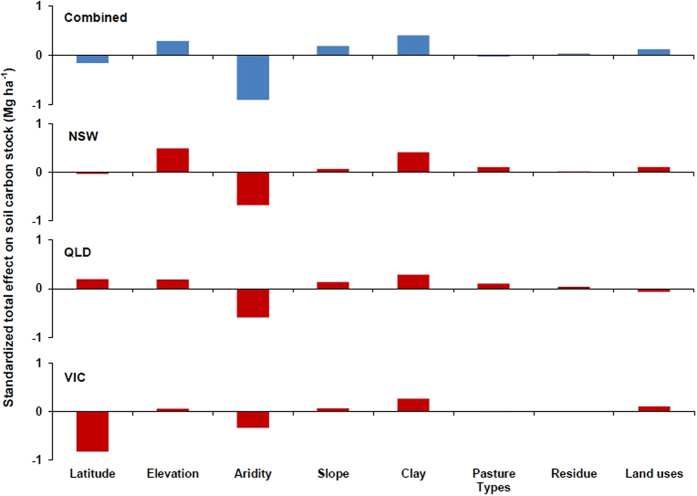
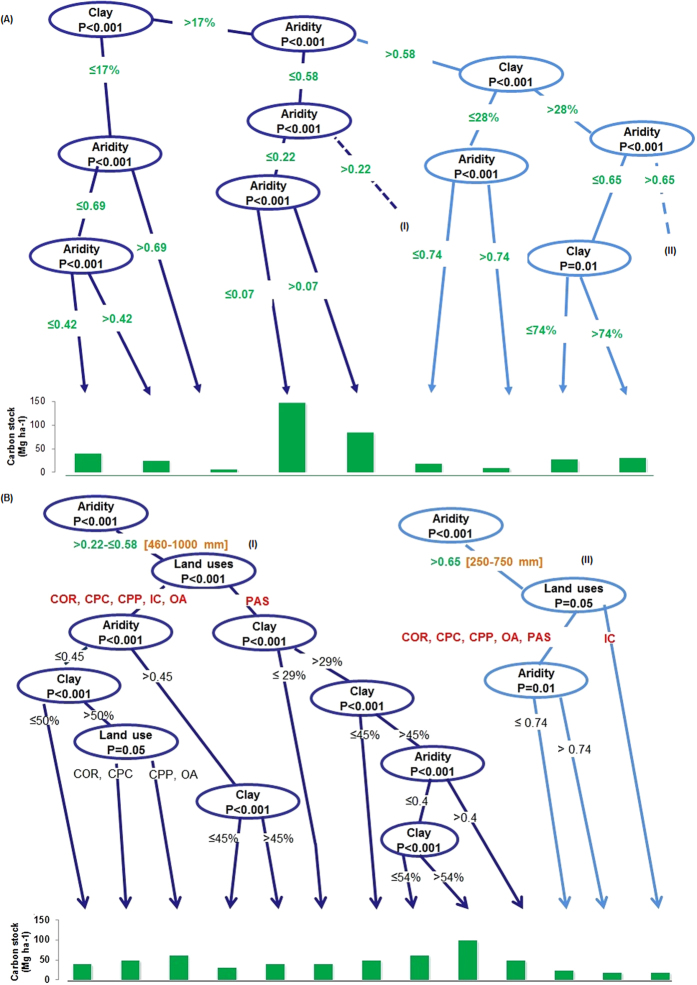
Australia's "Direct Action" climate change policy relies on purchasing greenhouse gas abatement from projects undertaking approved abatement activities. Management of soil organic carbon (SOC) in agricultural soils is an approved activity, based on the expectation that land use change can deliver significant changes in SOC. However, there are concerns that climate, topography and soil texture will limit changes in SOC stocks. This work analyses data from 1482 sites surveyed across the major agricultural regions of Eastern Australia to determine the relative importance of land use vs. other drivers of SOC. Variation in land use explained only 1.4% of the total variation in SOC, with aridity and soil texture the main regulators of SOC stock under different land uses. Results suggest the greatest potential for increasing SOC stocks in Eastern Australian agricultural regions lies in converting from cropping to pasture on heavy textured soils in the humid regions.
澳大利亚的“直接行动”气候变化政策依赖于从开展经批准的减排活动的项目中购买温室气体减排量。农业土壤中土壤有机碳(SOC)的管理是一项经批准的活动,其依据是土地利用变化能够带来土壤有机碳的显著变化这一预期。然而,有人担心气候、地形和土壤质地会限制土壤有机碳储量的变化。这项研究分析了澳大利亚东部主要农业地区1482个调查点的数据,以确定土地利用相对于其他土壤有机碳驱动因素的相对重要性。土地利用变化仅解释了土壤有机碳总变化量的1.4%,干旱和土壤质地是不同土地利用方式下土壤有机碳储量的主要调节因素。结果表明,在澳大利亚东部农业地区,增加土壤有机碳储量的最大潜力在于在湿润地区将质地较重的土壤上的作物种植改为牧场。