Research Center of Gastroenterology and Hepatology Craiova, University of Medicine and Pharmacy Craiova, Craiova, Romania; Department of Endoscopy, Gastrointestinal Unit, Copenhagen University Hospital Herlev, Copenhagen, Denmark, .
Endosc Ultrasound. 2015 Oct-Dec;4(4):330-5. doi: 10.4103/2303-9027.170426.
The treatment of pancreatic cancer represents a major objective in clinical research, as it still remains the fourth leading cause of cancer deaths among men and women, with approximately 6% of all cancer-related deaths.
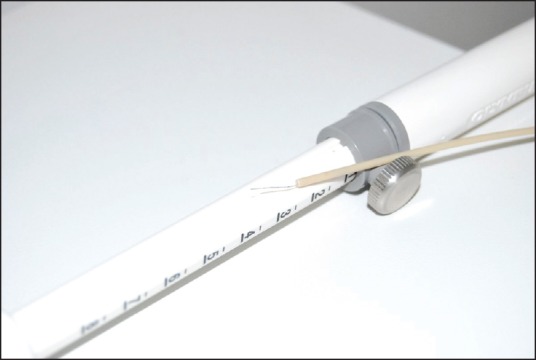
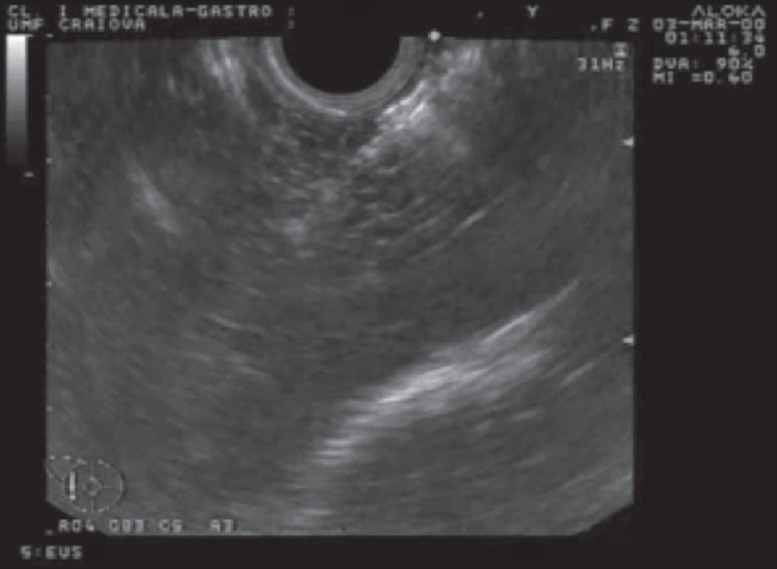
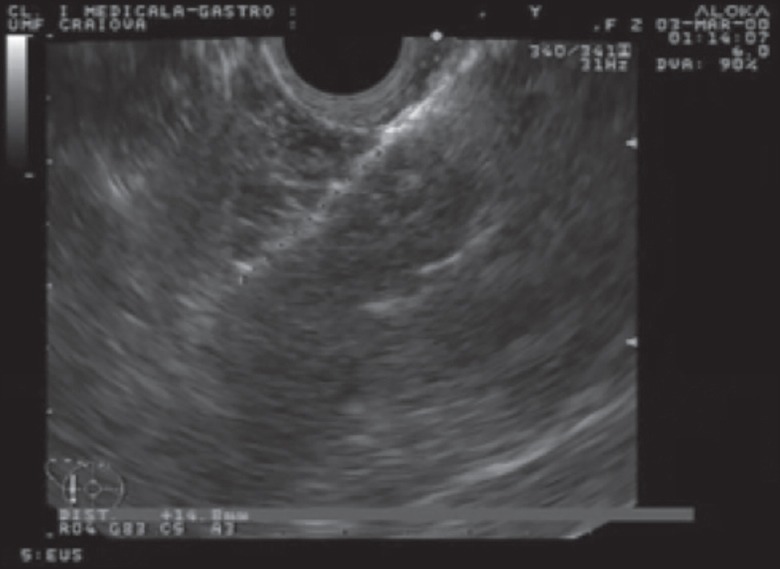
We studied the assessment of an endoscopic ultrasound (EUS)-guided radiofrequency ablation (RFA) probe through a 19G needle in order to achieve a desirable necrosis area in the pancreas. Radiofrequency ablation of the head of the pancreas was performed on 10 Yorkshire pigs with a weight between 25 kg and 35 kg and a length of 40-70 cm. Using an EUS-guided RFA experimental probe, we ablated an area of 2-3 cm width. The biological samples were harvested after 3 days and 5 days and necropsy was performed 1 week after the procedure.
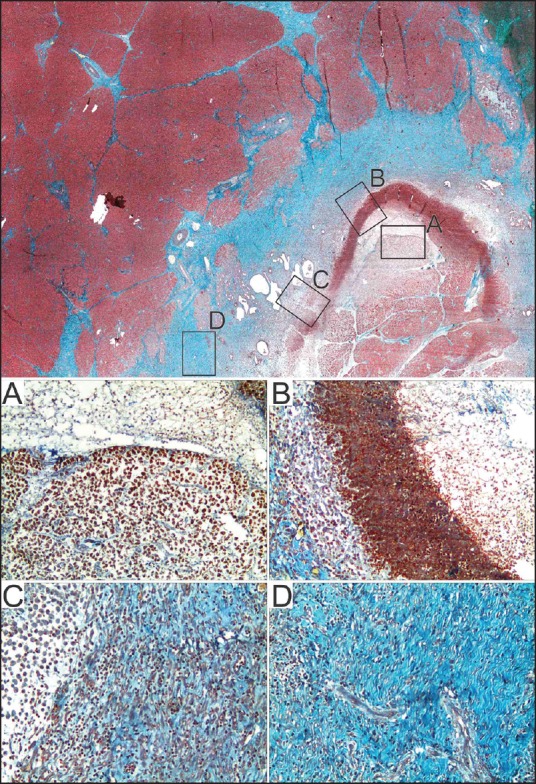
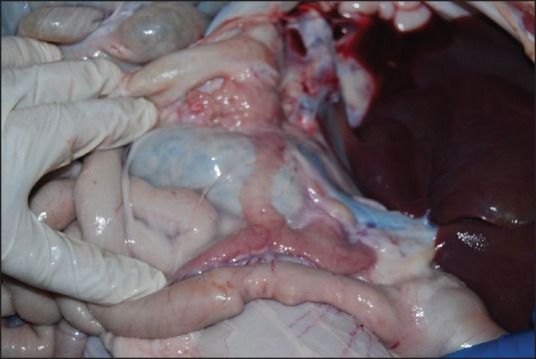
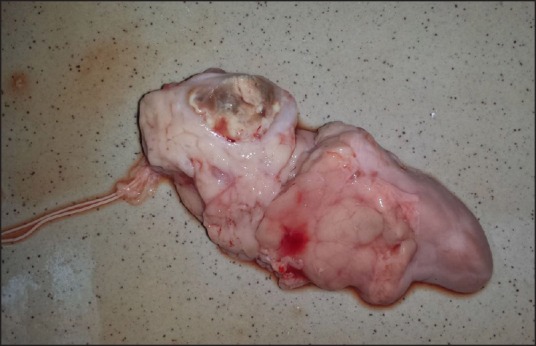
All pigs showed no significant change regarding their behavior and no signs of complication was encountered. Blood analysis revealed increased values of amylase, alkaline phosphatase, and gamma-glutamyl transpeptidase on the 3rd day but a decrease on the 5th day. After necropsy and isolation of the pancreas, the ablated area was easily found, describing a solid necrosis. The pathological examination revealed a coagulative necrosis area with minimal invasion and inflammatory tissue at about 2 cm surrounding the lesion.
EUS-RFA is a feasible technique and might represent a promising therapy for the future treatment of pancreatic cancer. However, further studies are necessary to investigate EUS-guided RFA as an option for palliation in pancreatic cancer until it can be successfully used in human patients.
胰腺癌的治疗是临床研究的主要目标,因为它仍然是男性和女性癌症死亡的第四大主要原因,约占所有癌症相关死亡的 6%。
我们研究了通过 19G 针评估内镜超声 (EUS)-引导的射频消融 (RFA) 探针,以实现胰腺中理想的坏死区域。对 10 头体重在 25 公斤至 35 公斤之间、体长在 40-70 厘米之间的约克夏猪进行了胰头部射频消融。使用 EUS 引导的 RFA 实验探针,我们消融了 2-3 厘米宽的区域。在第 3 天和第 5 天采集生物样本,并在手术后 1 周进行尸检。
所有猪的行为均无明显变化,也未出现并发症迹象。血液分析显示第 3 天淀粉酶、碱性磷酸酶和γ-谷氨酰转肽酶值升高,但第 5 天下降。尸检和胰腺分离后,很容易找到消融区域,描述为实性坏死。病理检查显示,病变周围约 2 厘米处有一个最小侵袭性和炎症组织的凝固性坏死区。
EUS-RFA 是一种可行的技术,可能代表未来治疗胰腺癌的一种有前途的治疗方法。然而,需要进一步的研究来调查 EUS 引导的 RFA 作为胰腺癌姑息治疗的一种选择,直到它能够成功地用于人类患者。