Bryant Jessica A, Aylward Frank O, Eppley John M, Karl David M, Church Matthew J, DeLong Edward F
Department of Civil and Environmental Engineering Massachusetts Institute of Technology, Cambridge, MA, USA.
Daniel K. Inouye Center for Microbial Oceanography, Research and Education, University of Hawaii, Manoa, Honolulu, HI, USA.
ISME J. 2016 Jun;10(6):1308-22. doi: 10.1038/ismej.2015.221. Epub 2015 Dec 8.
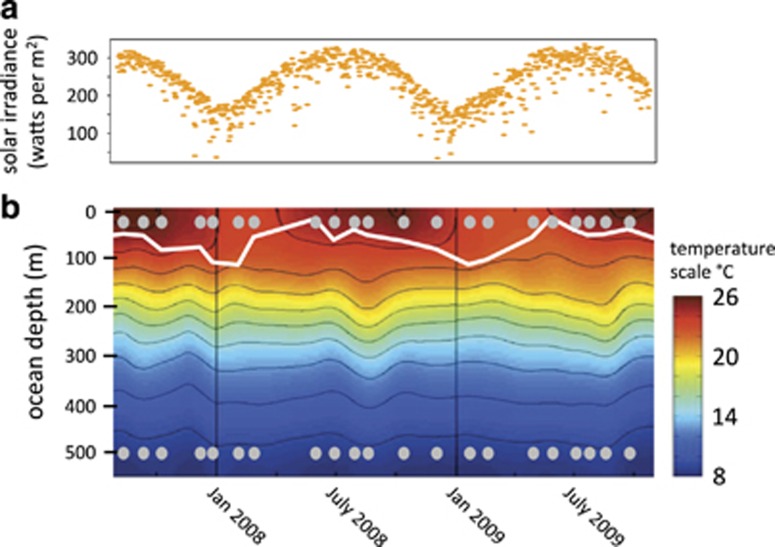
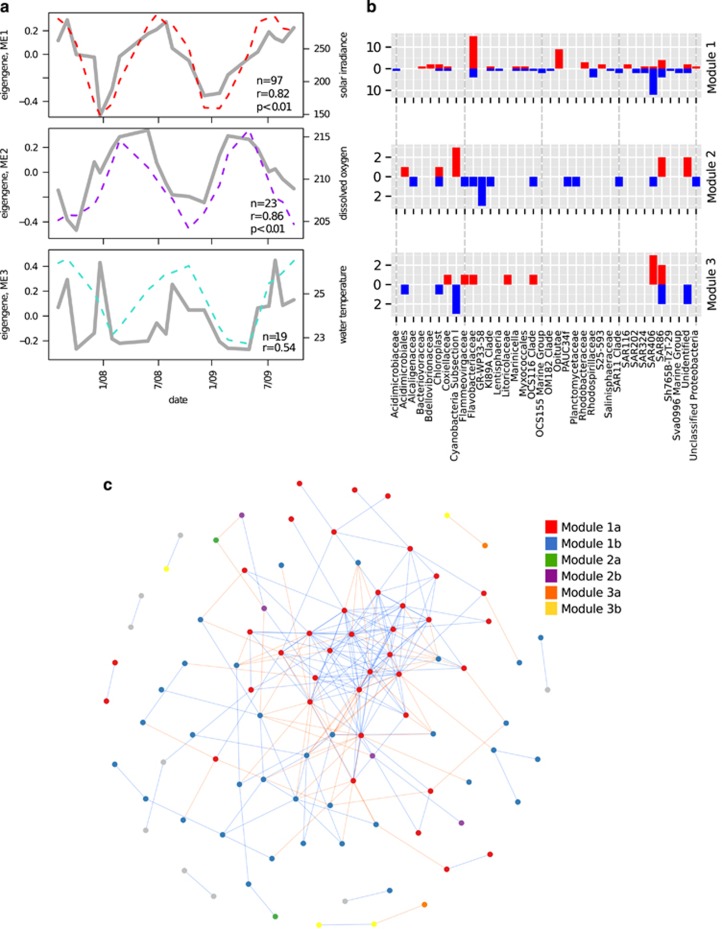
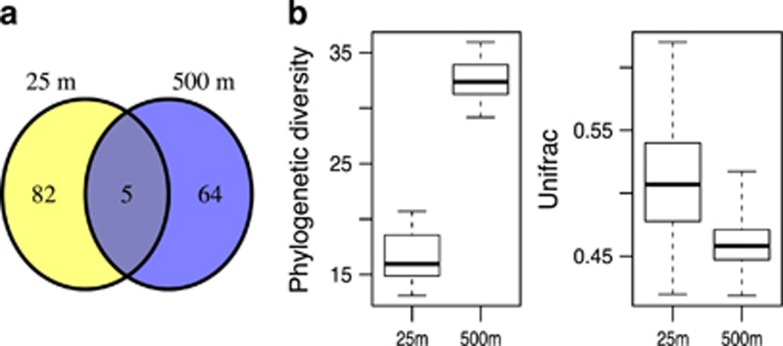
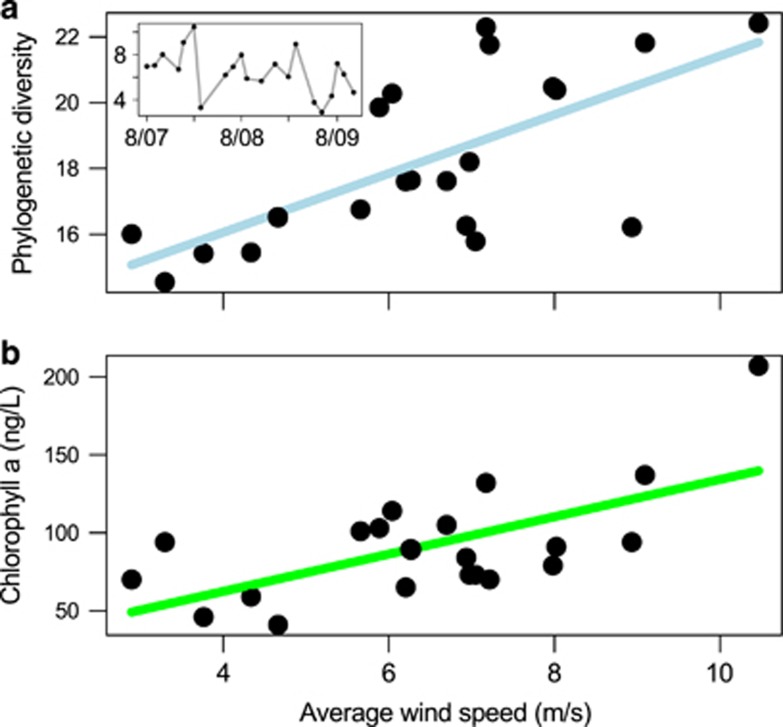
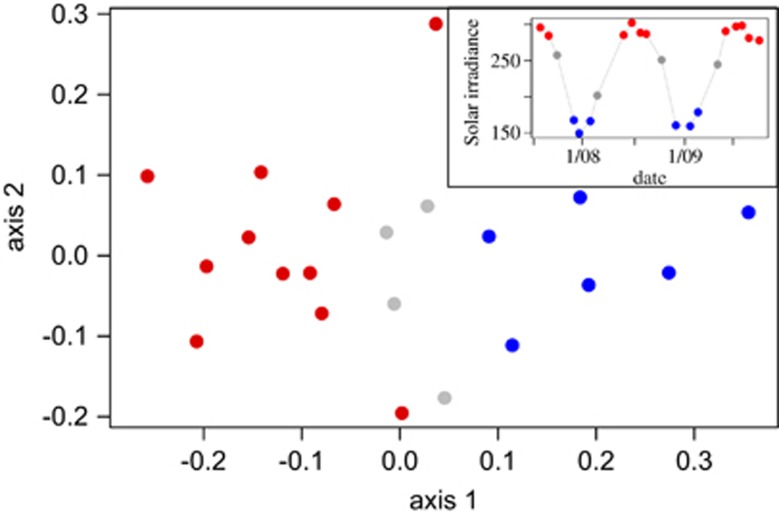
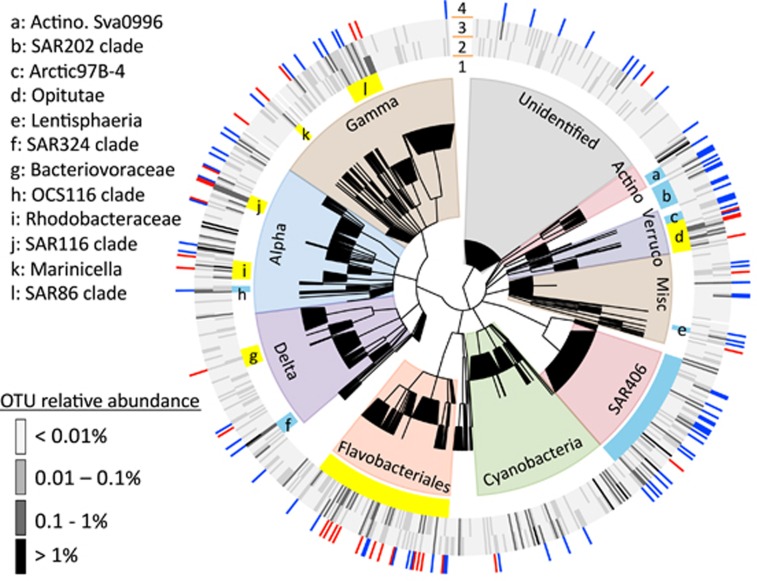
Few microbial time-series studies have been conducted in open ocean habitats having low seasonal variability such as the North Pacific Subtropical Gyre (NPSG), where surface waters experience comparatively mild seasonal variation. To better describe microbial seasonal variability in this habitat, we analyzed rRNA amplicon and shotgun metagenomic data over two years at the Hawaii Ocean Time-series Station ALOHA. We postulated that this relatively stable habitat might reveal different environmental factors that influence planktonic microbial community diversity than those previously observed in more seasonally dynamic habitats. Unexpectedly, the data showed that microbial diversity at 25 m was positively correlated with average wind speed 3 to 10 days prior to sampling. In addition, microbial community composition at 25 m exhibited significant correlations with solar irradiance. Many bacterial groups whose relative abundances varied with solar radiation corresponded to taxa known to exhibit strong seasonality in other oceanic regions. Network co-correlation analysis of 25 m communities showed seasonal transitions in composition, and distinct successional cohorts of co-occurring phylogenetic groups. Similar network analyses of metagenomic data also indicated distinct seasonality in genes originating from cyanophage, and several bacterial clades including SAR116 and SAR324. At 500 m, microbial community diversity and composition did not vary significantly with any measured environmental parameters. The minimal seasonal variability in the NPSG facilitated detection of more subtle environmental influences, such as episodic wind variation, on surface water microbial diversity. Community composition in NPSG surface waters varied in response to solar irradiance, but less dramatically than reported in other ocean provinces.
很少有微生物时间序列研究在季节性变化较小的开阔海洋栖息地进行,比如北太平洋亚热带环流(NPSG),其表层水经历相对温和的季节性变化。为了更好地描述该栖息地微生物的季节性变化,我们分析了夏威夷海洋时间序列站ALOHA两年间的rRNA扩增子和鸟枪法宏基因组数据。我们推测,这个相对稳定的栖息地可能会揭示出与之前在季节性变化更大的栖息地中观察到的不同的影响浮游微生物群落多样性的环境因素。出乎意料的是,数据显示,25米深处的微生物多样性与采样前3至10天的平均风速呈正相关。此外,25米深处的微生物群落组成与太阳辐照度呈现出显著的相关性。许多相对丰度随太阳辐射变化的细菌类群与已知在其他海洋区域表现出强烈季节性的分类群相对应。对25米深处群落的网络共相关分析显示了组成上的季节性转变,以及同时出现的系统发育类群的不同演替群组。对宏基因组数据的类似网络分析也表明,来自蓝噬菌体以及包括SAR116和SAR324在内的几个细菌分支的基因存在明显的季节性。在500米深处,微生物群落多样性和组成并未随任何测量的环境参数发生显著变化。NPSG最小的季节性变化有助于检测到更细微的环境影响,例如偶发的风变化,对表层水微生物多样性的影响。NPSG表层水的群落组成随太阳辐照度而变化,但变化程度不如其他海洋区域报道的那么显著。