Liu Tong, Han Qingjian, Chen Gang, Huang Ya, Zhao Lin-Xia, Berta Temugin, Gao Yong-Jing, Ji Ru-Rong
Department of Anesthesiology, Duke University Medical Center, Durham, NC, USA Jiangsu Key Laboratory of Translational Research and Therapy for Neuro-Psycho-Diseases, Institute of Neuroscience, Soochow University, Suzhou, Jiangsu, China Pain Research Laboratory, Institute of Nautical Medicine, Nantong University, Nantong, Jiangsu, China Department of Neurobiology, Duke University Medical Center, Durham, NC, USA.
Pain. 2016 Apr;157(4):806-817. doi: 10.1097/j.pain.0000000000000439.
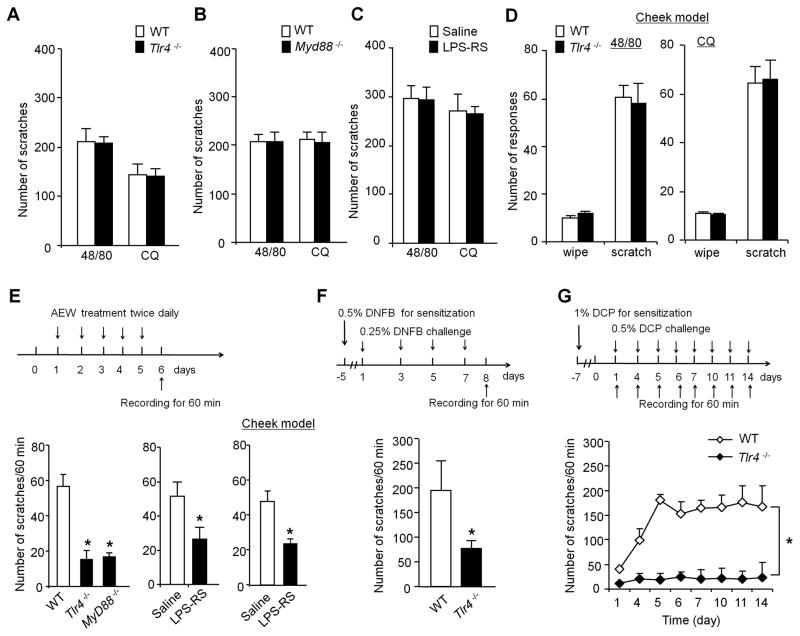
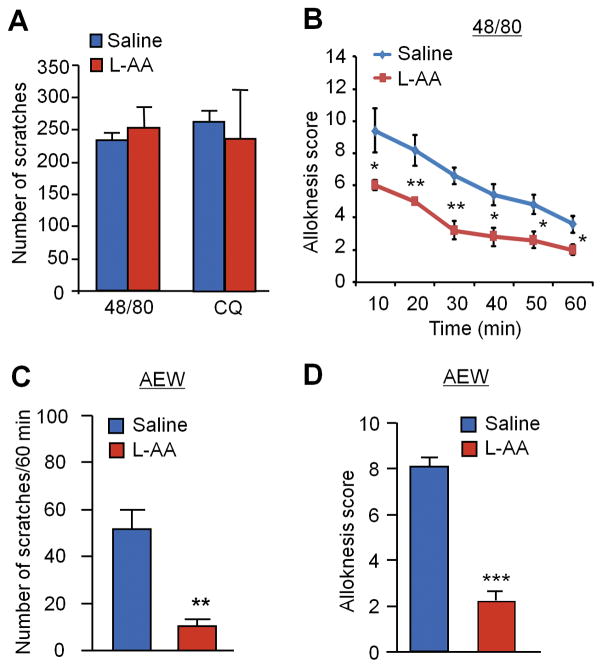
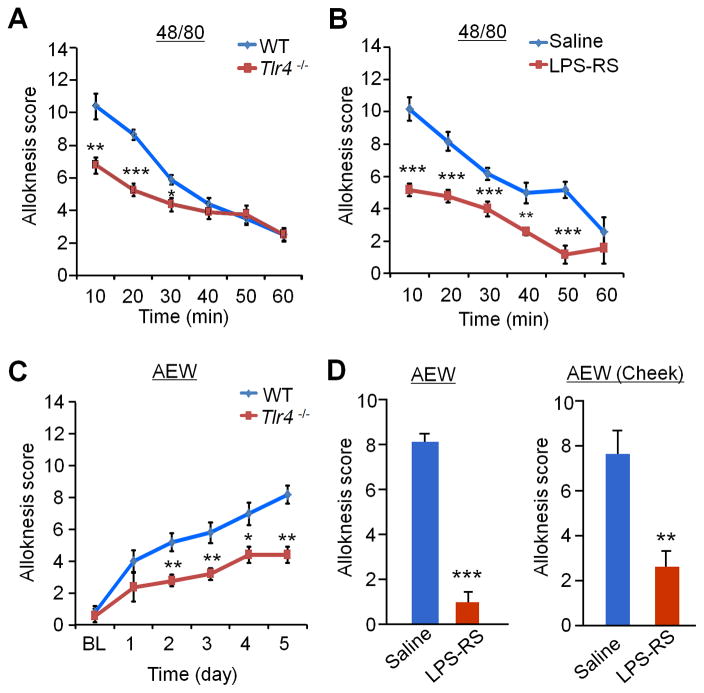
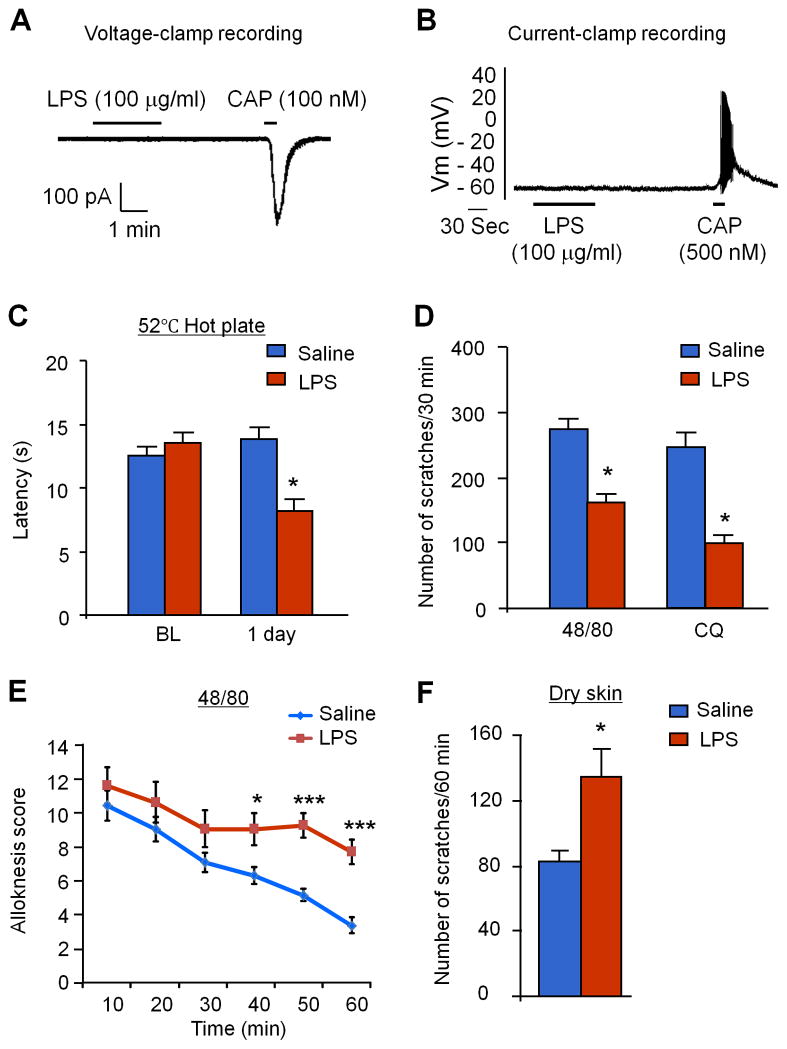
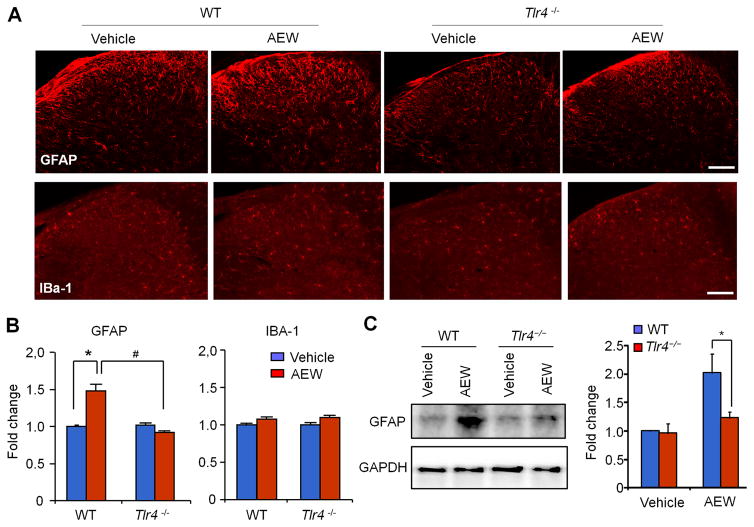
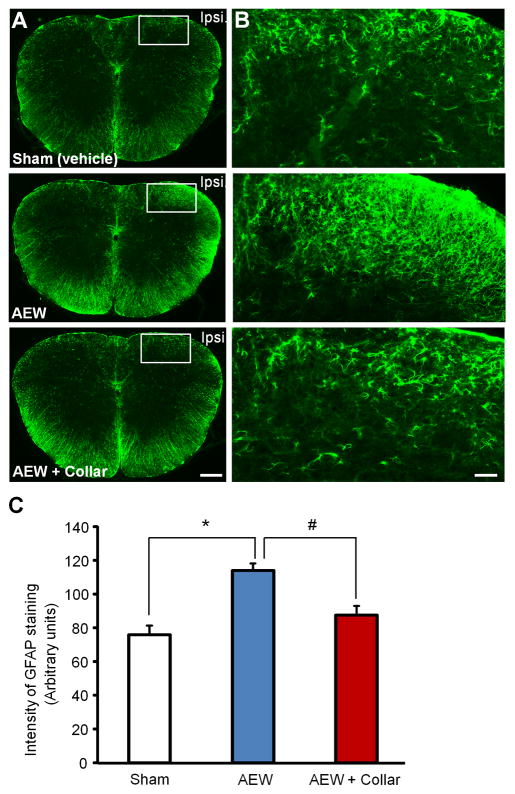
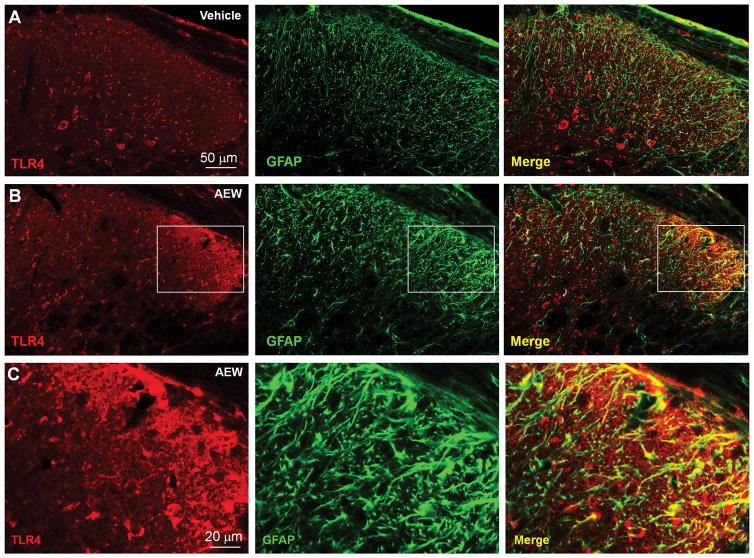
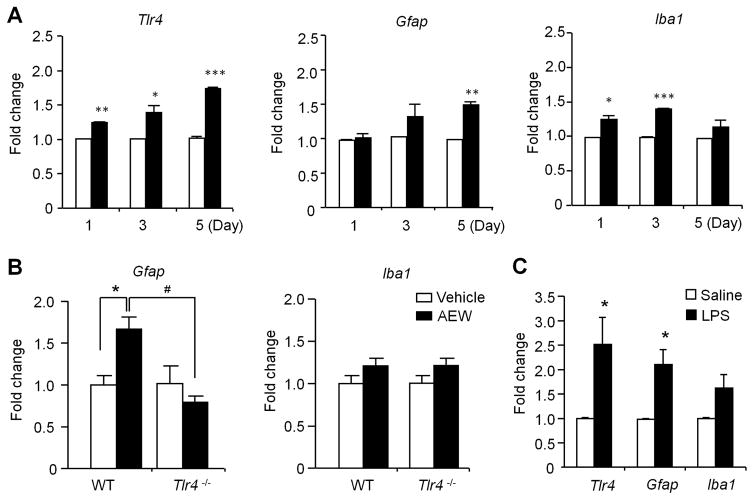
Increasing evidence suggests that Toll-like receptor 4 (TLR4) contributes importantly to spinal cord glial activation and chronic pain sensitization; however, its unique role in acute and chronic itch is unclear. In this study, we investigated the involvement of TLR4 in acute and chronic itch models in male mice using both transgenic and pharmacological approaches. Tlr4 mice exhibited normal acute itch induced by compound 48/80 and chloroquine, but these mice showed substantial reductions in scratching in chronic itch models of dry skin, induced by acetone and diethylether followed by water (AEW), contact dermatitis, and allergic contact dermatitis on the neck. Intrathecal (spinal) inhibition of TLR4 with lipopolysaccharide Rhodobacter sphaeroides did not affect acute itch but suppressed AEW-induced chronic itch. Compound 48/80 and AEW also produced robust alloknesis, a touch-elicited itch in wild-type mice, which was suppressed by intrathecal lipopolysaccharide R sphaeroides and Tlr4 deletion. Acetone and diethylether followed by water induced persistent upregulation of Tlr4 mRNA and increased TLR4 expression in GFAP-expressing astrocytes in spinal cord dorsal horn. Acetone and diethylether followed by water also induced TLR4-dependent astrogliosis (GFAP upregulation) in spinal cord. Intrathecal injection of astroglial inhibitor L-α-aminoadipate reduced AEW-induced chronic itch and alloknesis without affecting acute itch. Spinal TLR4 was also necessary for AEW-induced chronic itch in the cheek model. Interestingly, scratching plays an essential role in spinal astrogliosis because AEW-induced astrogliosis was abrogated by putting Elizabethan collars on the neck to prevent scratching the itchy skin. Our findings suggest that spinal TLR4 signaling is important for spinal astrocyte activation and astrogliosis that may underlie alloknesis and chronic itch.
越来越多的证据表明,Toll样受体4(TLR4)对脊髓胶质细胞激活和慢性疼痛敏化起着重要作用;然而,其在急性和慢性瘙痒中的独特作用尚不清楚。在本研究中,我们使用转基因和药理学方法研究了TLR4在雄性小鼠急性和慢性瘙痒模型中的作用。Tlr4基因敲除小鼠对化合物48/80和氯喹诱导的急性瘙痒表现正常,但在由丙酮和乙醚处理后再用水处理(AEW)、接触性皮炎以及颈部过敏性接触性皮炎诱导的慢性瘙痒模型中,这些小鼠的抓挠行为显著减少。鞘内(脊髓)注射球形红细菌脂多糖抑制TLR4不影响急性瘙痒,但可抑制AEW诱导的慢性瘙痒。化合物48/80和AEW还会在野生型小鼠中引发强烈的异触觉,即触摸诱发瘙痒,鞘内注射球形红细菌脂多糖和Tlr4基因敲除可抑制这种现象。丙酮和乙醚处理后再用水处理可导致脊髓背角中Tlr4 mRNA持续上调,并增加表达胶质纤维酸性蛋白(GFAP)的星形胶质细胞中TLR4的表达。丙酮和乙醚处理后再用水处理还会在脊髓中诱导TLR4依赖性星形胶质细胞增生(GFAP上调)。鞘内注射星形胶质细胞抑制剂L-α-氨基己二酸可减少AEW诱导的慢性瘙痒和异触觉,而不影响急性瘙痒。在脸颊模型中,脊髓TLR4对AEW诱导的慢性瘙痒也很必要。有趣的是,抓挠在脊髓星形胶质细胞增生中起重要作用,因为通过在颈部佩戴伊丽莎白项圈防止抓挠瘙痒皮肤,可消除AEW诱导的星形胶质细胞增生。我们的研究结果表明,脊髓TLR4信号传导对于脊髓星形胶质细胞激活和星形胶质细胞增生很重要,这可能是异触觉和慢性瘙痒的基础。