Abd Elrazek Abd Elrazek, Mahfouz Hamdy, Elazeem Khaled Abd, Fakhry Mohamed, Elrazek Emad Abd, Foad Mahmoud, Alboraie Mohamed, Ragab Aly, Baghdady Shazly, Bilasy Shymaa E, Salama Khaled, Masseih Ramy Abdel, Amer Mohamed Omar, Hassaneen Sayed, Bhagavathula Akshaya Srikanth, Elnour Asim Ahmed, Al Nuaimi Saif K, Shehab Abdullah
From the Division of Liver Transplantation and Data Mining Research, Department of Hepatology and GIT; Senior Researcher (Al Azhar and Aswan University, Cairo, Asuit and Aswan, Egypt (AEAH); Department of Tropical, GI and Hepatology - Al Azhar School of Medicine-Asuit Branch-Al Azhar University-Asuit, Egypt (EMAE, HMM, MF, KAE); Department of Gynecology and Obstetrics, Al Azhar School of Medicine, Asuit Branch, Al Azhar University - Asuit, Egypt (MF); Department of Internal Medicine, Al Azhar School of Medicine, Al Azhar University, Cairo, Egypt (MA); Department of General and Laparoscopic Surgery, Al Azhar School of Medicine, Cairo (AR); Chest and Respiratory Intensive Care Unit, Aswan School of Medicine, Aswan University, Aswan, Egypt (SB); Department of Biochemistry, Faculty of Pharmacy, Suez canal University, Ismailia, Egypt (SEB); Graduate Medical Student, Egypt (KS); Department of Hepatology, UCLA, USA; Research Assistant (RAE); Department of Hepatology, National Liver Institute, Menofiya University-Menofiya, Egypt (MOA); Department of Radiology, Asuit faculty of Medicine, Asuit University, Asuit, Egypt (SH); Department of Clinical Pharmacy, University of Gondar College of Medicine and Health Sciences, Gondar, Ethiopia (ASB); Departments of Clinical Pharmacology, Medicine and Cardiovascular Diseases, College of Medicine and Health Sciences (CMHS), University of Arab Emirates (AAE, SKA, AS); UAE-Emirates (AAE, SA, AS).
Medicine (Baltimore). 2015 Dec;94(49):e2241. doi: 10.1097/MD.0000000000002241.
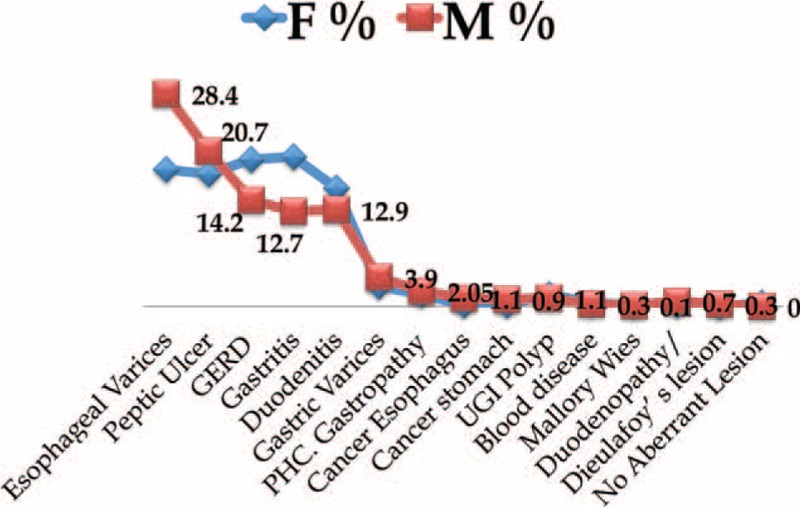
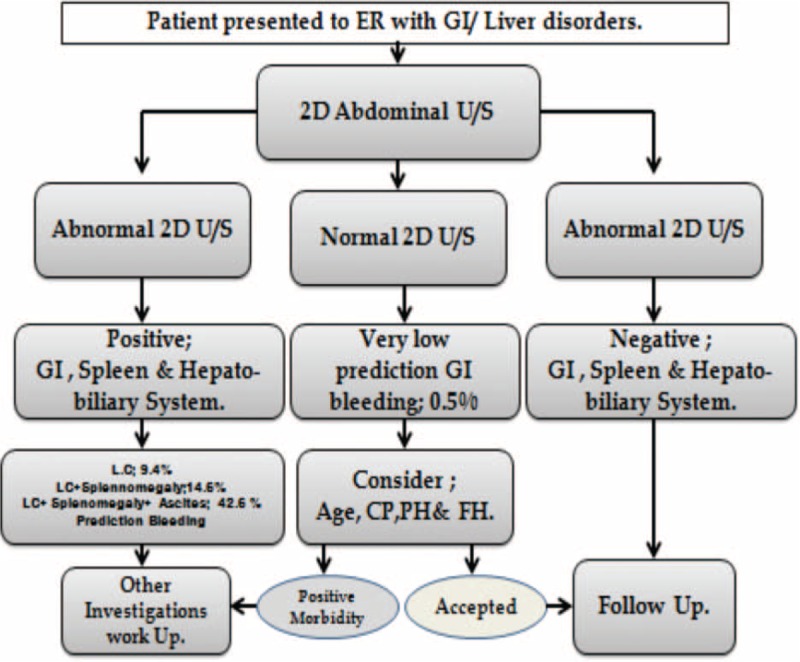
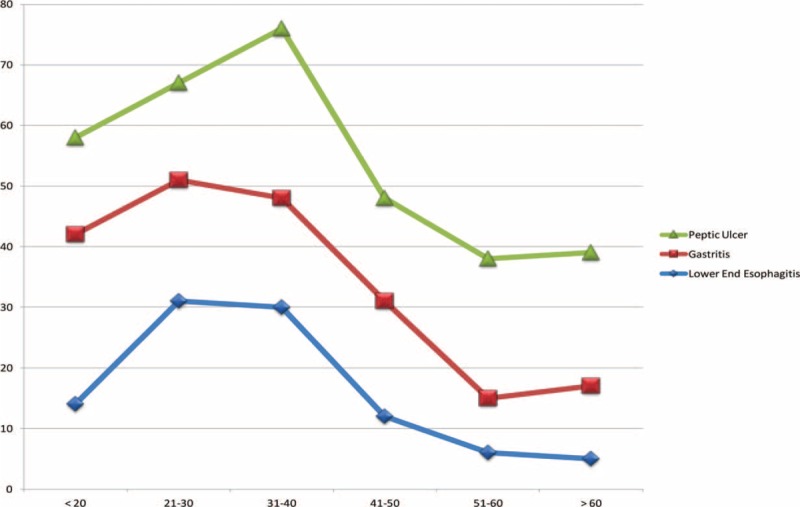
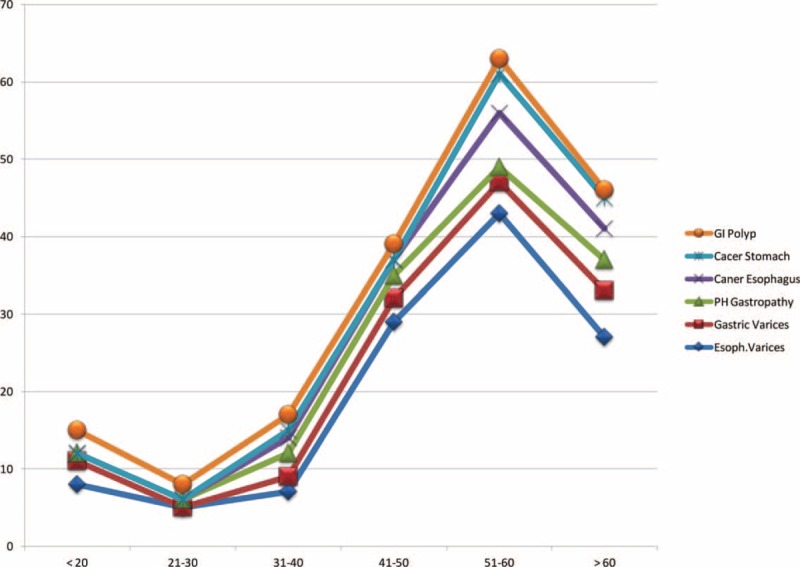
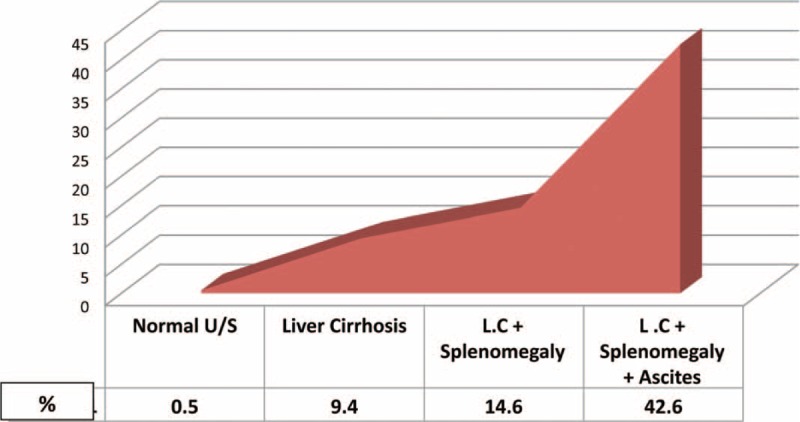
In countries endemic for liver and GIT diseases, frequent emergency department (ED) patients contribute to a disproportionate number of visits consuming substantial amount of medical resources. One of the most frequent ED visits is patients who present with hypovolemic shock, abdominal pain, or confusion with or without signs of upper gastrointestinal bleeding (UGIB). The use of conventional two-dimensional ultrasound (2D-U/S) may provide immediate and useful information on the presence of esophageal varices, gastrointestinal tumors, and other GIT abnormalities.The current study investigated the feasibility of using (2D-U/S) to predict the source of UGIB in ED and to determine patients' priority for UGE.Between February 2003 and March 2013, we retrospectively reviewed the profiles of 38,551 Egyptian patients, aged 2 to 75 years old, who presented with a history of GI/liver diseases and no alcohol consumption. We assessed the value of 2D-U/S technology in predicting the source of UGIB.Of 38,551 patients presenting to ED, 900 patients (2.3%), 534 male (59.3%) and 366 female (40.7%) developed UGIB. Analyzing results obtained from U/S examinations by data mining for emergent UGE were patients with liver cirrhosis (LC), splenomegaly, and ascites (42.6% incidence of UGIB), followed by LC and splenomegaly (14.6%), LC only (9.4%), and was only 0.5% who had no morbidity finding by 2D-U/S.Ultrasonographic instrumentation increases the feasibility of predictive emergency medicine. The area has recently not only gained a fresh impulse, but also a new set of complex problems that needs to be addressed in the emergency medicine setting according to each priority.
在肝脏和胃肠道疾病流行的国家,急诊科(ED)的常客占就诊人数的比例过高,消耗了大量医疗资源。最常见的急诊就诊之一是出现低血容量性休克、腹痛或伴有或不伴有上消化道出血(UGIB)体征的意识模糊的患者。使用传统二维超声(2D-U/S)可能会提供有关食管静脉曲张、胃肠道肿瘤和其他胃肠道异常情况的即时有用信息。本研究调查了使用(2D-U/S)预测急诊中UGIB来源并确定患者UGIB优先级的可行性。在2003年2月至2013年3月期间,我们回顾性分析了38551名2至75岁埃及患者的病历,这些患者有胃肠道/肝脏疾病史且无饮酒史。我们评估了2D-U/S技术在预测UGIB来源方面的价值。在38551名到急诊科就诊的患者中,900名患者(2.3%)出现了UGIB,其中男性534名(59.3%),女性366名(40.7%)。通过数据挖掘对急诊UGIB的超声检查结果进行分析,发现患有肝硬化(LC)、脾肿大和腹水的患者UGIB发生率为42.6%,其次是LC和脾肿大(14.6%),仅LC患者(9.4%),而二维超声未发现任何病变的患者仅占0.5%。超声检查设备提高了预测性急诊医学的可行性。该领域最近不仅获得了新的推动力,而且还出现了一系列新的复杂问题,需要在急诊医学环境中根据每个优先级加以解决。