Popova Antonia P, Cui Tracy X, Kaciroti Niko, Goldsmith Adam M, Linn Marisa J, Pryhuber Gloria S, Hershenson Marc B
Department of Pediatrics and Communicable Diseases, University of Michigan, Ann Arbor, Michigan, United States of America.
Center for Computational Medicine and Bioinformatics, University of Michigan Medical School, Ann Arbor, Michigan, United States of America.
PLoS One. 2015 Dec 11;10(12):e0144122. doi: 10.1371/journal.pone.0144122. eCollection 2015.
Isolation of tracheal aspirate mesenchymal stromal cells (MSCs) from premature infants has been associated with increased risk of bronchopulmonary dysplasia (BPD). MSCs show high levels of mRNAs encoding matricellular proteins, non-structural extracellular proteins that regulate cell-matrix interactions and participate in tissue remodeling. We hypothesized that lung matricellular protein expression predicts BPD development.
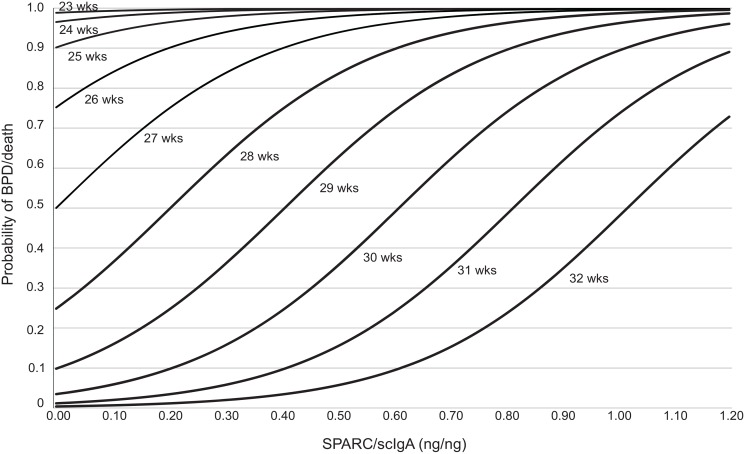
We collected tracheal aspirates and MSCs from mechanically-ventilated premature infants during the first week of life. Tracheal aspirate and MSC-conditioned media were analyzed for seven matricellular proteins including SPARC (for Secreted Protein, Acidic, Rich in Cysteine, also called osteonectin) and normalized to secretory component of IgA. A multiple logistic regression model was used to determine whether tracheal aspirate matricellular protein levels were independent predictors of BPD or death, controlling for gestational age (GA) and birth weight (BW).
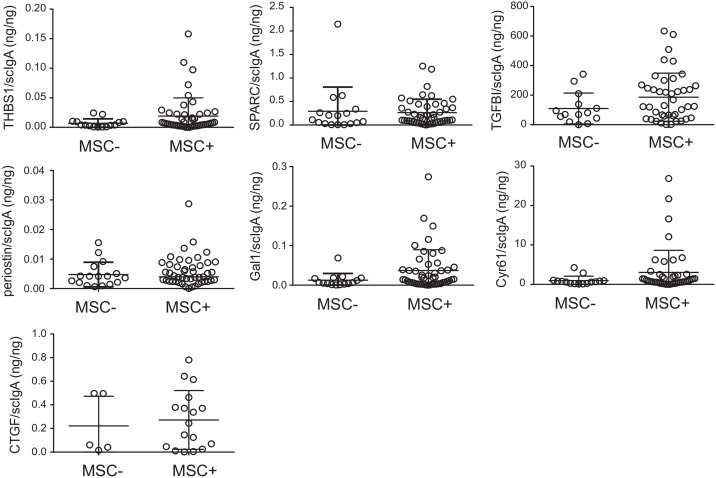
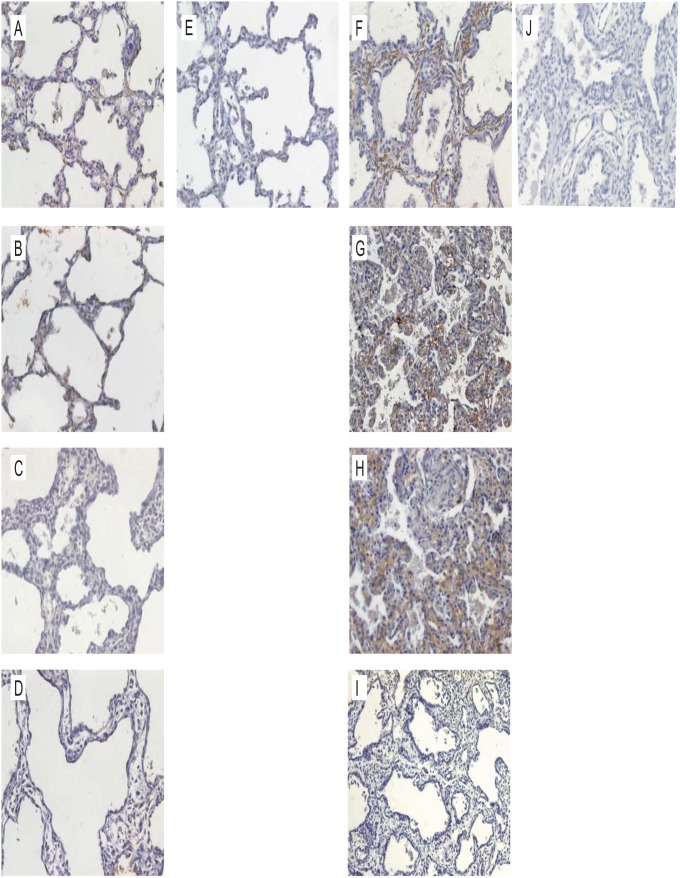
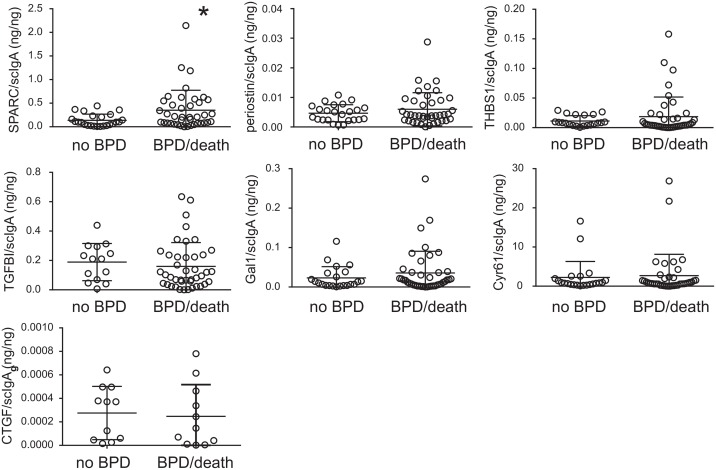
We collected aspirates from 89 babies (38 developed BPD, 16 died before 36 wks post-conceptual age). MSC-conditioned media showed no differences in matricellular protein abundance between cells from patients developing BPD and cells from patients who did not. However, SPARC levels were higher in tracheal aspirates from babies with an outcome of BPD or death (p<0.01). Further, our logistic model showed that tracheal aspirate SPARC (p<0.02) was an independent predictor of BPD/death. SPARC deposition was increased in the lungs of patients with BPD.
In mechanically-ventilated premature infants, tracheal aspirate SPARC levels predicted development of BPD or death. Further study is needed to determine the value of SPARC as a biomarker or therapeutic target in BPD.
从早产儿气管吸出物中分离间充质基质细胞(MSCs)与支气管肺发育不良(BPD)风险增加有关。MSCs显示出编码基质细胞蛋白的mRNA高水平表达,基质细胞蛋白是调节细胞-基质相互作用并参与组织重塑的非结构性细胞外蛋白。我们推测肺基质细胞蛋白表达可预测BPD的发生。
我们在出生后第一周收集了机械通气早产儿的气管吸出物和MSCs。对气管吸出物和MSCs条件培养基进行了七种基质细胞蛋白分析,包括SPARC(分泌性蛋白质,酸性,富含半胱氨酸,也称为骨连接蛋白),并将其标准化为IgA的分泌成分。使用多元逻辑回归模型来确定气管吸出物基质细胞蛋白水平是否是BPD或死亡的独立预测因素,同时控制胎龄(GA)和出生体重(BW)。
我们收集了89名婴儿的吸出物(38名发生BPD,16名在孕龄36周前死亡)。BPD患儿和未患BPD患儿的MSCs条件培养基中基质细胞蛋白丰度无差异。然而,发生BPD或死亡婴儿的气管吸出物中SPARC水平更高(p<0.01)。此外,我们的逻辑模型显示气管吸出物中的SPARC(p<0.02)是BPD/死亡的独立预测因素。BPD患者肺中SPARC沉积增加。
在机械通气的早产儿中,气管吸出物SPARC水平可预测BPD或死亡的发生。需要进一步研究以确定SPARC作为BPD生物标志物或治疗靶点的价值。