Chen Kan, Dai Weiqi, Wang Fan, Xia Yujing, Li Jingjing, Li Sainan, Liu Tong, Zhang Rong, Wang Jianrong, Lu Wenxia, Zhou Yuqing, Yin Qin, Zheng Yuanyuan, Abudumijiti Huerxidan, Chen Rongxia, Lu Jie, Zhou Yingqun, Guo Chuanyong
Department of Gastroenterology, Shanghai Tenth People's Hospital, Tongji University School of Medicine, Shanghai, People's Republic of China.
Department of Gastroenterology, Shanghai Tenth People's Hospital, Tongji University School of Medicine, First Clinical Medical College of Nanjing Medical University, Nanjing, People's Republic of China.
Onco Targets Ther. 2015 Dec 1;8:3585-93. doi: 10.2147/OTT.S92832. eCollection 2015.
15-Deoxy-Δ12,14-prostaglandin J2 (15d-PGJ2) induces reactive oxygen species (ROS)-mediated apoptosis in many malignant cells, which has not been studied in hepatoma cells. In this study, we investigated whether 15d-PGJ2 induced apoptosis in hepatocellular carcinoma (HCC) associated with ROS.
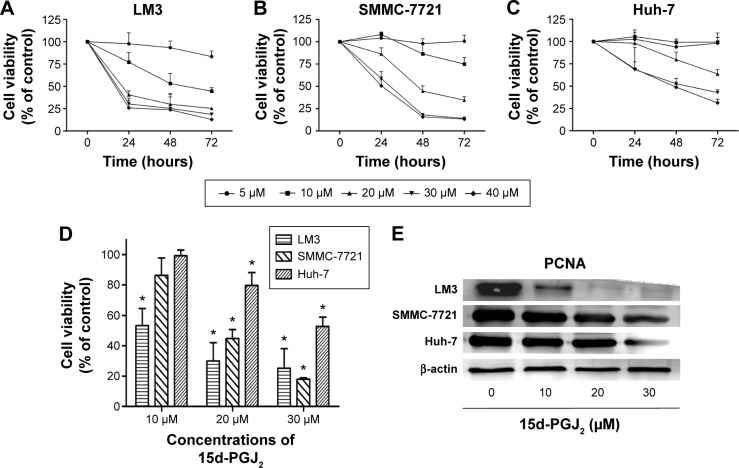
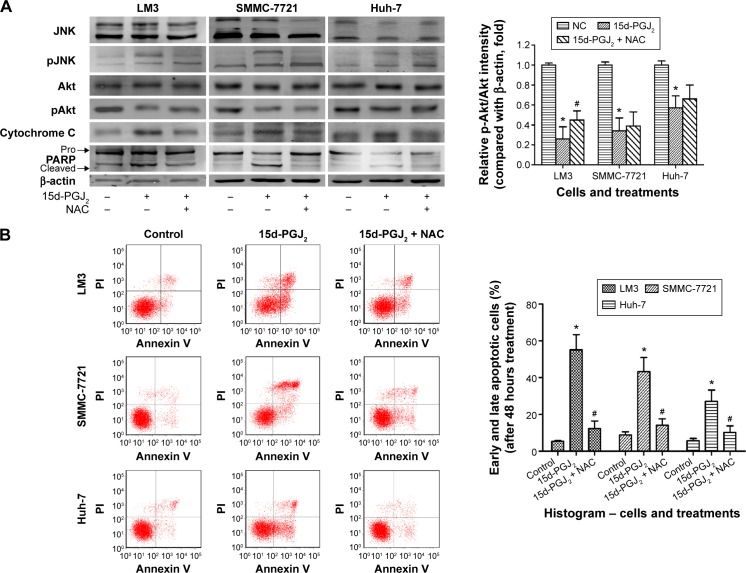
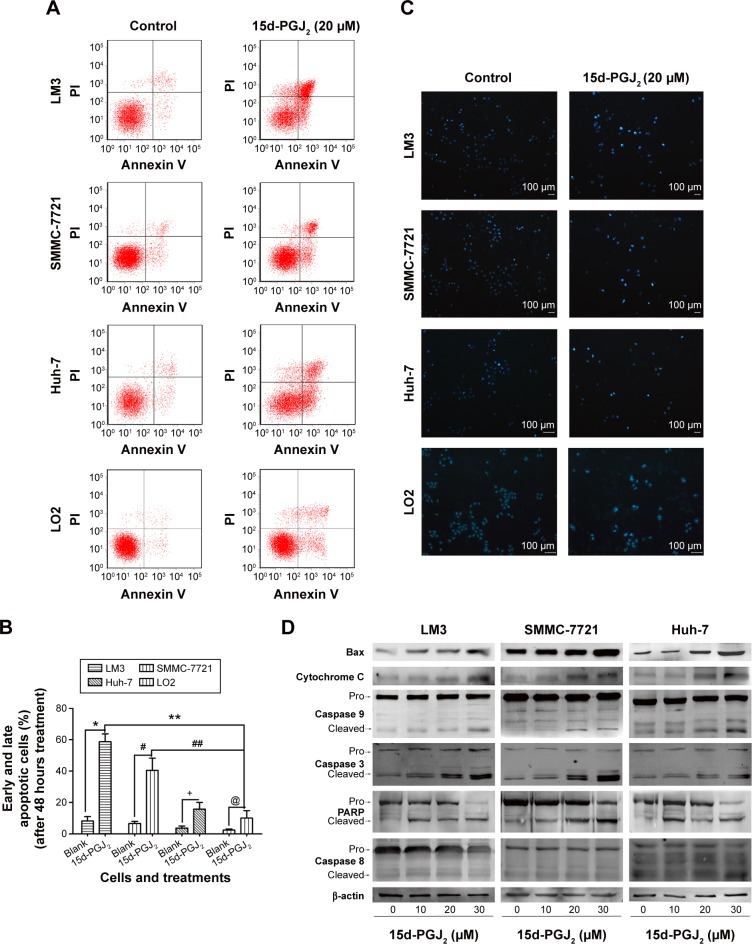
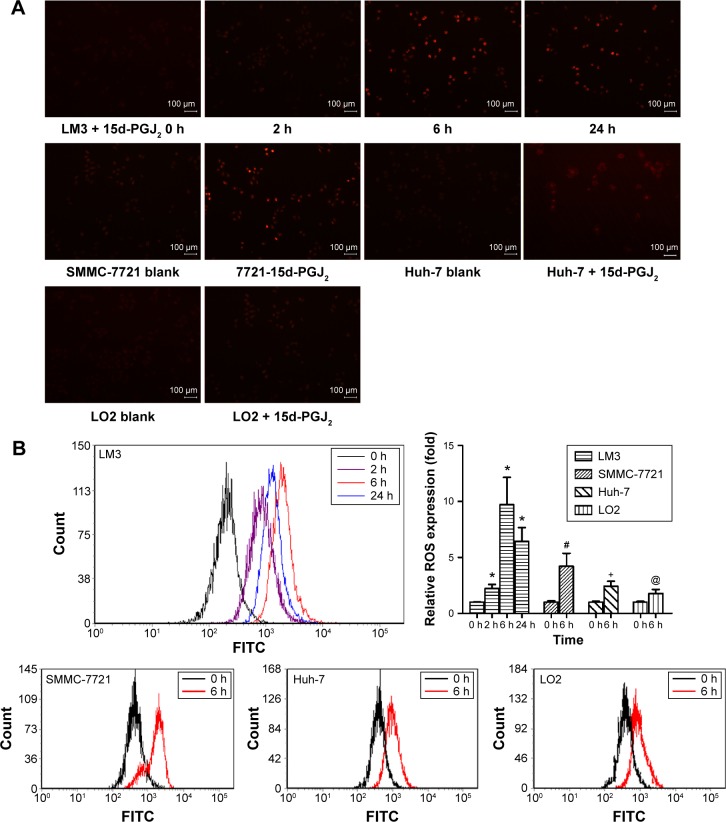
The LM3, SMMC-7721, and Huh-7 HCC cell lines were treated with 15d-PGJ2 (5-40 μM) for 24, 48, and 72 hours. Cholecystokinin 8 was used to detect the cytotoxicity of 15d-PGJ2. Flow cytometry, Hoechst staining, and Western blotting were used to analyze apoptosis. ROS were combined with the fluorescent probe dihydroethidium and then observed by fluorescence microscopy and flow cytometry. Activation of JNK and expression of Akt were detected by Western blotting.
15d-PGJ2 inhibited HCC cell proliferation and induced apoptosis in a dose- and time-dependent manner. Apoptosis was mainly induced via an intrinsic pathway and was ROS-dependent, and was alleviated by ROS scavengers. ROS induced JNK activation and Akt downregulation in HCC cells.
15d-PGJ2 induced ROS in HCC cell lines, and inhibition of cell growth and apoptosis were partly ROS-dependent.
15-脱氧-Δ12,14-前列腺素J2(15d-PGJ2)可诱导多种恶性细胞发生活性氧(ROS)介导的凋亡,而肝癌细胞中的这一现象尚未见研究报道。在本研究中,我们探究了15d-PGJ2是否通过ROS诱导肝癌细胞凋亡。
用15d-PGJ2(5 - 40 μM)处理LM3、SMMC-7721和Huh-7肝癌细胞系24、48和72小时。采用胆囊收缩素8检测15d-PGJ2的细胞毒性。运用流式细胞术、Hoechst染色及蛋白质免疫印迹法分析细胞凋亡情况。将ROS与荧光探针二氢乙锭结合,然后通过荧光显微镜和流式细胞术进行观察。通过蛋白质免疫印迹法检测JNK的激活及Akt的表达。
15d-PGJ2以剂量和时间依赖性方式抑制肝癌细胞增殖并诱导细胞凋亡。细胞凋亡主要通过内源性途径诱导,且依赖于ROS,ROS清除剂可减轻细胞凋亡。ROS可诱导肝癌细胞中JNK激活及Akt下调。
15d-PGJ2可在肝癌细胞系中诱导ROS产生,其对细胞生长的抑制及凋亡作用部分依赖于ROS。