Tang Shaogeng, Henne W Mike, Borbat Peter P, Buchkovich Nicholas J, Freed Jack H, Mao Yuxin, Fromme J Christopher, Emr Scott D
Weill Institute of Cell and Molecular Biology, Cornell University, Ithaca, United States.
Department of Molecular Biology and Genetics, Cornell University, Ithaca, United States.
Elife. 2015 Dec 15;4:e12548. doi: 10.7554/eLife.12548.
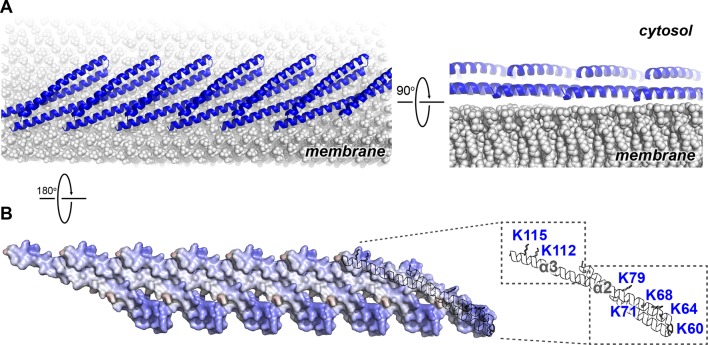
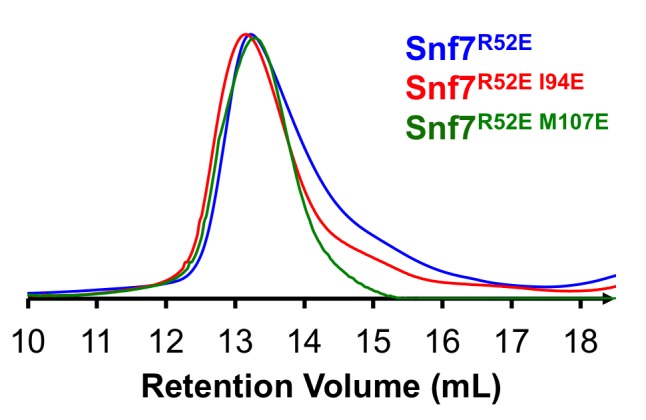
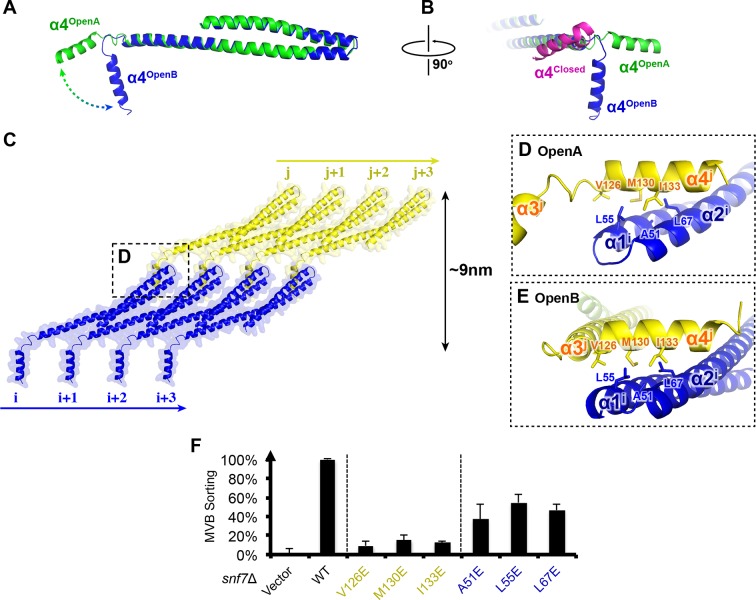
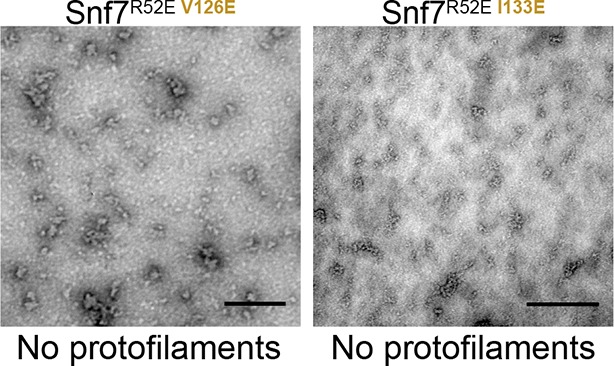
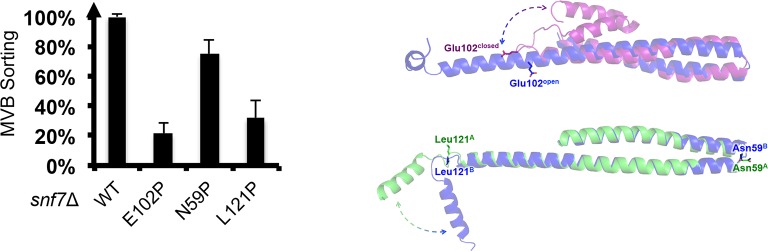
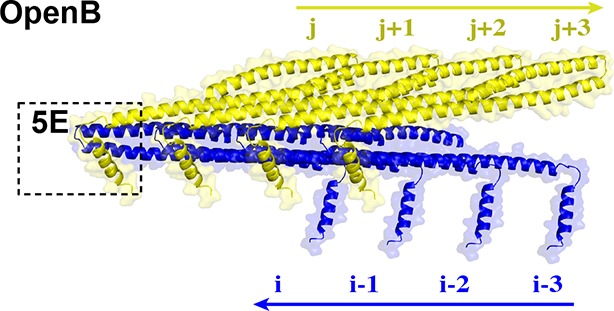
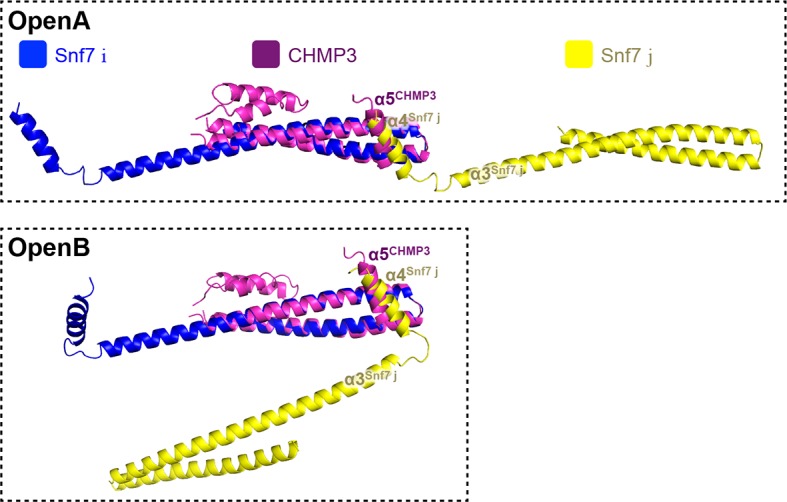
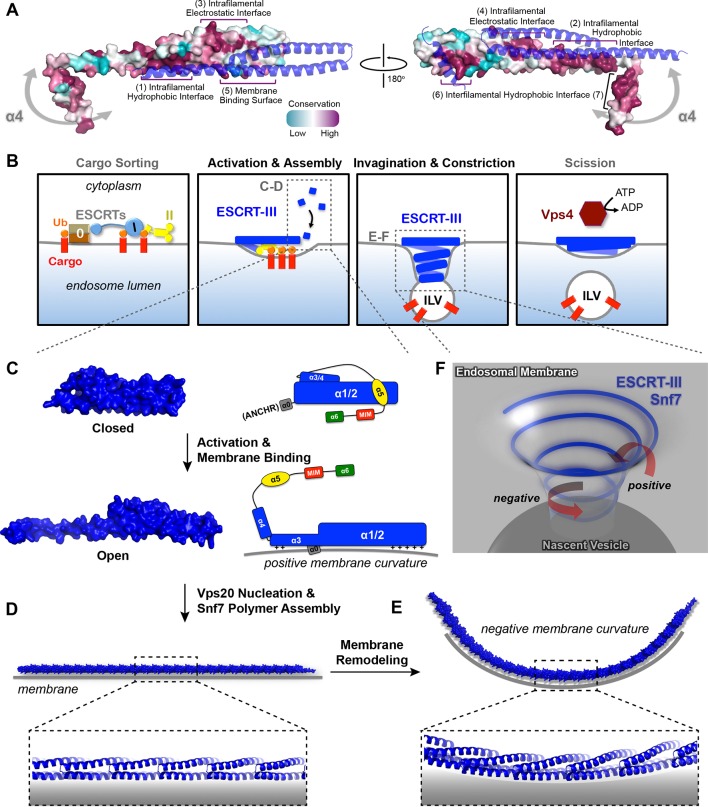
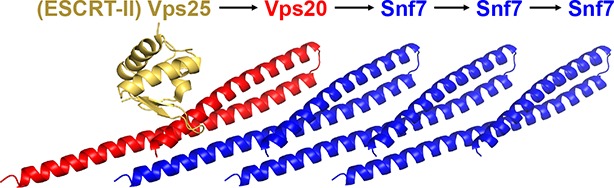
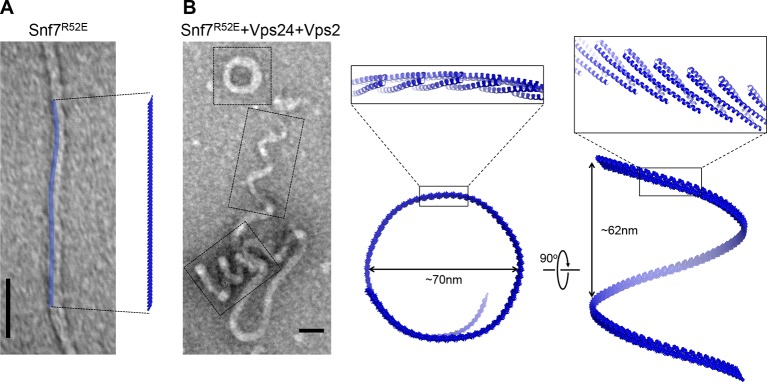
The endosomal sorting complexes required for transport (ESCRTs) constitute hetero-oligomeric machines that catalyze multiple topologically similar membrane-remodeling processes. Although ESCRT-III subunits polymerize into spirals, how individual ESCRT-III subunits are activated and assembled together into a membrane-deforming filament remains unknown. Here, we determine X-ray crystal structures of the most abundant ESCRT-III subunit Snf7 in its active conformation. Using pulsed dipolar electron spin resonance spectroscopy (PDS), we show that Snf7 activation requires a prominent conformational rearrangement to expose protein-membrane and protein-protein interfaces. This promotes the assembly of Snf7 arrays with ~30 Å periodicity into a membrane-sculpting filament. Using a combination of biochemical and genetic approaches, both in vitro and in vivo, we demonstrate that mutations on these protein interfaces halt Snf7 assembly and block ESCRT function. The architecture of the activated and membrane-bound Snf7 polymer provides crucial insights into the spatially unique ESCRT-III-mediated membrane remodeling.
转运所需的内体分选复合物(ESCRTs)构成了异源寡聚机器,可催化多种拓扑结构相似的膜重塑过程。尽管ESCRT-III亚基聚合成螺旋结构,但单个ESCRT-III亚基如何被激活并组装成膜变形细丝仍不清楚。在这里,我们确定了最丰富的ESCRT-III亚基Snf7处于活性构象时的X射线晶体结构。使用脉冲偶极电子自旋共振光谱(PDS),我们表明Snf7激活需要显著的构象重排,以暴露蛋白质-膜和蛋白质-蛋白质界面。这促进了具有约30 Å周期性的Snf7阵列组装成膜塑造细丝。通过体外和体内生化和遗传方法的结合,我们证明这些蛋白质界面上的突变会阻止Snf7组装并阻断ESCRT功能。活化的和膜结合的Snf7聚合物的结构为空间独特的ESCRT-III介导的膜重塑提供了关键见解。