Daly Elizabeth A, Brodeur Richard D
Cooperative Institution for Marine Resources Studies, Oregon State University, Newport, Oregon, United States of America.
Fish Ecology Division, Northwest Fisheries Science Center, National Marine Fisheries Service, National Oceanic and Atmospheric Administration, Newport, Oregon, United states of America.
PLoS One. 2015 Dec 16;10(12):e0144066. doi: 10.1371/journal.pone.0144066. eCollection 2015.
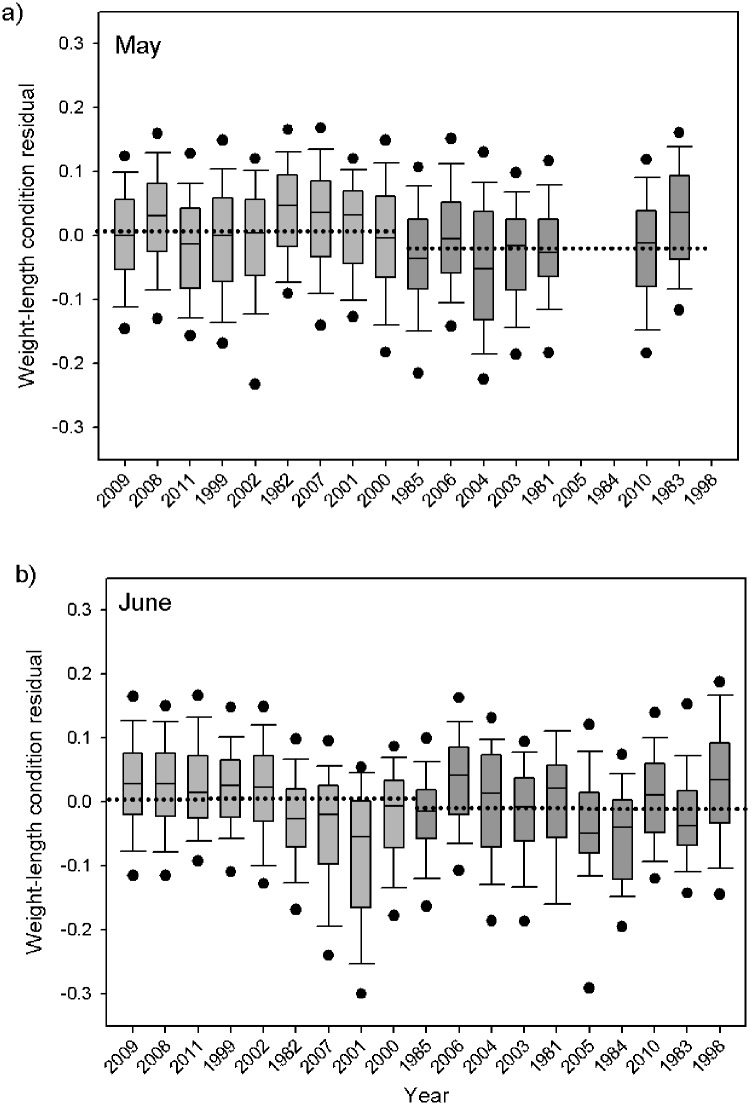
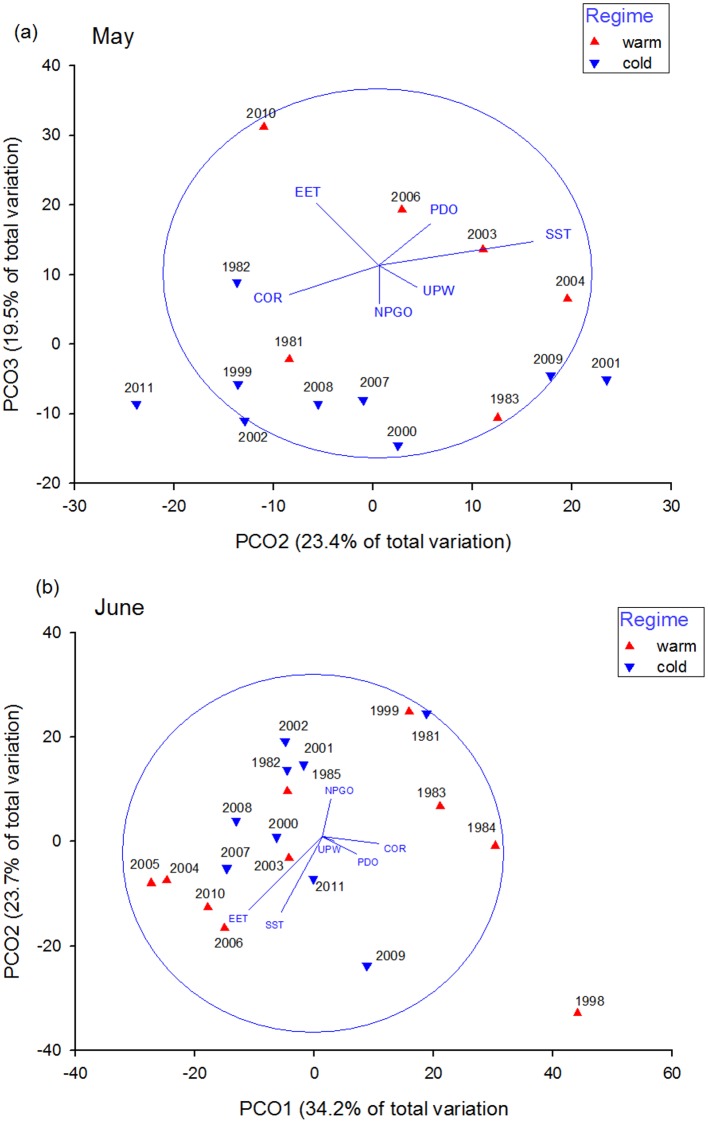
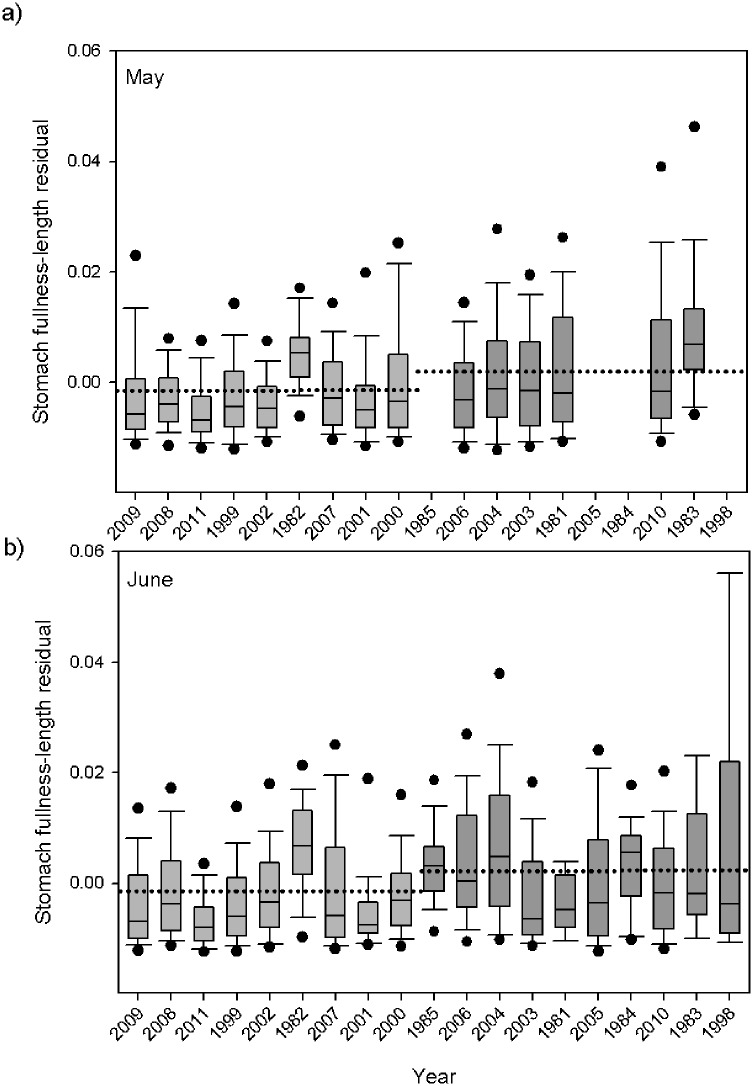
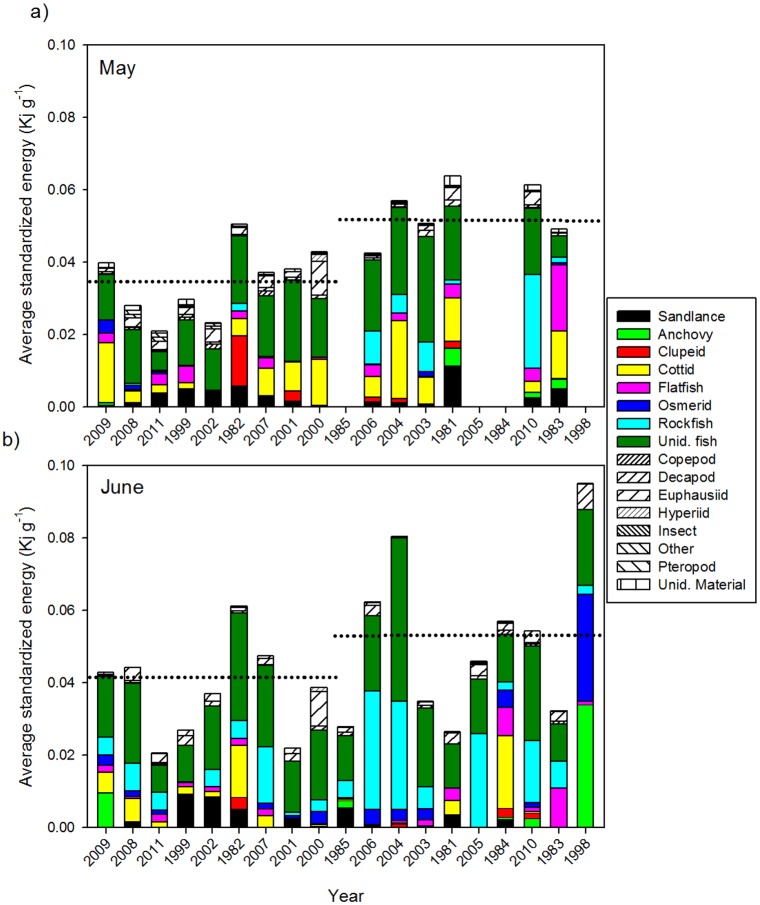
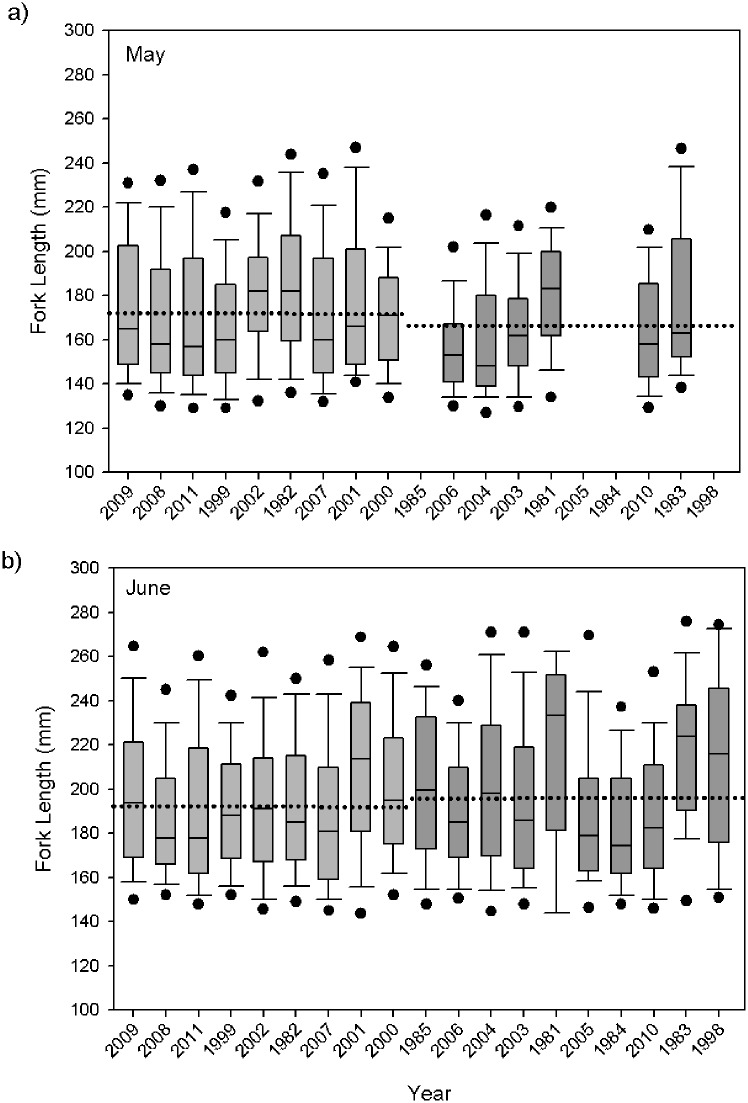
The trophic habits, size and condition of yearling Chinook salmon (Oncorhynchus tshawytscha) caught early in their marine residence were examined during 19 survey years (1981-1985; 1998-2011). Juvenile salmon consumed distinct highly piscivorous diets in cold and warm ocean regimes with major differences between ocean regimes driven by changes in consumption of juvenile rockfishes, followed by several other fish prey, adult euphausiids and decapod larvae. Notable, Chinook salmon consumed 30% more food in the warm versus cold ocean regime in both May and June. Additionally, there were about 30% fewer empty stomachs in the warm ocean regime in May, and 10% fewer in warm June periods. The total prey energy density consumed during the warmer ocean regime was also significantly higher than in cold. Chinook salmon had lower condition factor and were smaller in fork length during the warm ocean regime, and were longer and heavier for their size during the cold ocean regime. The significant increase in foraging during the warm ocean regime occurred concurrently with lower available prey biomass. Adult return rates of juvenile Chinook salmon that entered the ocean during a warm ocean regime were lower. Notably, our long term data set contradicts the long held assertion that juvenile salmon eat less in a warm ocean regime when low growth and survival is observed, and when available prey are reduced. Comparing diet changes between decades under variable ocean conditions may assist us in understanding the effects of projected warming ocean regimes on juvenile Chinook salmon and their survival in the ocean environment. Bioenergetically, the salmon appear to require more food resources during warm ocean regimes.
在19个调查年份(1981 - 1985年;1998 - 2011年)期间,对在海洋栖息地早期捕获的一岁龄奇努克鲑(Oncorhynchus tshawytscha)的食性、大小和状况进行了研究。幼鲑在寒冷和温暖的海洋环境中食用不同的高度食肉性食物,海洋环境之间的主要差异是由幼体岩鱼的消费量变化驱动的,其次是其他几种鱼类猎物、成年磷虾和十足目幼虫。值得注意的是,奇努克鲑在五月和六月的温暖海洋环境中比寒冷环境中多消耗30%的食物。此外,五月温暖海洋环境中的空腹数量减少了约30%,六月温暖时期减少了10%。温暖海洋环境中消耗的总猎物能量密度也显著高于寒冷环境。在温暖海洋环境中,奇努克鲑的状况因子较低,叉长较小,而在寒冷海洋环境中,它们的体长和体重相对其体型更大。在温暖海洋环境中觅食量的显著增加与可获得的猎物生物量减少同时发生。在温暖海洋环境中进入海洋的幼奇努克鲑的成年回游率较低。值得注意的是,我们的长期数据集与长期以来的观点相矛盾,即当观察到幼鲑生长缓慢和存活率低以及可获得的猎物减少时,它们在温暖海洋环境中吃得更少。比较不同海洋条件下几十年间的饮食变化,可能有助于我们理解预计的海洋变暖环境对幼奇努克鲑及其在海洋环境中生存的影响。从生物能量学角度来看,鲑鱼在温暖海洋环境中似乎需要更多的食物资源。