Schaufler Jörg, Ronovsky Marianne, Savalli Giorgia, Cabatic Maureen, Sartori Simone B, Singewald Nicolas, Pollak Daniela D
a Department of Neurophysiology and Neuropharmacology , Center for Pharmacology and Physiology, Medical University of Vienna , Vienna , Austria ;
b Department of Pharmacology and Toxicology , Institute of Pharmacy and CMBI, Leopold-Franzens-University of Innsbruck , Innsbruck , Austria.
Ann Med. 2016;48(1-2):17-27. doi: 10.3109/07853890.2015.1122216. Epub 2015 Dec 18.
Disturbances of circadian rhythms are a key symptom of mood and anxiety disorders. Selective serotonin reuptake inhibitors (SSRIs) - commonly used antidepressant drugs - also modulate aspects of circadian rhythmicity. However, their potential to restore circadian disturbances in depression remains to be investigated.
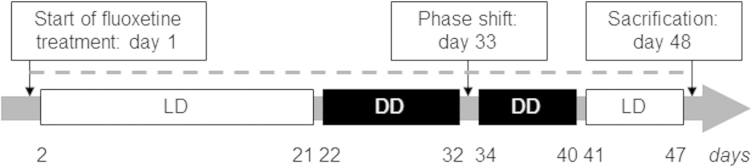
The effects of the SSRI fluoxetine on genetically based, depression-related circadian disruptions at the behavioral and molecular level were examined using mice selectively bred for high anxiety-related and co-segregating depression-like behavior (HAB) and normal anxiety/depression behavior mice (NAB).
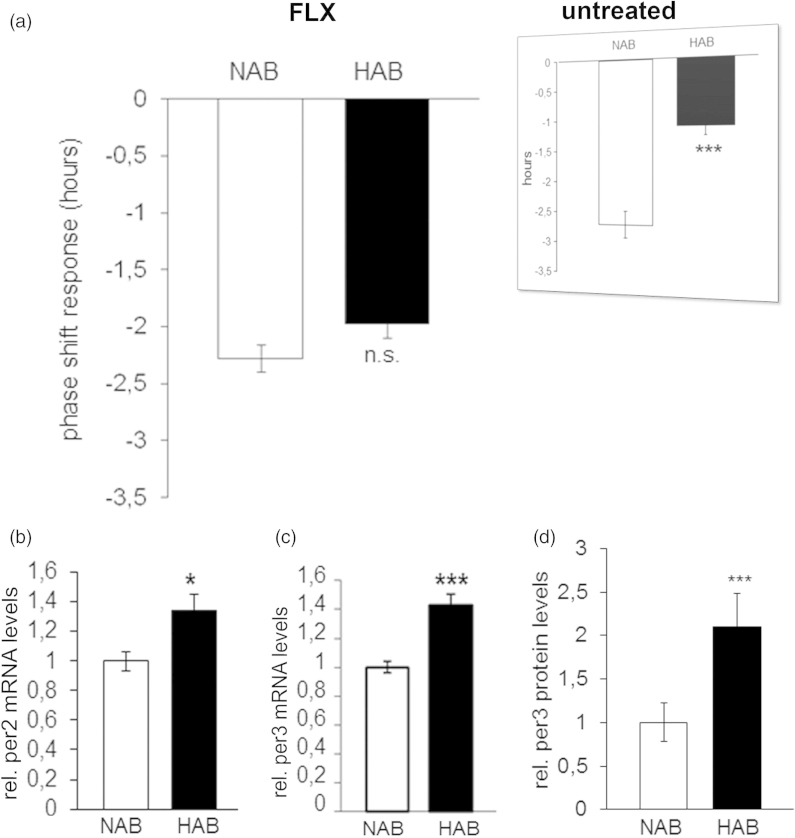
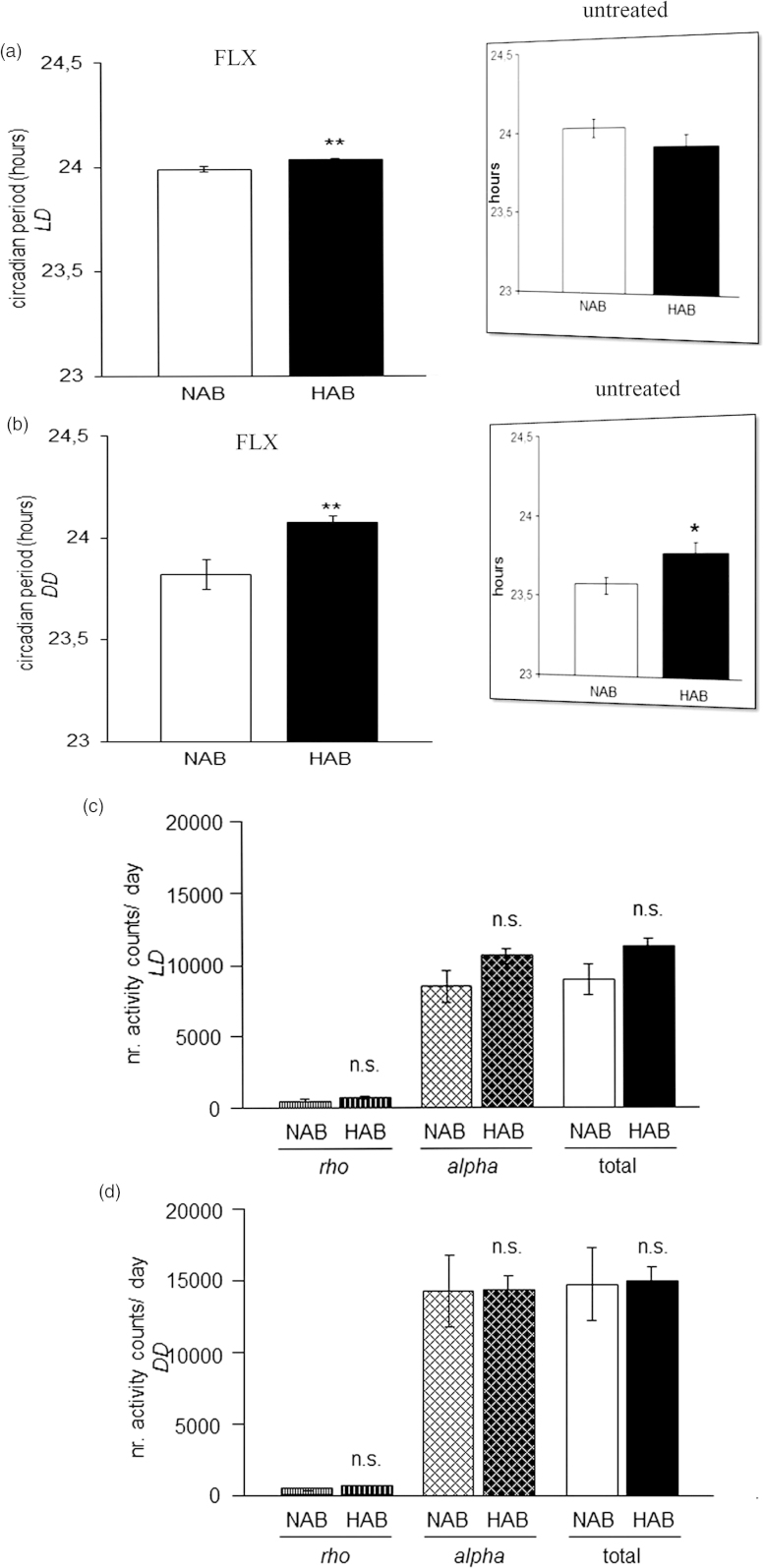
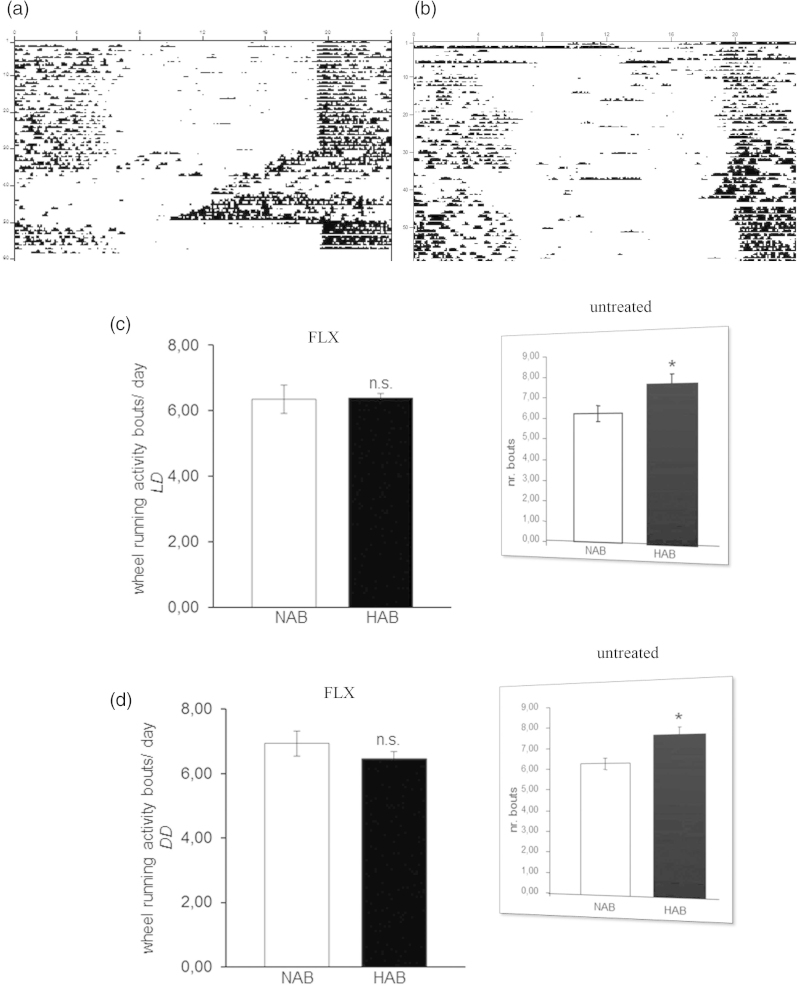
The length of the circadian period was increased in fluoxetine-treated HAB as compared to NAB mice while the number of activity bouts and light-induced entrainment were comparable. No difference in hippocampal Cry2 expression, previously reported to be dysbalanced in untreated HAB mice, was observed, while Per2 and Per3 mRNA levels were higher in HAB mice under fluoxetine treatment.
The present findings provide evidence that fluoxetine treatment normalizes disrupted circadian locomotor activity and clock gene expression in a genetic mouse model of high trait anxiety and depression. An interaction between the molecular mechanisms mediating the antidepressant response to fluoxetine and the endogenous regulation of circadian rhythms in genetically based mood and anxiety disorders is proposed.
昼夜节律紊乱是情绪和焦虑障碍的关键症状。选择性5-羟色胺再摄取抑制剂(SSRIs)——常用的抗抑郁药物——也会调节昼夜节律的各个方面。然而,它们恢复抑郁症患者昼夜节律紊乱的潜力仍有待研究。
使用选择性培育出具有高焦虑相关和共同分离的抑郁样行为(HAB)的小鼠以及正常焦虑/抑郁行为小鼠(NAB),研究了SSRI氟西汀在行为和分子水平上对基于基因的、与抑郁相关的昼夜节律紊乱的影响。
与NAB小鼠相比,氟西汀治疗的HAB小鼠的昼夜周期长度增加,而活动发作次数和光诱导的同步化情况相当。未观察到海马体Cry2表达有差异,此前报道未经治疗的HAB小鼠中Cry2表达失衡,而在氟西汀治疗下,HAB小鼠中Per2和Per3 mRNA水平较高。
本研究结果提供了证据,表明在具有高特质焦虑和抑郁的基因小鼠模型中,氟西汀治疗可使昼夜运动活动和时钟基因表达的紊乱恢复正常。提出了介导对氟西汀抗抑郁反应的分子机制与基于基因的情绪和焦虑障碍中昼夜节律的内源性调节之间的相互作用。