Gyorik Dorka, Eszlari Nora, Gal Zsofia, Torok Dora, Baksa Daniel, Kristof Zsuliet, Sutori Sara, Petschner Peter, Juhasz Gabriella, Bagdy Gyorgy, Gonda Xenia
Faculty of Medicine, Semmelweis University, Budapest, Hungary.
Department of Pharmacodynamics, Faculty of Pharmacy, Semmelweis University, Budapest, Hungary.
Front Psychiatry. 2021 Aug 26;12:687487. doi: 10.3389/fpsyt.2021.687487. eCollection 2021.
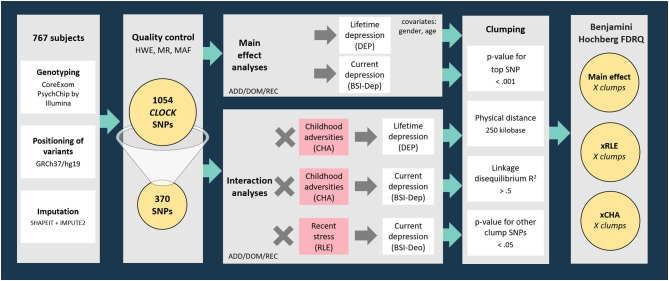
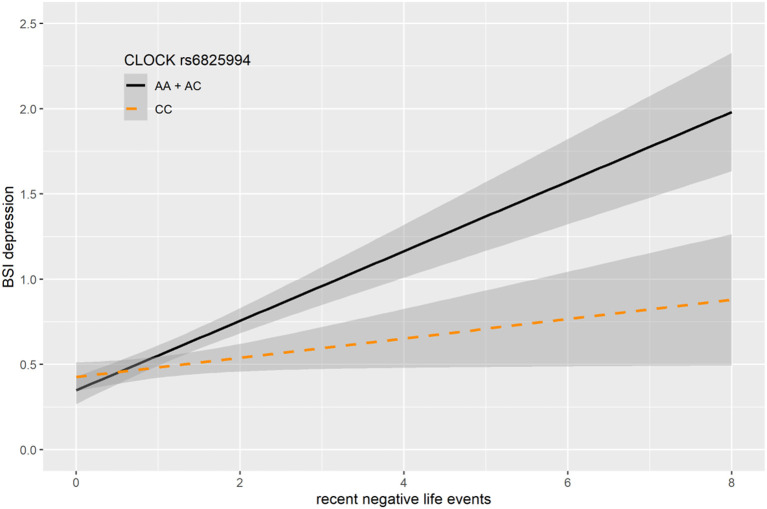
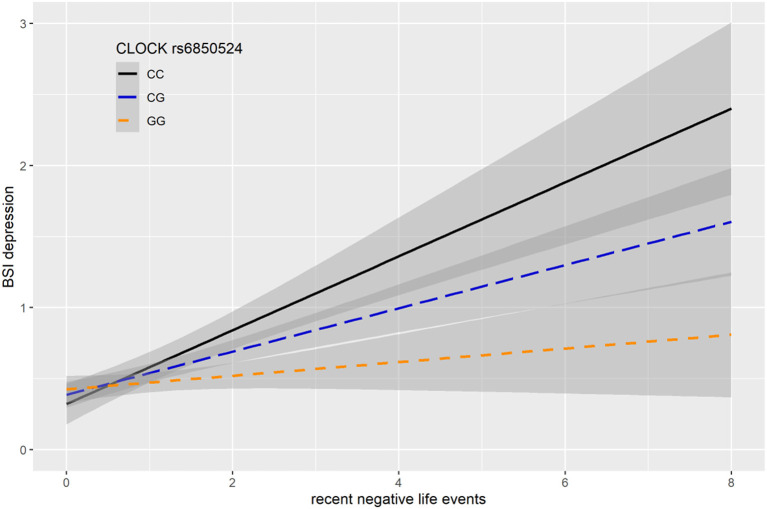
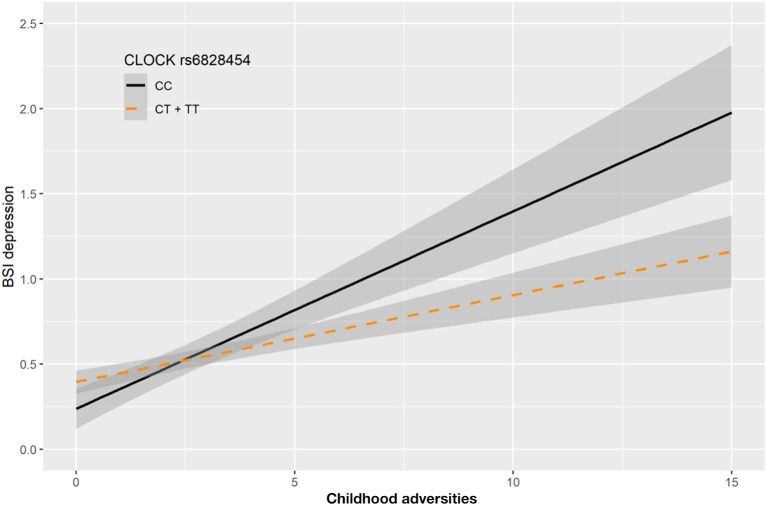
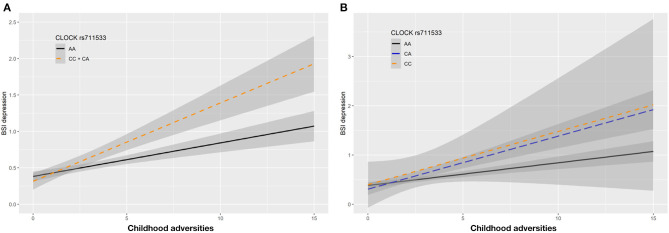
The role of circadian dysregulation is increasingly acknowledged in the background of depressive symptoms, and is also a promising treatment target. Similarly, stress shows a complex relationship with the circadian system. The gene, encoding a key element in circadian regulation has been implicated in previous candidate variant studies in depression with contradictory findings, and only a few such studies considered the interacting effects of stress. We investigated the effect of variation with a linkage-disequilibrium-based clumping method, in interaction with childhood adversities and recent negative life events, on two phenotypes of depression, lifetime depression and current depressive symptoms in a general population sample. Participants in NewMood study completed questionnaires assessing childhood adversities and recent negative life events, the Brief Symptom Inventory to assess current depressive symptoms, provided data on lifetime depression, and were genotyped for 1054 SNPs in the gene, 370 of which survived quality control and were entered into linear and logistic regression models with current depressive symptoms and lifetime depression as the outcome variable, and childhood adversities or recent life events as interaction variables followed by a linkage disequilibrium-based clumping process to identify clumps of SNPs with a significant main or interaction effect. No significant clumps with a main effect were found. In interaction with recent life events a significant clump containing 94 SNPs with top SNP rs6825994 for dominant and rs6850524 for additive models on current depression was identified, while in interaction with childhood adversities on current depressive symptoms, two clumps, both containing 9 SNPs were found with top SNPs rs6828454 and rs711533. Our findings suggest that contributes to depressive symptoms, but via mediating the effects of early adversities and recent stressors. Given the increasing burden on circadian rhythmicity in the modern lifestyle and our expanding insight into the contribution of circadian disruption in depression especially as a possible mediator of stress, our results may pave the way for identifying those who would be at an increased risk for depressogenic effects of circadian dysregulation in association with stress as well as new molecular targets for intervention in stress-related psychopathologies in mood disorders.
昼夜节律失调在抑郁症状背景下的作用日益受到认可,并且也是一个有前景的治疗靶点。同样,压力与昼夜节律系统呈现出复杂的关系。该基因编码昼夜节律调节中的一个关键要素,在先前关于抑郁症的候选变异研究中涉及其中,但结果相互矛盾,而且只有少数此类研究考虑了压力的交互作用。我们采用基于连锁不平衡的聚类方法,研究该基因变异与童年逆境及近期负面生活事件的相互作用,对普通人群样本中抑郁症的两种表型(终生抑郁和当前抑郁症状)的影响。“新情绪”研究中的参与者完成了评估童年逆境和近期负面生活事件的问卷、用于评估当前抑郁症状的简明症状量表,提供了终生抑郁的数据,并对该基因中的1054个单核苷酸多态性(SNP)进行基因分型,其中370个通过质量控制,被纳入以当前抑郁症状和终生抑郁为结果变量、童年逆境或近期生活事件为交互变量的线性和逻辑回归模型,随后进行基于连锁不平衡的聚类过程,以识别具有显著主效应或交互效应的SNP簇。未发现具有主效应的显著簇。在与近期生活事件的相互作用中,识别出一个包含94个SNP的显著簇,对于当前抑郁症,显性模型的顶级SNP为rs6825994,加性模型的顶级SNP为rs6850524;而在与童年逆境对当前抑郁症状的相互作用中,发现两个均包含9个SNP的簇,顶级SNP分别为rs6828454和rs711533。我们的研究结果表明,该基因通过介导早期逆境和近期应激源的影响来促成抑郁症状。鉴于现代生活方式中昼夜节律的负担日益加重,以及我们对昼夜节律紊乱在抑郁症中的作用(尤其是作为压力的可能介导因素)的认识不断深入,我们的结果可能为识别那些因昼夜节律失调与压力相关而患抑郁症风险增加的人以及为情绪障碍中与压力相关的精神病理学干预的新分子靶点铺平道路。