Berry David, Kuzyk Orest, Rauch Isabella, Heider Susanne, Schwab Clarissa, Hainzl Eva, Decker Thomas, Müller Mathias, Strobl Birgit, Schleper Christa, Urich Tim, Wagner Michael, Kenner Lukas, Loy Alexander
Division of Microbial Ecology, Department of Microbiology and Ecosystem Science, Research Network Chemistry meets Microbiology, University of Vienna Vienna, Austria.
Department of Microbiology, Immunobiology and Genetics, Max F. Perutz Laboratories, University of Vienna Vienna, Austria.
Front Microbiol. 2015 Dec 15;6:1408. doi: 10.3389/fmicb.2015.01408. eCollection 2015.
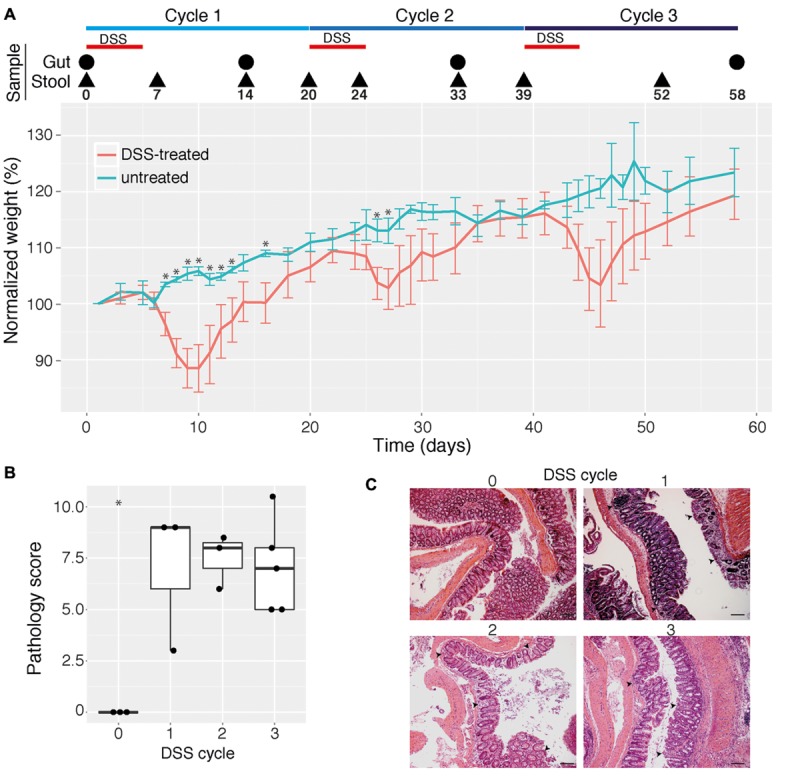
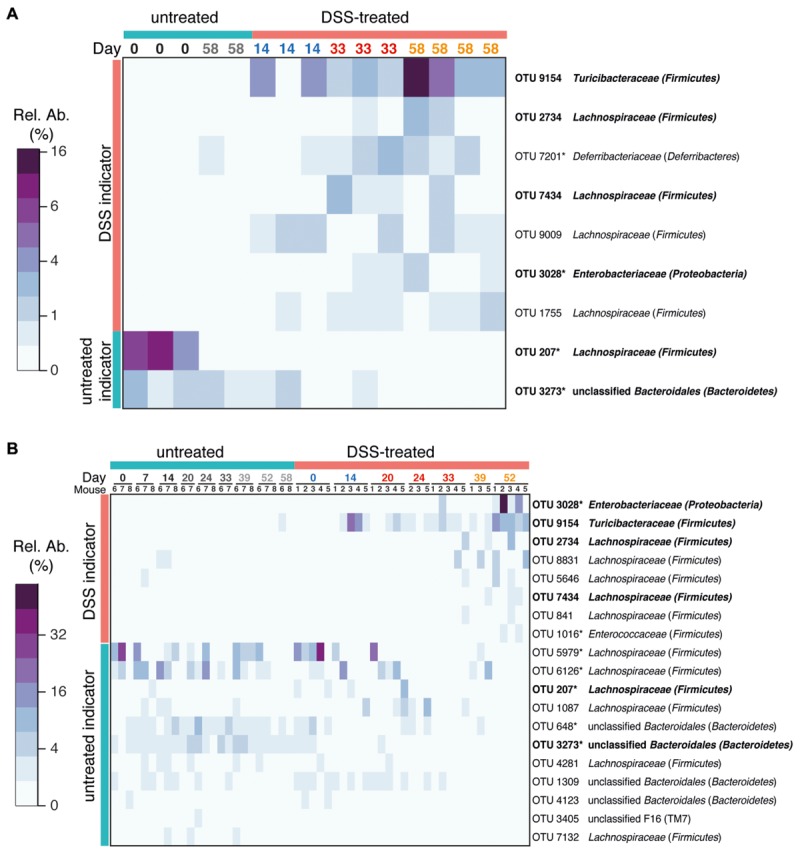
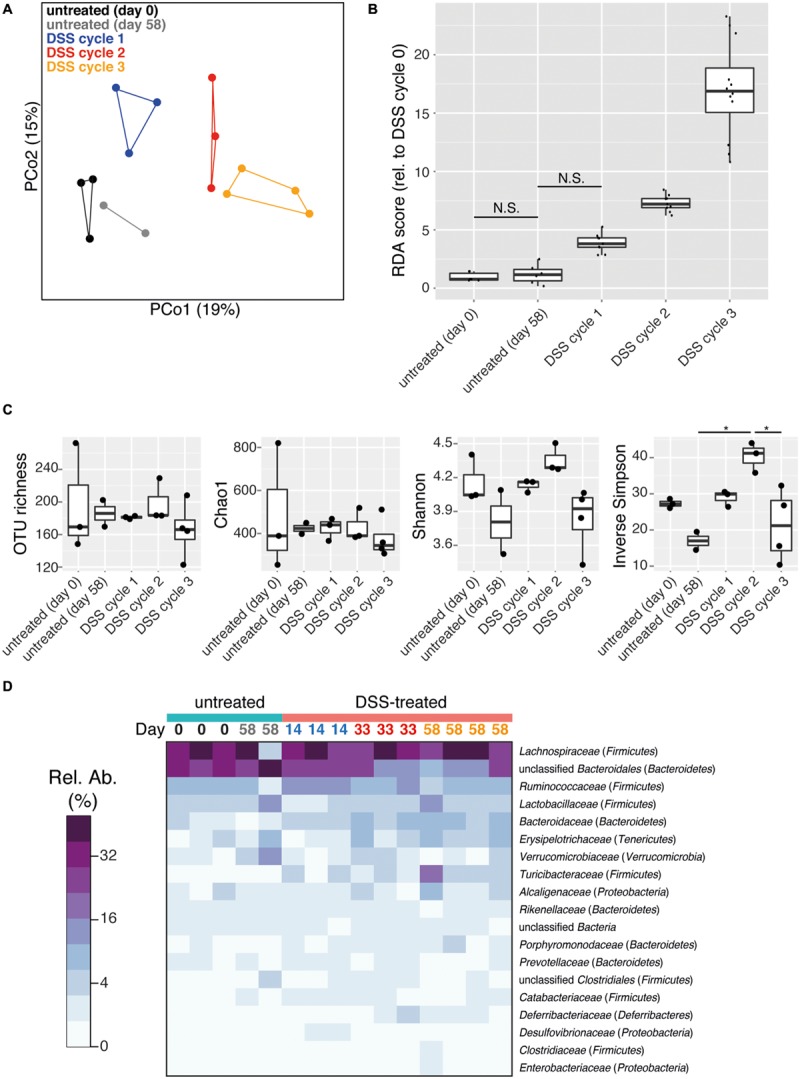
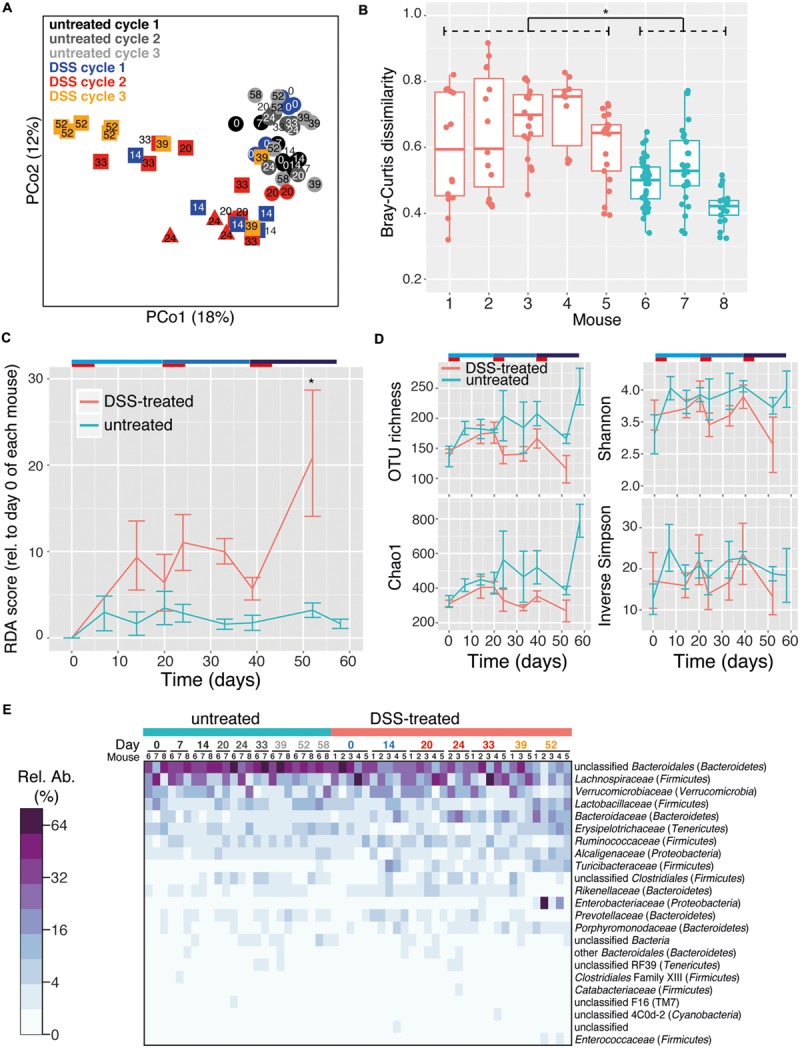
Acute colitis causes alterations in the intestinal microbiota, but the microbiota is thought to recover after such events. Extreme microbiota alterations are characteristic of human chronic inflammatory bowel diseases, although alterations reported in different studies are divergent and sometimes even contradictory. To better understand the impact of periodic disturbances on the intestinal microbiota and its compositional difference between acute and relapsing colitis, we investigated the beginnings of recurrent inflammation using the dextran sodium sulfate (DSS) mouse model of chemically induced colitis. Using bacterial 16S rRNA gene-targeted pyrosequencing as well as quantitative fluorescence in situ hybridization, we profiled the intestinal and stool microbiota of mice over the course of three rounds of DSS-induced colitis and recovery. We found that characteristic inflammation-associated microbiota could be detected in recovery-phase mice. Successive inflammation episodes further drove the microbiota into an increasingly altered composition post-inflammation, and signatures of colitis history were detectable in the microbiota more sensitively than by pathology analysis. Bacterial indicators of murine colitis history were identified in intestinal and stool samples, with a high degree of consistency between both sample types. Stool may therefore be a promising non-invasive source of bacterial biomarkers that are highly sensitive to inflammation state and history.
急性结肠炎会导致肠道微生物群发生改变,但人们认为在这类事件之后微生物群会恢复。极端的微生物群改变是人类慢性炎症性肠病的特征,尽管不同研究报告的改变存在差异,有时甚至相互矛盾。为了更好地理解周期性干扰对肠道微生物群的影响以及急性和复发性结肠炎之间微生物群的组成差异,我们使用化学诱导性结肠炎的葡聚糖硫酸钠(DSS)小鼠模型研究了复发性炎症的起始情况。通过针对细菌16S rRNA基因的焦磷酸测序以及定量荧光原位杂交,我们分析了在三轮DSS诱导的结肠炎及恢复过程中小鼠的肠道和粪便微生物群。我们发现,在恢复阶段的小鼠中可以检测到与炎症相关的特征性微生物群。连续的炎症发作进一步使微生物群在炎症后进入一个组成变化越来越大的状态,并且微生物群中结肠炎历史的特征比病理分析更能灵敏地检测到。在肠道和粪便样本中鉴定出了小鼠结肠炎历史的细菌指标,两种样本类型之间具有高度一致性。因此,粪便可能是一种很有前景的非侵入性细菌生物标志物来源,对炎症状态和历史高度敏感。