El-Sherbiny Islam, Nabil Baher, Saber Tamer, Abdelgawad Fathy Elsayed
Cardiology Department, Faculty of Medicine, Zagazig University, Zagazig 44519, Egypt.
Internal Medicine Department, Faculty of Medicine, Zagazig University, Zagazig 44519, Egypt.
Cardiol Res Pract. 2015;2015:274892. doi: 10.1155/2015/274892. Epub 2015 Dec 1.
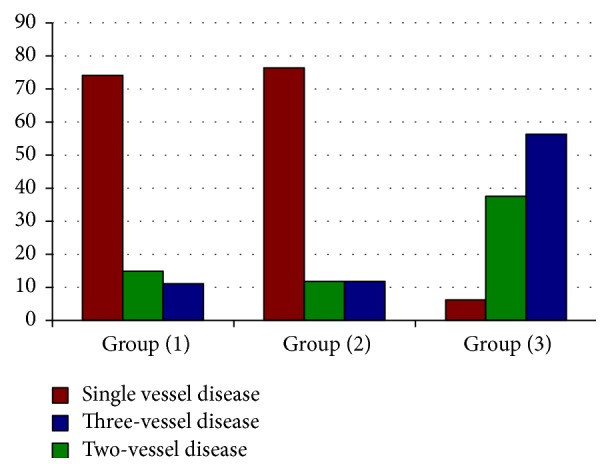
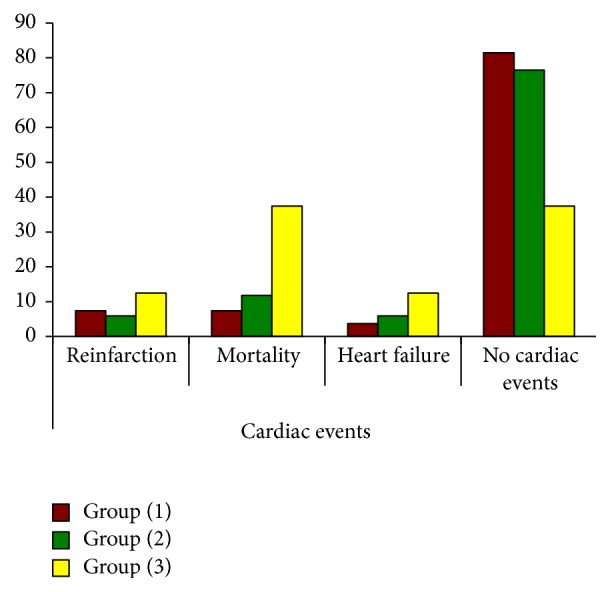
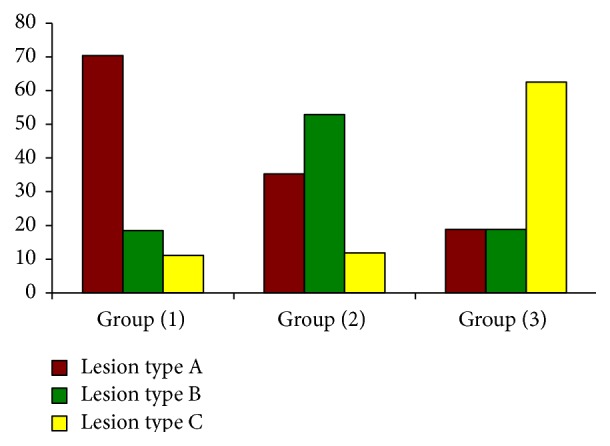
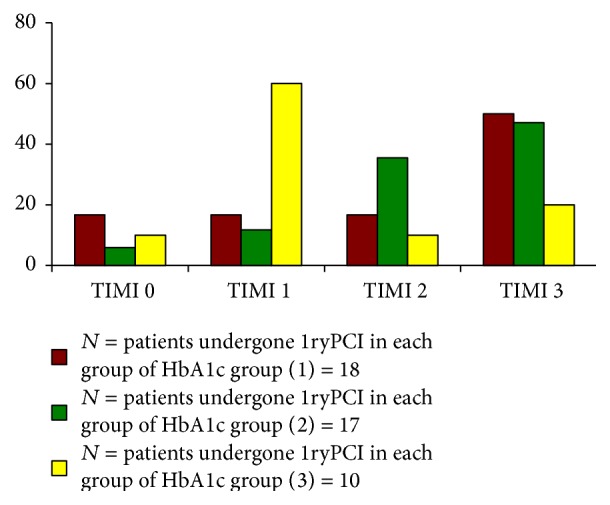
We aimed to assess the predictive value of admission HbA1c level in nondiabetic patients presented by acute STEMI, on outcome of PCI and short term outcome of adverse cardiac events. Methods. 60 nondiabetic patients were admitted to Cardiology Department, Zagazig University Hospital, with acute STMI: 27 patients with HbA1c levels of 4.5% to 6.4% (group 1), 17 patients with HbA1c levels of 6.5% to 8.5% (group 2), and 16 patients with HbA1c levels higher than 8.5% (group 3). Either invasive intervention was done at admission by (pPCI) or coronary angiography was done within month (3-28 days) from taking thrombolytic. Participants were followed up for 6 months. Results. There was significant difference among different groups of HbA1c as regards the number of diseased vessels, severity of CAD lesions (p value < 0.01), and TIMI flow grades (p value < 0.05). There was significant difference among different groups as regards the adverse cardiac events on short term follow-up period (p value < 0.05). Conclusion. The present study showed that admission higher HbA1c level in patients presented by acute STEMI is associated with more severe CAD, lower rate of complete revascularization, and higher incidence of adverse cardiac events.
我们旨在评估急性ST段抬高型心肌梗死(STEMI)非糖尿病患者入院时糖化血红蛋白(HbA1c)水平对经皮冠状动脉介入治疗(PCI)结局及心脏不良事件短期结局的预测价值。方法。60例非糖尿病急性STMI患者入住扎加齐格大学医院心内科:27例患者HbA1c水平为4.5%至6.4%(第1组),17例患者HbA1c水平为6.5%至8.5%(第2组),16例患者HbA1c水平高于8.5%(第3组)。入院时行有创干预(直接PCI)或在溶栓后1个月内(3 - 28天)行冠状动脉造影。对参与者进行6个月的随访。结果。不同HbA1c组在病变血管数量、冠状动脉疾病(CAD)病变严重程度(p值<0.01)及心肌梗死溶栓治疗(TIMI)血流分级方面存在显著差异(p值<0.05)。不同组在短期随访期心脏不良事件方面存在显著差异(p值<0.05)。结论。本研究表明,急性STEMI患者入院时较高的HbA1c水平与更严重的CAD、完全血运重建率较低及心脏不良事件发生率较高相关。