Hunter Sarah B, Han Bing, Slaughter Mary E, Godley Susan H, Garner Bryan R
RAND, 1776 Main Street, Santa Monica, CA, 90407-2138, USA.
RAND, 4570 Fifth Ave., Suite 600, Pittsburgh, PA, 15213, USA.
Implement Sci. 2015 Dec 24;10:173. doi: 10.1186/s13012-015-0364-4.
Few empirical studies longitudinally examine evidence-based practice (EBP) sustainment and the hypothesized factors that influence it. In an effort to address this gap, the current study examined sustainment of an EBP for adolescent substance use called the adolescent community reinforcement approach (A-CRA).
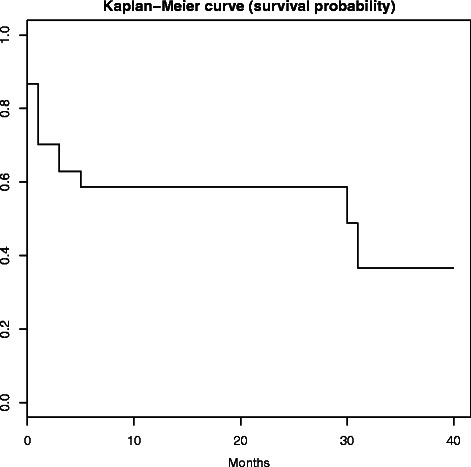
A-CRA sustainment was assessed via information collected as part of key informant interviews and surveys with clinical staff from community-based treatment organizations that had received federal funding to implement A-CRA. Administrative data from the funding period on implementation was also used. Using discrete-time survival analysis, we regressed A-CRA sustainment on several factors theorized to influence EBP sustainment. Factors examined included outer setting, inner setting, implementation quality during the funding period, and intervention-related characteristics.
Overall, data from 83 % of the targeted sample of treatment organizations was collected. A-CRA sustainment was strongly related to the time since funding loss. Strong relationships were found between sustainment status and implementation quality during the funding period, agency focus, funding stability, and political support for the treatment along with staff perceptions of the treatment's complexity and implementation difficulty.
Consistent with the Consolidated Framework for Implementation Research, the current study found several factors related to the outer setting (e.g., funding stability), inner setting (e.g., agency focus), implementation quality during the funding period (e.g., staff trained, clients served), and characteristics of the intervention (e.g., implementation complexity) to be associated with EBP sustainment. Future research is warranted to examine the extent to which these relationships are stable over time. Efforts to ensure that adequate implementation occurs during the initial implementation period and that adequate funding, infrastructure, and staff support following the ending of initial support are critical to a program's survival.
很少有实证研究纵向考察循证实践(EBP)的维持情况以及影响其维持的假设因素。为了填补这一空白,本研究考察了一种针对青少年物质使用的循证实践——青少年社区强化法(A-CRA)的维持情况。
通过作为关键知情人访谈和对来自接受联邦资金以实施A-CRA的社区治疗组织的临床工作人员进行调查的一部分所收集的信息,来评估A-CRA的维持情况。还使用了资助期内关于实施情况的行政数据。使用离散时间生存分析,我们将A-CRA的维持情况与几个理论上影响循证实践维持的因素进行回归分析。所考察的因素包括外部环境、内部环境、资助期内的实施质量以及与干预相关的特征。
总体而言,收集了目标治疗组织样本中83%的数据。A-CRA的维持与资金损失后的时间密切相关。在维持状态与资助期内的实施质量、机构重点、资金稳定性、对该治疗的政治支持以及工作人员对治疗复杂性和实施难度的看法之间发现了密切关系。
与实施研究综合框架一致,本研究发现与外部环境(如资金稳定性)、内部环境(如机构重点)、资助期内的实施质量(如工作人员培训、服务的客户)以及干预特征(如实施复杂性)相关的几个因素与循证实践的维持有关。有必要进行未来研究,以考察这些关系随时间的稳定程度。确保在初始实施期内进行充分实施,并在初始支持结束后提供充足的资金、基础设施和工作人员支持,对于项目的存续至关重要。