Montraveta Arnau, Lee-Vergés Eriong, Roldán Jocabed, Jiménez Laura, Cabezas Sandra, Clot Guillem, Pinyol Magda, Xargay-Torrent Sílvia, Rosich Laia, Arimany-Nardí Cristina, Aymerich Marta, Villamor Neus, López-Guillermo Armando, Pérez-Galán Patricia, Roué Gaël, Pastor-Anglada Marçal, Campo Elías, López-Guerra Mónica, Colomer Dolors
Institut d'Investigacions Biomèdiques August Pi i Sunyer (IDIBAPS), Barcelona, Spain.
Hematopathology Unit, Hospital Clinic, IDIBAPS, Barcelona, Spain.
Oncotarget. 2016 Feb 2;7(5):5507-20. doi: 10.18632/oncotarget.6685.
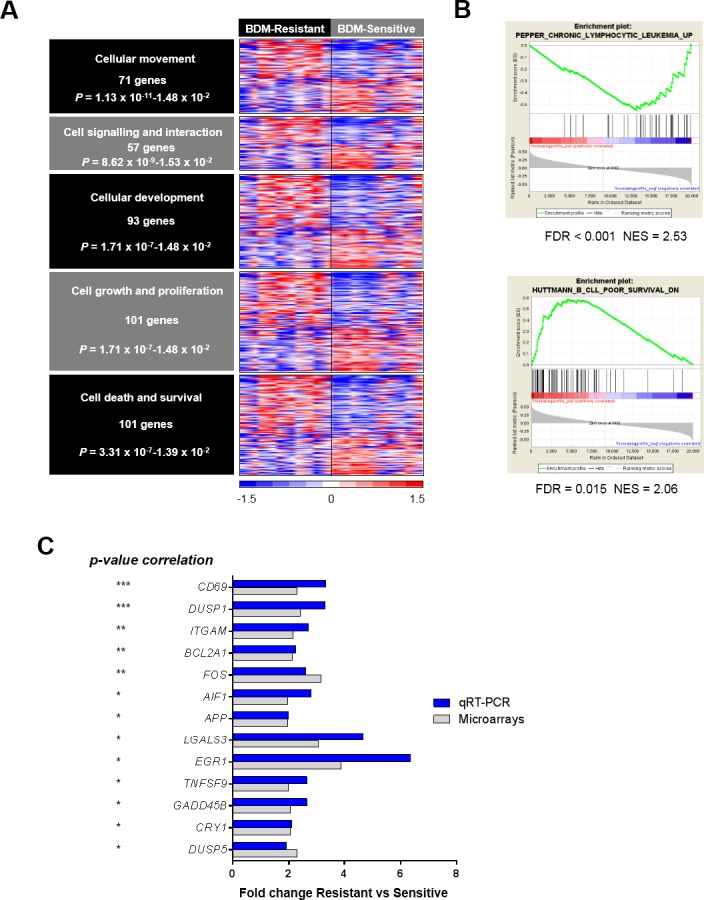
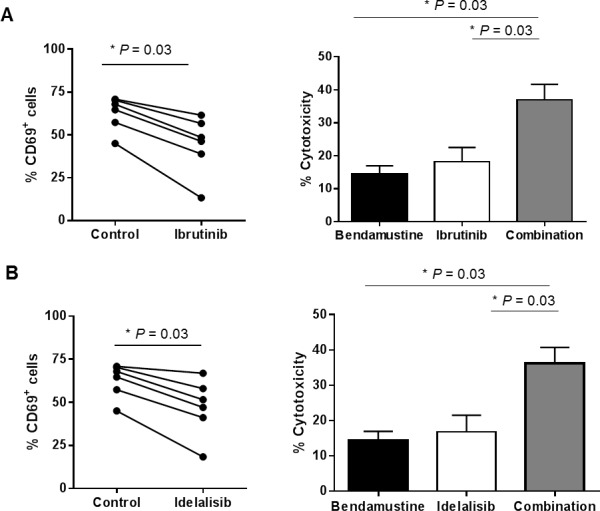
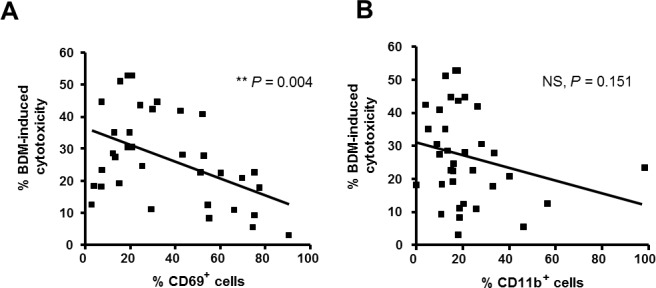
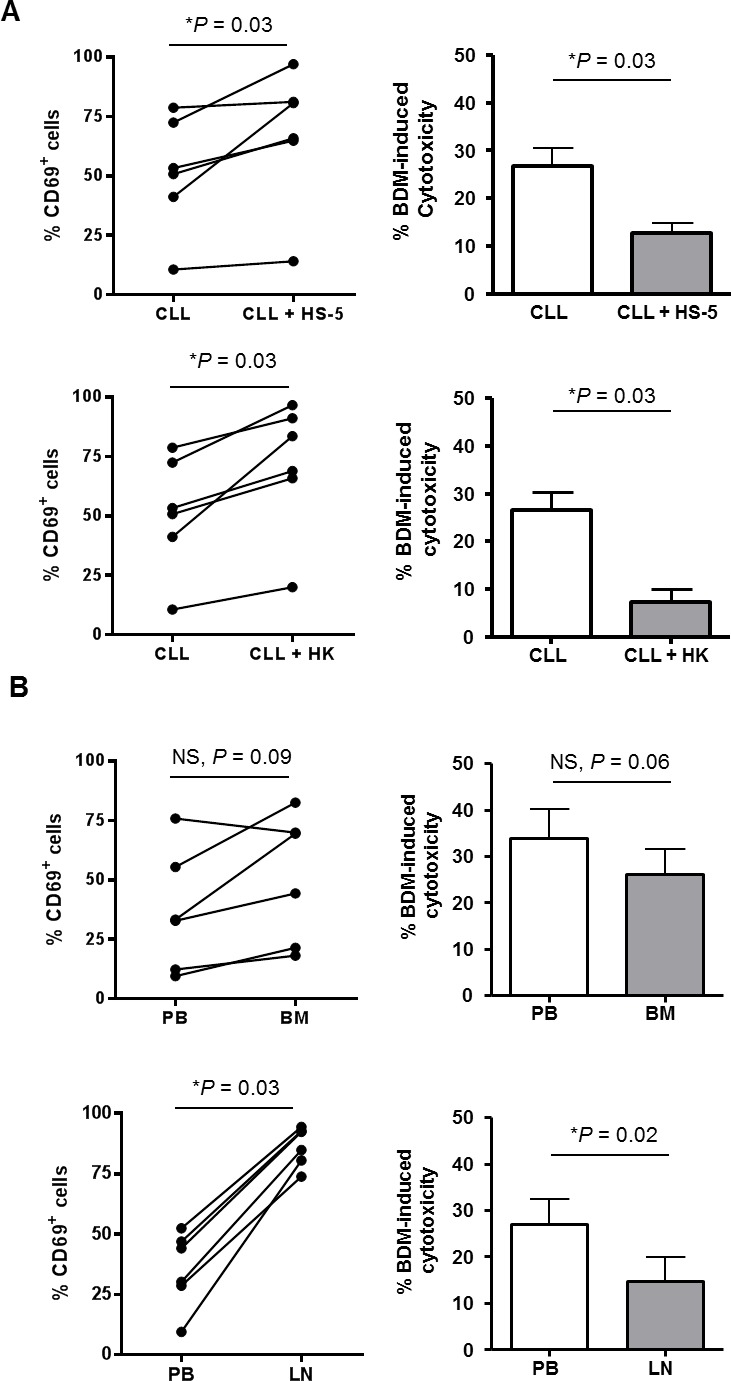
Clinical responses to bendamustine in chronic lymphocytic leukemia (CLL) are highly heterogeneous and no specific markers to predict sensitivity to this drug have been reported. In order to identify biomarkers of response, we analyzed the in vitro activity of bendamustine and the gene expression profile in primary CLL cells. We observed that mRNA expression of CD69 (CD69) and ITGAM (CD11b) constitute the most powerful predictor of response to bendamustine. When we interrogated the predictive value of the corresponding cell surface proteins, the expression of the activation marker CD69 was the most reliable predictor of sensitivity to bendamustine. Importantly, a multivariate analysis revealed that the predictive value of CD69 expression was independent from other clinico-biological CLL features. We also showed that when CLL cells were co-cultured with distinct subtypes of stromal cells, an upregulation of CD69 was accompanied by a reduced sensitivity to bendamustine. In agreement with this, tumor cells derived from lymphoid tumor niches harbored higher CD69 expression and were less sensitive to bendamustine than their peripheral blood counterparts. Furthermore, pretreatment of CD69 high CLL cases with the B-cell receptor (BCR) pathway inhibitors ibrutinib and idelalisib decreased CD69 levels and enhanced bendamustine cytotoxic effect. Collectively, our findings indicate that CD69 could be a predictor of bendamustine response in CLL patients and the combination of clinically-tested BCR signaling inhibitors with bendamustine may represent a promising strategy for bendamustine low responsive CLL cases.
苯达莫司汀治疗慢性淋巴细胞白血病(CLL)的临床反应高度异质性,目前尚无预测该药物敏感性的特异性标志物报道。为了确定反应的生物标志物,我们分析了苯达莫司汀的体外活性以及原发性CLL细胞中的基因表达谱。我们观察到,CD69(CD69)和ITGAM(CD11b)的mRNA表达构成了对苯达莫司汀反应的最有力预测指标。当我们探究相应细胞表面蛋白的预测价值时,活化标志物CD69的表达是对苯达莫司汀敏感性的最可靠预测指标。重要的是,多变量分析显示,CD69表达的预测价值独立于其他临床生物学CLL特征。我们还表明,当CLL细胞与不同亚型的基质细胞共培养时,CD69的上调伴随着对苯达莫司汀敏感性的降低。与此一致的是,源自淋巴肿瘤微环境的肿瘤细胞比其外周血对应细胞具有更高的CD69表达,并且对苯达莫司汀的敏感性更低。此外,用B细胞受体(BCR)途径抑制剂依鲁替尼和idelalisib预处理CD69高表达的CLL病例可降低CD69水平并增强苯达莫司汀的细胞毒性作用。总体而言,我们的研究结果表明,CD69可能是CLL患者对苯达莫司汀反应的预测指标,并且经临床测试的BCR信号抑制剂与苯达莫司汀联合使用可能是苯达莫司汀低反应性CLL病例的一种有前景的策略。