Shimizu T, Shiohara M, Tai T, Nagao K, Nakajima K, Kobayashi H
Department of Urology, Toho University School of Medicine, 6-11-1 Omori-Nishi, Ota-ku, Tokyo, 143-8541 Japan.
Reprod Med Biol. 2016;15(1):35-43. doi: 10.1007/s12522-015-0213-9. Epub 2015 Jul 3.
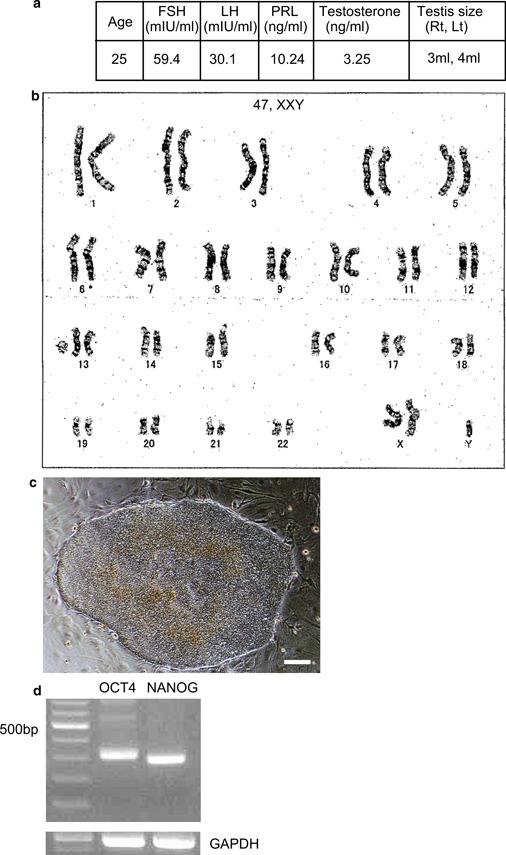
Klinefelter syndrome (KS) (47, XXY) is the most common sex chromosome abnormality in humans. KS is characterized by gynecomastia, tall stature, small testes, low testosterone levels, learning disabilities, and behavioral problems. KS is also associated with infertility due to non-obstructive azoospermia (NOA). The mechanism underlying NOA is still poorly understood, and although there is no current treatment, the use of microdissection testicular sperm extraction (micro-TESE) followed by in vitro fertilization can result in successful conception. The generation of induced pluripotent stem (iPS) cells derived from KS patients may be useful for studying the disease mechanism and identifying novel therapies.
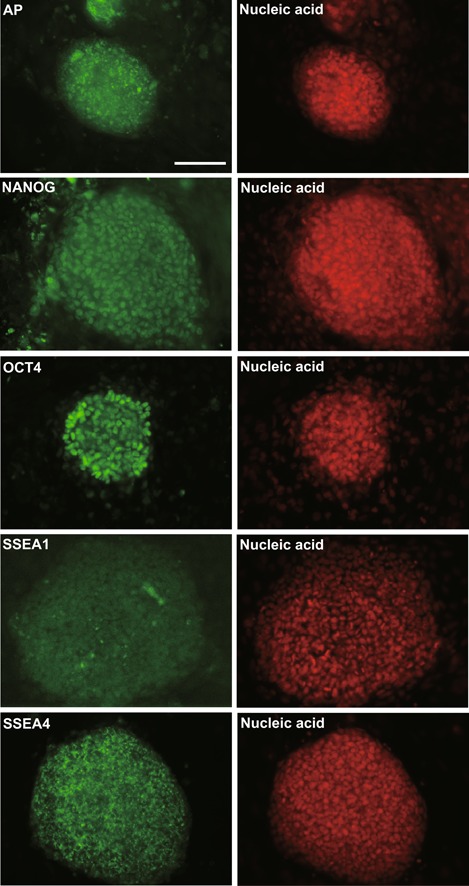
Cells from a KS patient were transduced with Sendai viral vectors encoding four transcription factors, OCT4, SOX2, KLF4, and C-MYC, and the transduced cells were analyzed for in vitro and in vivo pluripotency.
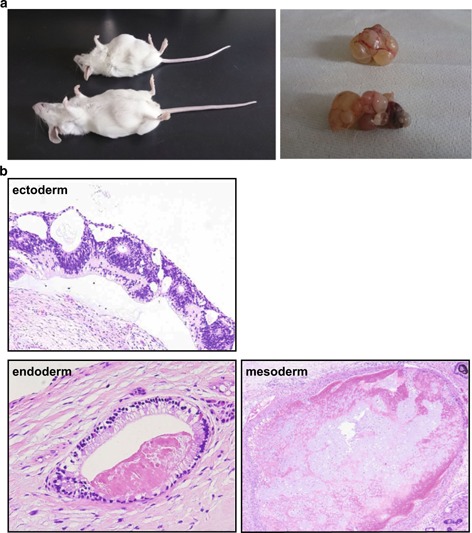
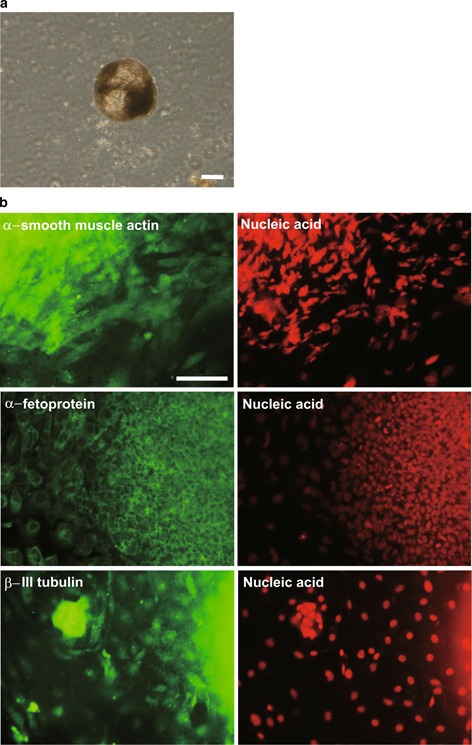
KS patient-derived iPS cells were successfully generated and shown to produce teratomas in the testes of SCID mice. In vitro differentiation of the iPS cells into cardiomyocyte-like cells was confirmed by the presence of clusters of beating cells.
KS patient-derived iPS cells that could differentiate into cardiomyocyte-like cells were established.
克兰费尔特综合征(KS)(47,XXY)是人类最常见的性染色体异常疾病。KS的特征包括男性乳房发育、身材高大、睾丸小、睾酮水平低、学习障碍和行为问题。KS还与非梗阻性无精子症(NOA)导致的不育有关。NOA的潜在机制仍知之甚少,尽管目前尚无治疗方法,但采用显微切割睾丸取精术(micro-TESE)然后进行体外受精可实现成功受孕。从KS患者中产生诱导多能干细胞(iPS细胞)可能有助于研究疾病机制并确定新的治疗方法。
用编码四种转录因子OCT4、SOX2、KLF4和C-MYC的仙台病毒载体转导KS患者的细胞,并对转导后的细胞进行体外和体内多能性分析。
成功产生了源自KS患者的iPS细胞,并证明其在SCID小鼠睾丸中形成了畸胎瘤。通过跳动细胞簇的存在证实了iPS细胞在体外分化为心肌样细胞。
建立了能够分化为心肌样细胞的源自KS患者的iPS细胞。