Jin Yanliang, Wang Xingwei, Hu Shaoyan, Tang Jingyan, Li Benshang, Chai Yihuan
Department of Hematology and Oncology, Soochow University Affiliated to Children's Hospital, Jiangsu, 215003, China.
Department of Hematology and Oncology, Shanghai Children's Medical Center, Key laboratory of Pediatric Hematology and Oncology Ministry of Health, Shanghai Jiao Tong University School of Medicine, Shanghai, 200127, China.
Cancer Med. 2016 Feb;5(2):337-51. doi: 10.1002/cam4.579. Epub 2015 Dec 29.
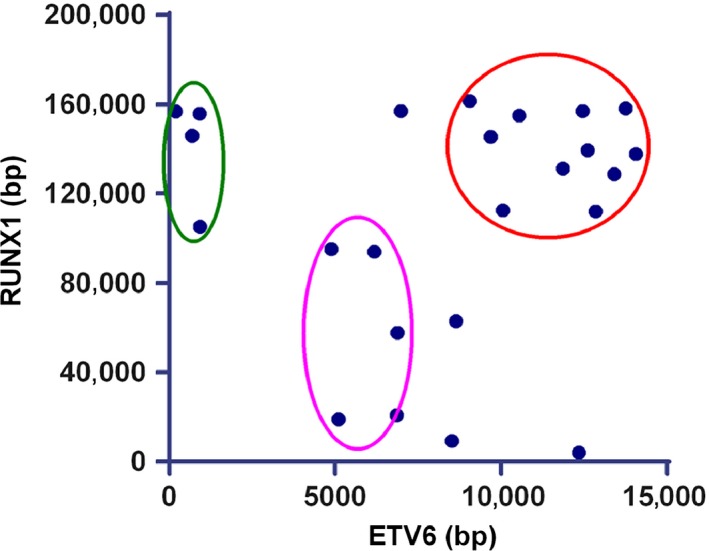
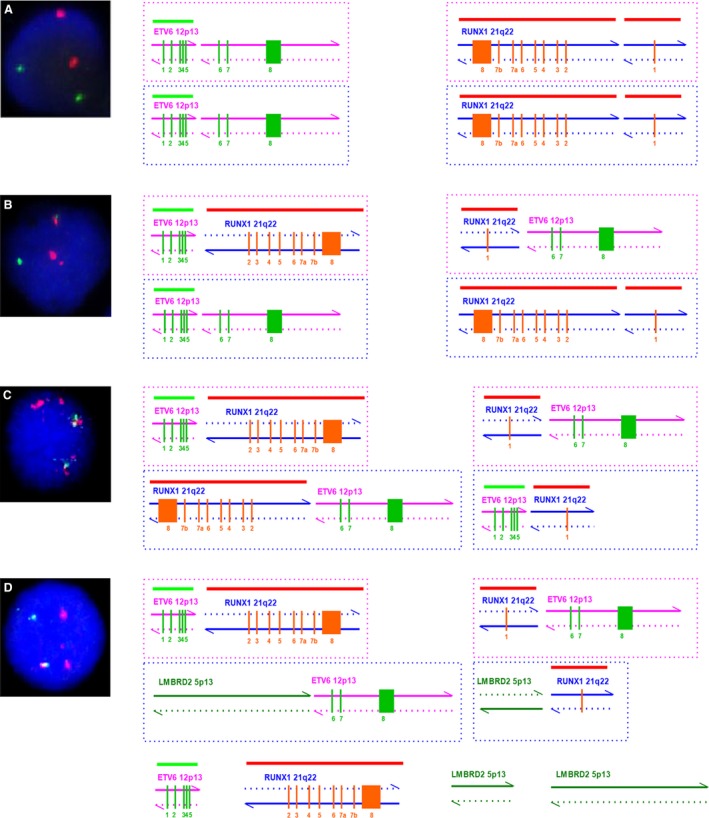
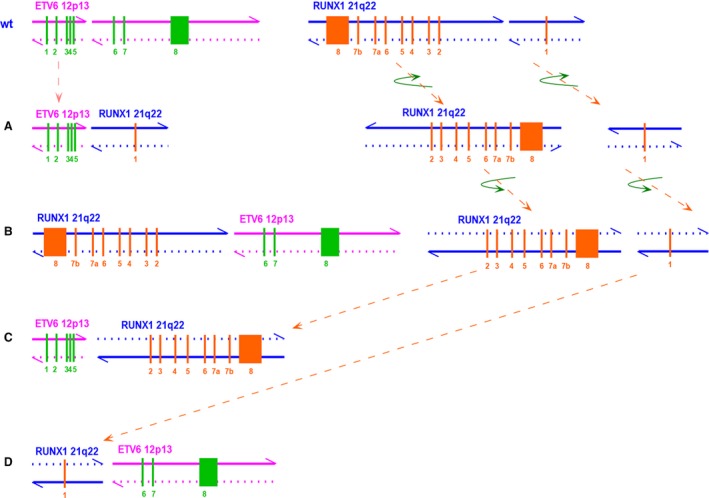
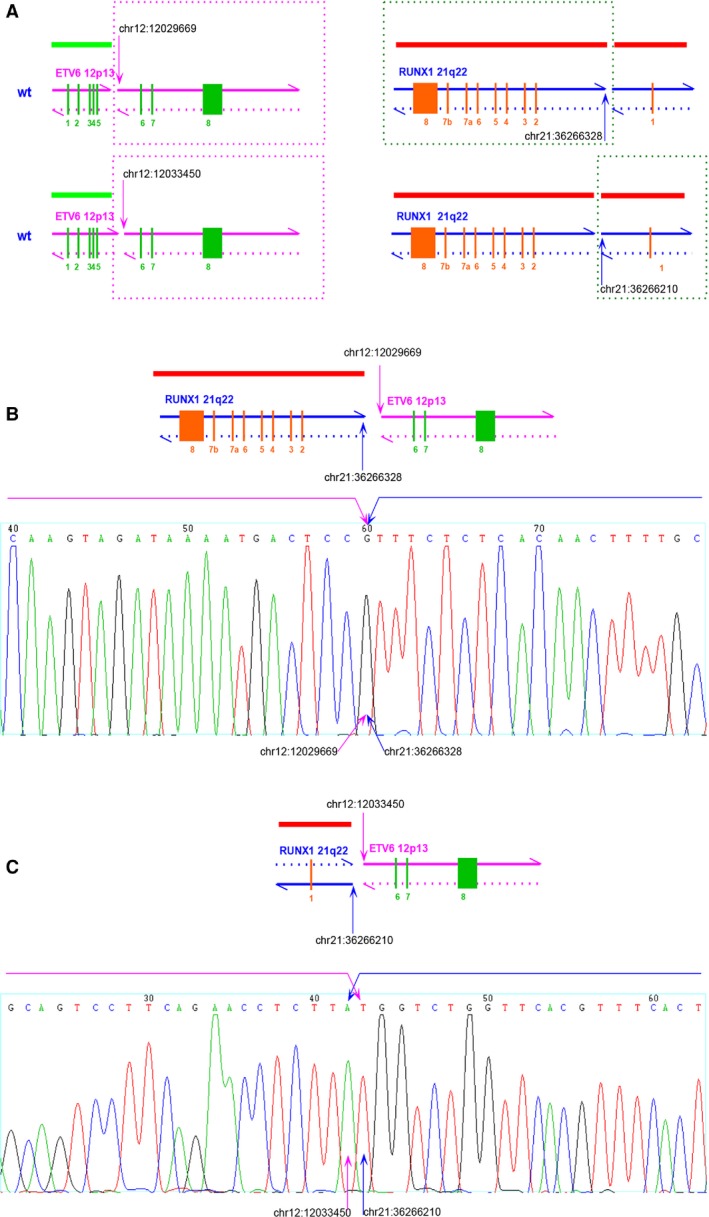
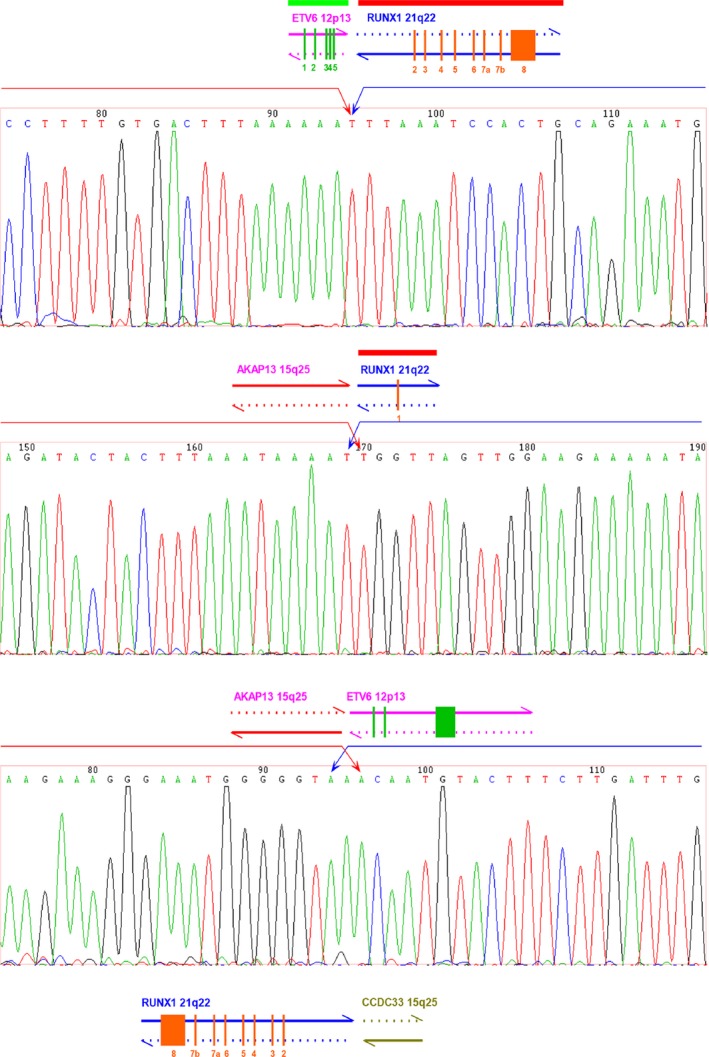
The t(12;21)(p13;q22) ETV6-RUNX1 gene fusion is one of the most common chromosomal translocation in childhood acute lymphoblastic leukemia (ALL). It is associated with favorable prognosis. The identification of the genomic sequence of the breakpoint flanking regions of the ETV6-RUNX1 translocation should be the best strategy to monitor minimal residual disease (MRD) in patients with ETV6-RUNX1-positive ALL. In this study, the ETV6-RUNX1 translocation was sequenced by next-generation sequencing (NGS) in 26 patients with ETV6-RUNX1-positive ALL and re-sequenced by using the Sanger method. Interestingly, the three-way translocation, including ETV6-RUNX1, was detected in five patients. Four of them relapsed during or after therapy, while 21 patients without the three-way translocation were still in remission (P < 0.0001). The three-way translocation pattern was identical between the diagnosis and relapse samples in three patients, excluding one patient (SCMC-001245). The relapse samples retained the translocation of ETV6-RUNX1 relative to the three-way translocation t(8;12;21) at diagnosis, suggesting that the three-way translocation might be an important risk factor for relapse in patients with ETV6-RUNX1-positive ALL and should be further studied.
t(12;21)(p13;q22) ETV6-RUNX1基因融合是儿童急性淋巴细胞白血病(ALL)中最常见的染色体易位之一。它与良好的预后相关。鉴定ETV6-RUNX1易位断点侧翼区域的基因组序列应该是监测ETV6-RUNX1阳性ALL患者微小残留病(MRD)的最佳策略。在本研究中,对26例ETV6-RUNX1阳性ALL患者的ETV6-RUNX1易位进行了二代测序(NGS),并采用桑格法进行重测序。有趣的是,在5例患者中检测到了包括ETV6-RUNX1在内的三向易位。其中4例在治疗期间或治疗后复发,而21例无三向易位的患者仍处于缓解期(P < 0.0001)。3例患者的诊断样本和复发样本中的三向易位模式相同,排除1例患者(SCMC-001245)。复发样本在诊断时相对于三向易位t(8;12;21)保留了ETV6-RUNX1的易位,这表明三向易位可能是ETV6-RUNX1阳性ALL患者复发的重要危险因素,应进一步研究。