Liang Pan-Pan, Huang Xin-Zhu, Yi Jin-Ling, Chen Zhi-Rui, Ma Han, Ye Cong-Xiu, Chen Xian-Yan, Lai Wei, Chen Jian
Department of Dermatology, Third Affiliated Hospital of Sun Yat-sen University, Guangzhou, Guangdong 510630, China.
Chin Med J (Engl). 2016 Jan 5;129(1):54-8. doi: 10.4103/0366-6999.172573.
Trichophyton rubrum represents the most common infectious fungus responsible for dermatophytosis in human, but the mechanism involved is still not completely understood. An appropriate model constructed to simulate host infection is the prerequisite to study the pathogenesis of dermatophytosis caused by T. rubrum. In this study, we intended to develop a new T. rubrum infection model in vitro, using the three-dimensional reconstructed epidermis - EpiSkin ®, and to pave the way for further investigation of the mechanisms involved in T. rubrum infection.
The reconstructed human epidermis (RHE) was infected by inoculating low-dose (400 conidia) and high-dose (4000 conidia) T. rubrum conidia to optimize the infection dose. During the various periods after infection, the samples were processed for pathological examination and scanning electron microscopy (SEM) observation.
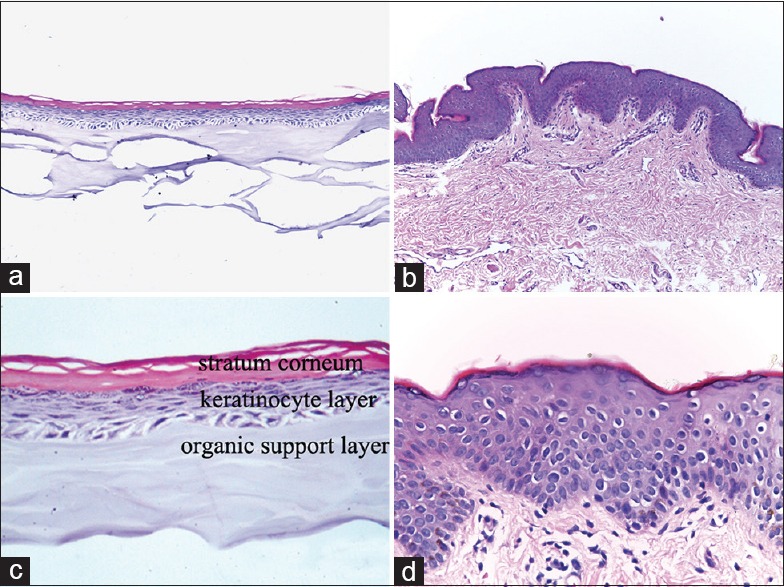
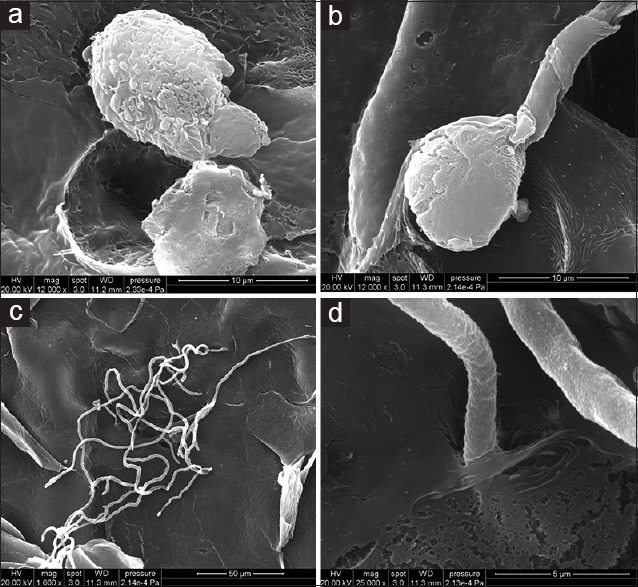
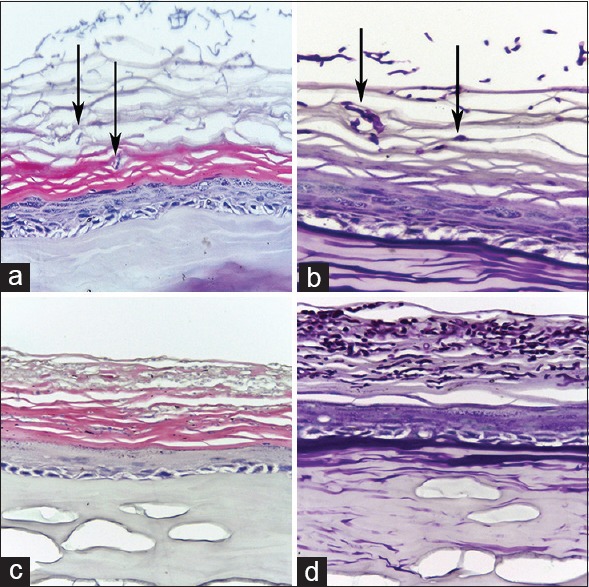
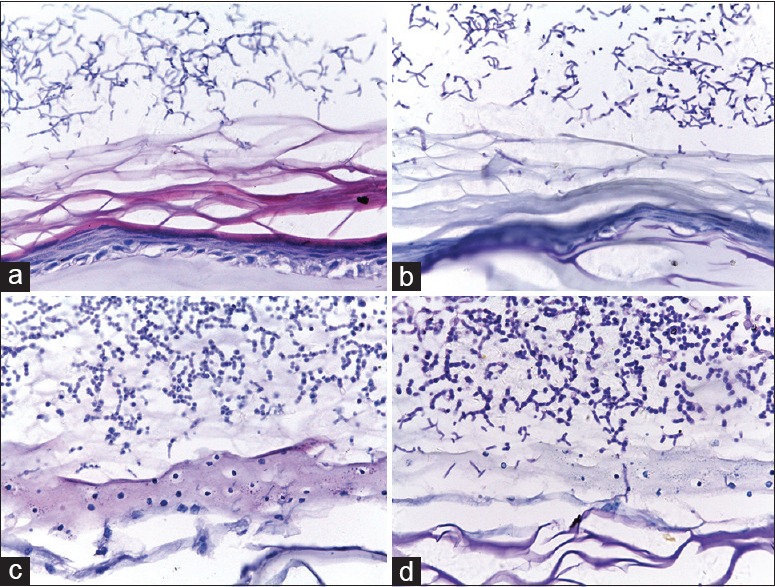
The histological analysis of RHE revealed a fully differentiated epidermis with a functional stratum corneum, which was analogous to the normal human epidermis. The results of hematoxylin and eosin staining and the periodic acid-Schiff staining showed that the infection dose of 400 conidia was in accord with the pathological characteristics of host dermatophytosis caused by T. rubrum. SEM observations further exhibited the process of T. rubrum infection in an intuitionistic way.
We established the T. rubrum infection model on RHE in vitro successfully. It is a promising model for further investigation of the mechanisms involved in T. rubrum infection.
红色毛癣菌是引起人类皮肤癣菌病最常见的感染性真菌,但其致病机制仍未完全明确。构建合适的模拟宿主感染的模型是研究红色毛癣菌所致皮肤癣菌病发病机制的前提。在本研究中,我们旨在利用三维重建表皮-EpiSkin®建立一种新的体外红色毛癣菌感染模型,为进一步研究红色毛癣菌感染的机制铺平道路。
通过接种低剂量(400个分生孢子)和高剂量(4000个分生孢子)的红色毛癣菌分生孢子感染重建人表皮(RHE),以优化感染剂量。在感染后的不同时期,对样本进行病理检查和扫描电子显微镜(SEM)观察。
RHE的组织学分析显示其表皮完全分化,角质层功能正常,类似于正常人类表皮。苏木精-伊红染色和过碘酸-希夫染色结果表明,400个分生孢子的感染剂量符合红色毛癣菌引起的宿主皮肤癣菌病的病理特征。SEM观察进一步直观地展示了红色毛癣菌的感染过程。
我们成功地在体外RHE上建立了红色毛癣菌感染模型。它是进一步研究红色毛癣菌感染机制的一个有前景的模型。