Liao Yuan-Ya, Tsai Hsiao-Chi, Chou Pei-Yu, Wang Shih-Wei, Chen Hsien-Te, Lin Yu-Min, Chiang I-Ping, Chang Tzu-Ming, Hsu Shao-Keh, Chou Ming-Chih, Tang Chih-Hsin, Fong Yi-Chin
Institute of Medicine, Chung Shan Medical University, Taichung, Taiwan.
Department of Surgery, Chung Shan Medical University Hospital, Taichung, Taiwan.
Oncotarget. 2016 Jan 26;7(4):4310-25. doi: 10.18632/oncotarget.6708.
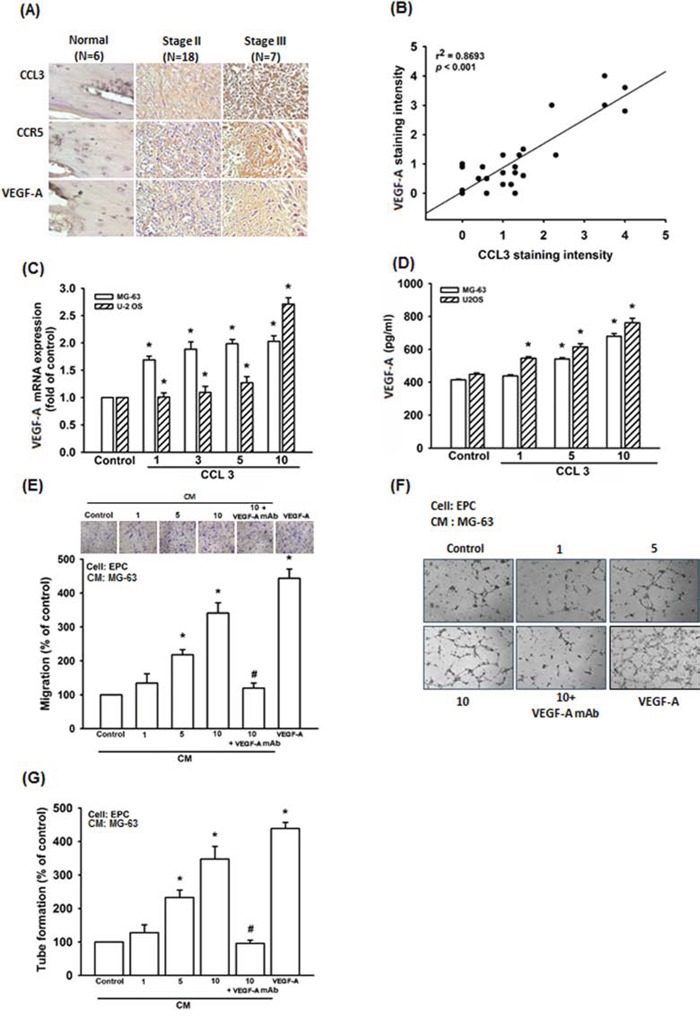
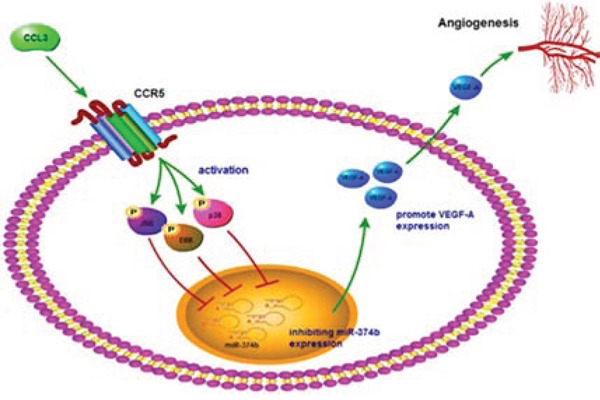
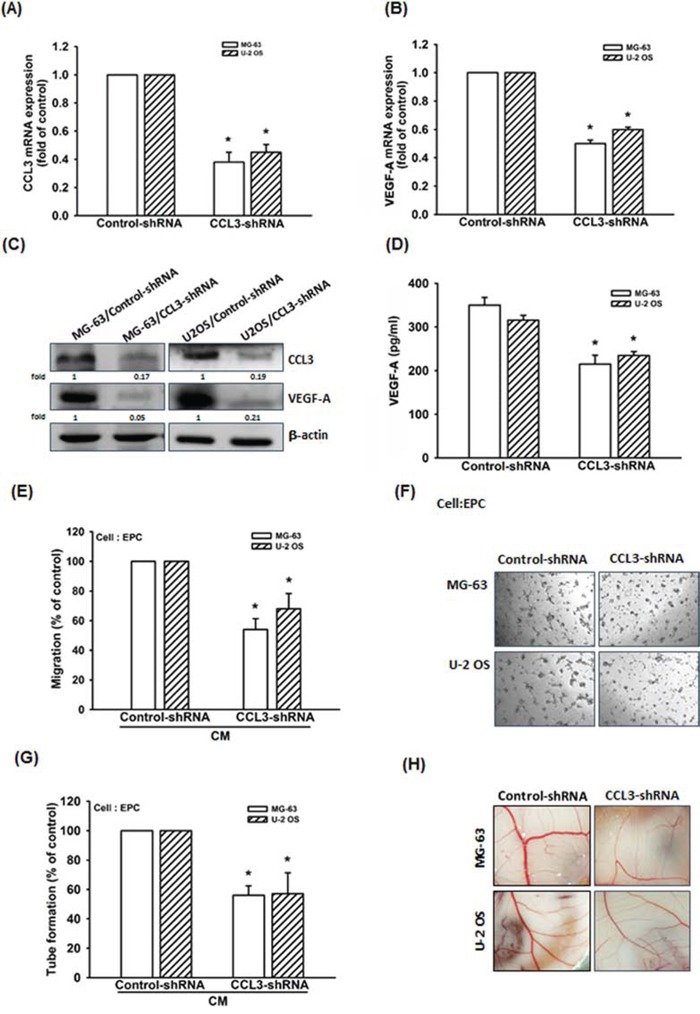
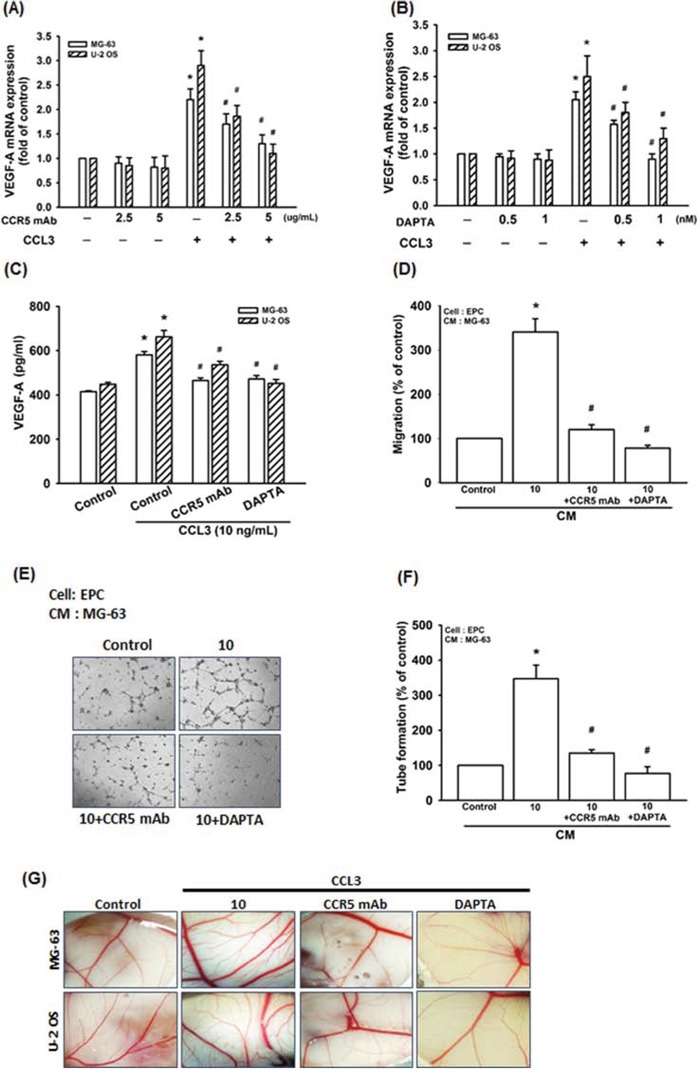
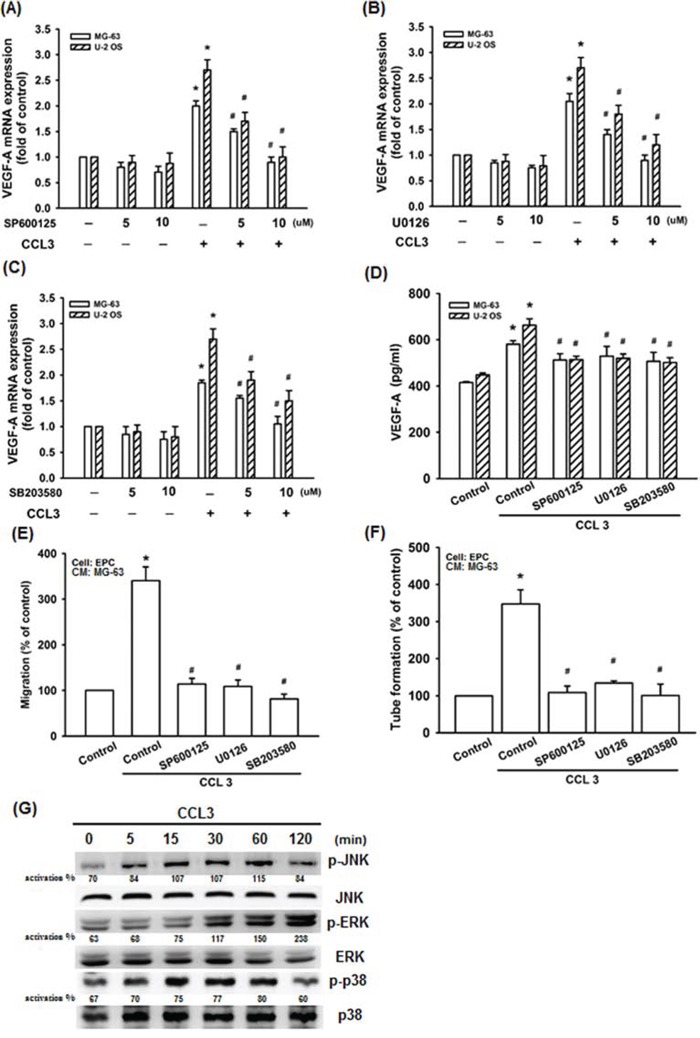
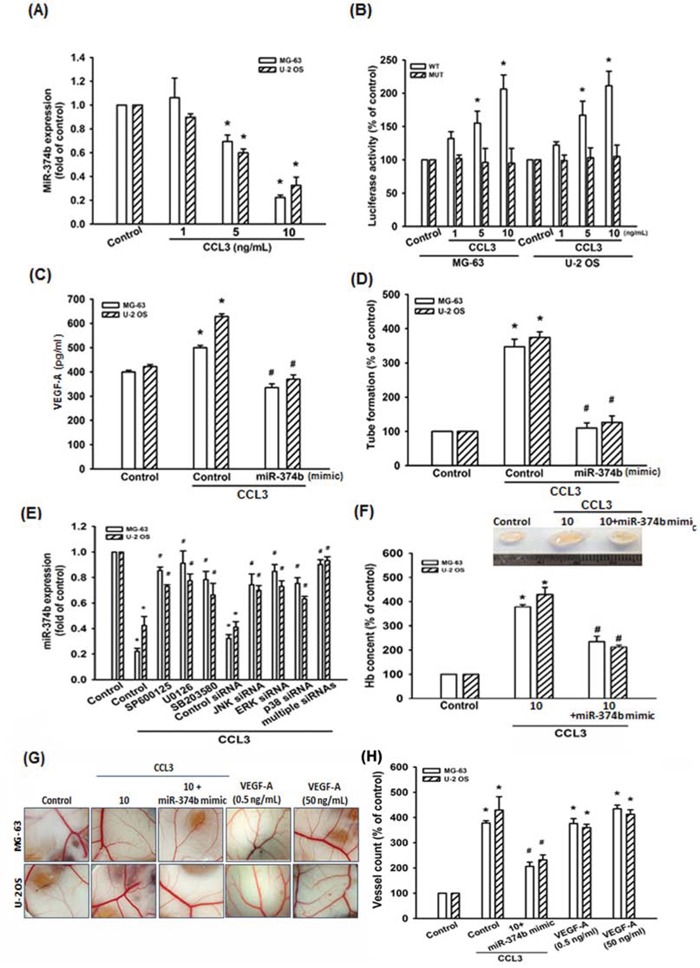
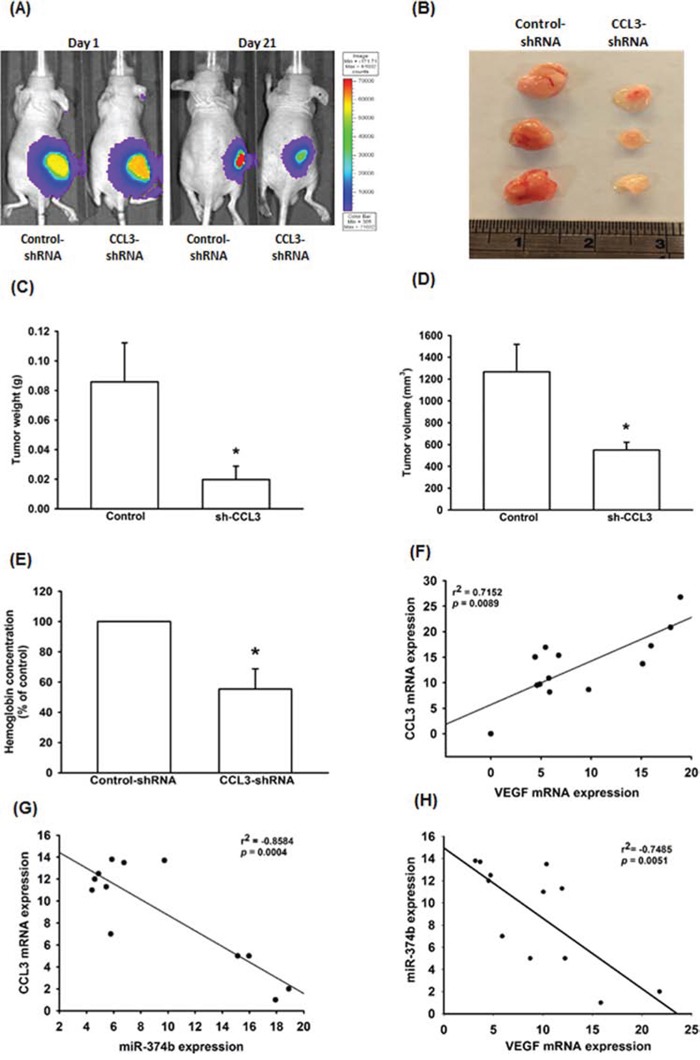
Osteosarcoma is the most frequent bone tumor, characterized by a high metastatic potential. However, the crosstalk between chemokine (C-C motif) ligand 3 (CCL3), which facilitates tumor progression and metastasis. Vascular endothelial growth factor-A (VEGF-A), an angiogenesis inducer and a highly specific mitogen for endothelial cells, has not been well explored in human osteosarcoma. Here we demonstrate the correlation of CCL3 and VEGF-A expressions, quantified by immunohistochemistry, with the tumor stage of human osteosarcoma tissues. Furthermore, CCL3 promotes VEGF-A expression in human osteosarcoma cells that subsequently induces human endothelial progenitor cell (EPC) migration and tube formation. Phosphorylation of JNK, ERK, and p38 was found after CCL3 stimulation. In addition, JNK, ERK, and p38 inhibitors also abolished CCL3-induced VEGF-A expression and angiogenesis. We noted that CCL3 reduces the expression of miR-374b and miR-374b mimic by reversing CCL3-promoted VEGF-A expression and angiogenesis in vitro and in vivo. This study shows that CCL3 promotes VEGF-A expression and angiogenesis in human osteosarcoma cells by down-regulating miR-374b expression via JNK, ERK, and p38 signaling pathways. Thus, CCL3 may be a new molecular therapeutic target in osteosarcoma angiogenesis and metastasis.
骨肉瘤是最常见的骨肿瘤,其特点是具有高转移潜能。然而,趋化因子(C-C基序)配体3(CCL3)促进肿瘤进展和转移,血管内皮生长因子-A(VEGF-A)是一种血管生成诱导剂和内皮细胞的高度特异性有丝分裂原,在人类骨肉瘤中的研究尚不充分。在此,我们通过免疫组织化学对CCL3和VEGF-A表达进行定量,证明其与人类骨肉瘤组织肿瘤分期的相关性。此外,CCL3促进人类骨肉瘤细胞中VEGF-A的表达,进而诱导人类内皮祖细胞(EPC)迁移和血管生成。CCL3刺激后发现JNK、ERK和p38磷酸化。此外,JNK、ERK和p38抑制剂也消除了CCL3诱导的VEGF-A表达和血管生成。我们注意到,CCL3通过在体外和体内逆转CCL3促进的VEGF-A表达和血管生成来降低miR-374b的表达。本研究表明,CCL3通过JNK、ERK和p38信号通路下调miR-374b表达,促进人类骨肉瘤细胞中VEGF-A的表达和血管生成。因此,CCL3可能是骨肉瘤血管生成和转移的一个新的分子治疗靶点。