Saito-Hakoda Akiko, Uruno Akira, Yokoyama Atsushi, Shimizu Kyoko, Parvin Rehana, Kudo Masataka, Saito-Ito Takako, Sato Ikuko, Kogure Naotaka, Suzuki Dai, Shimada Hiroki, Yoshikawa Takeo, Fujiwara Ikuma, Kagechika Hiroyuki, Iwasaki Yasumasa, Kure Shigeo, Ito Sadayoshi, Sugawara Akira
Department of Molecular Endocrinology, Tohoku University Graduate School of Medicine, Sendai, Miyagi, Japan.
Department of Medical Biochemistry, Tohoku University Graduate School of Medicine, Sendai, Miyagi, Japan.
PLoS One. 2015 Dec 29;10(12):e0141960. doi: 10.1371/journal.pone.0141960. eCollection 2015.
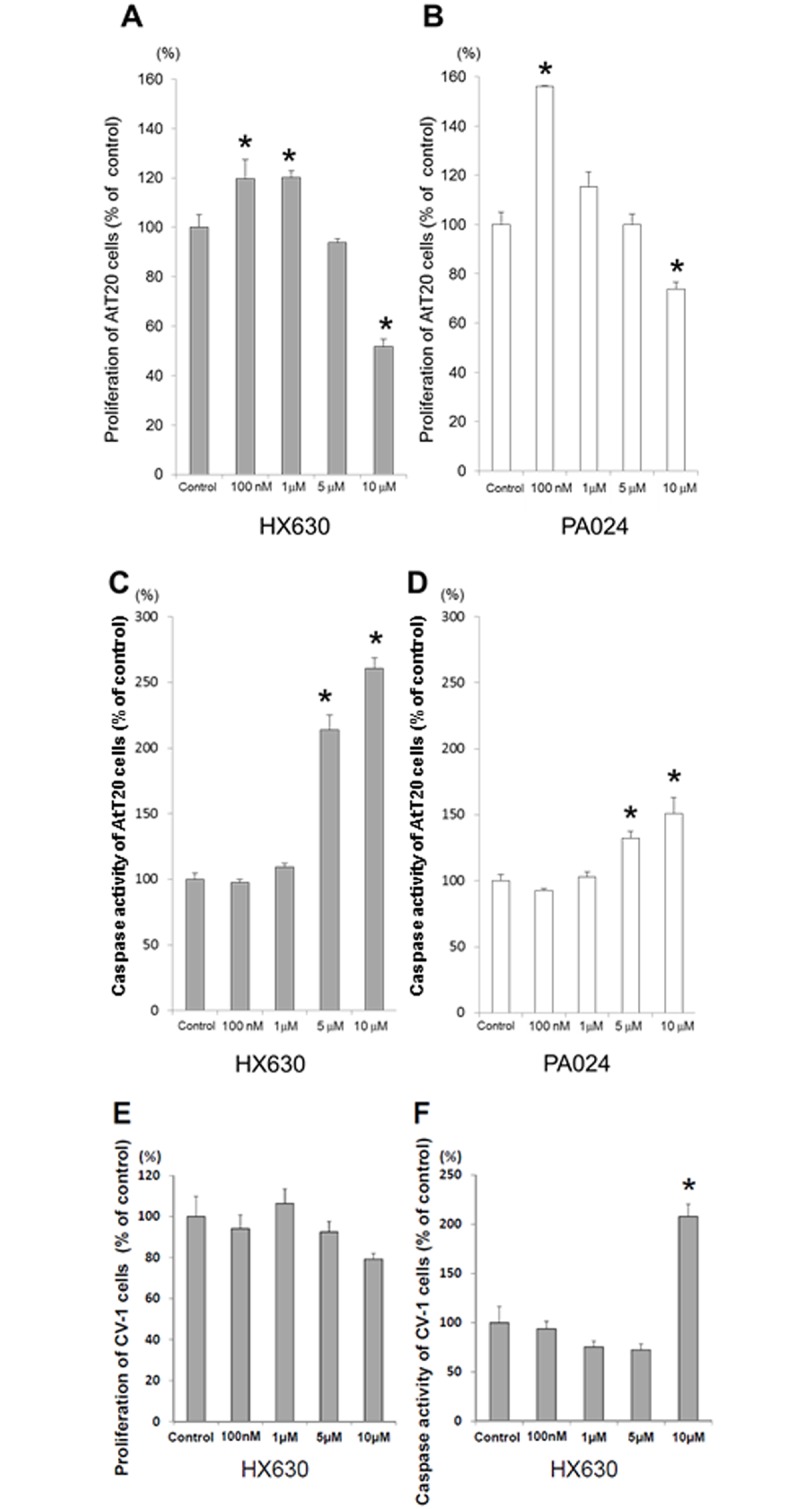
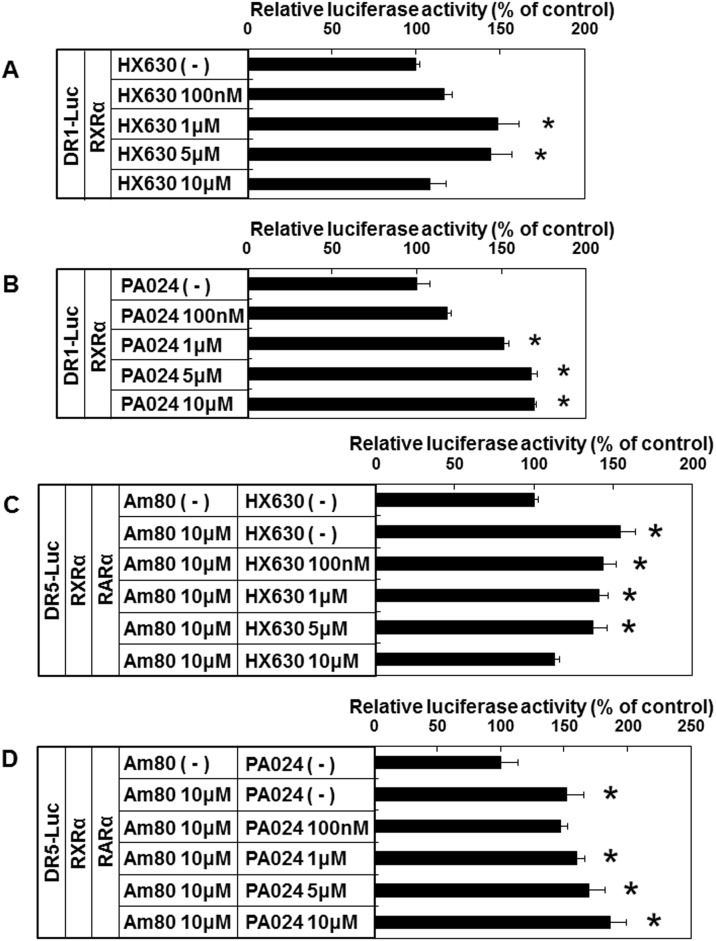
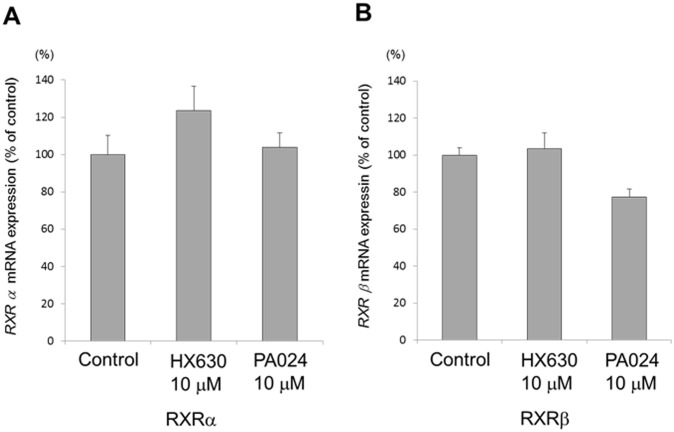
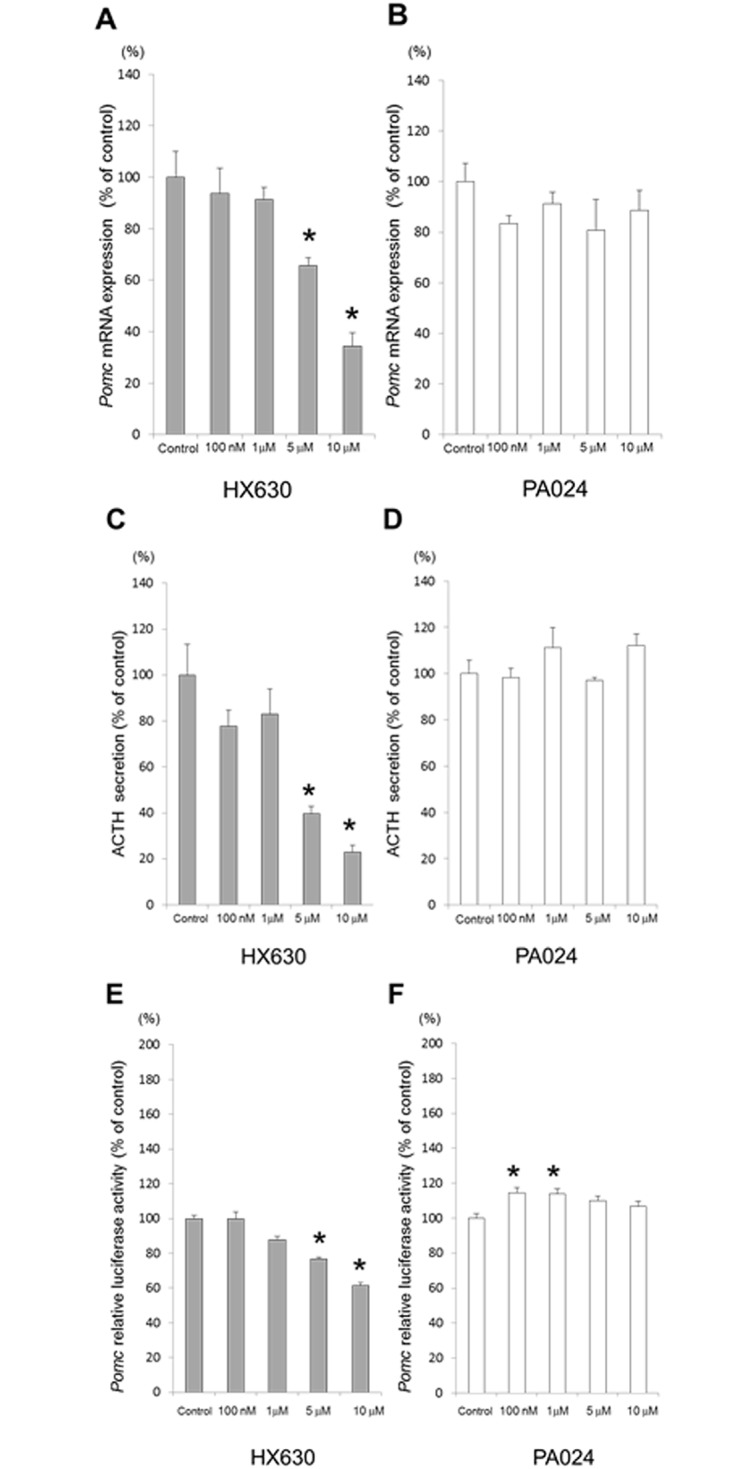
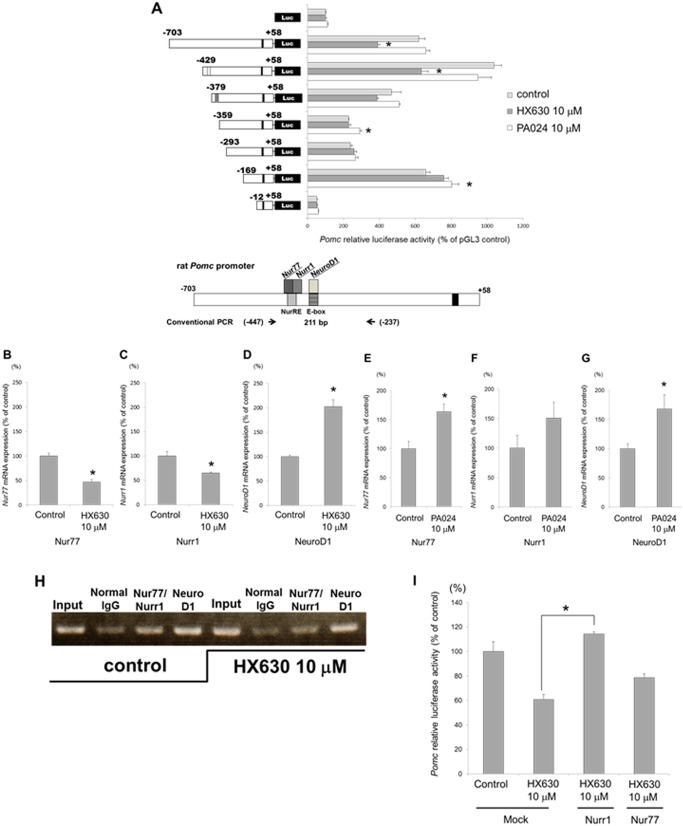
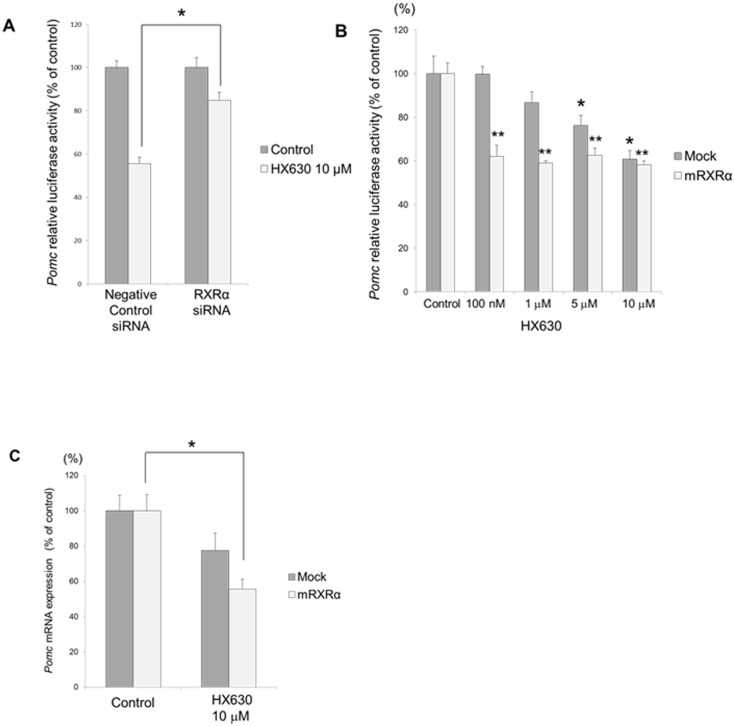
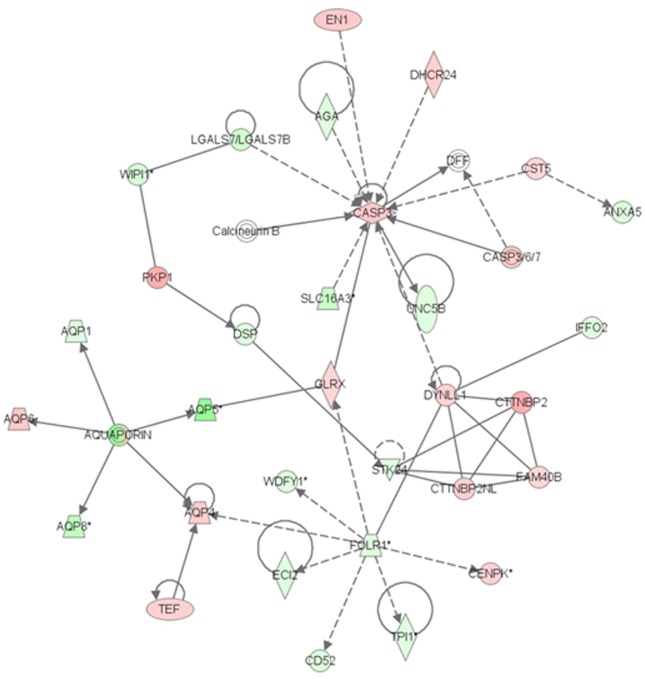
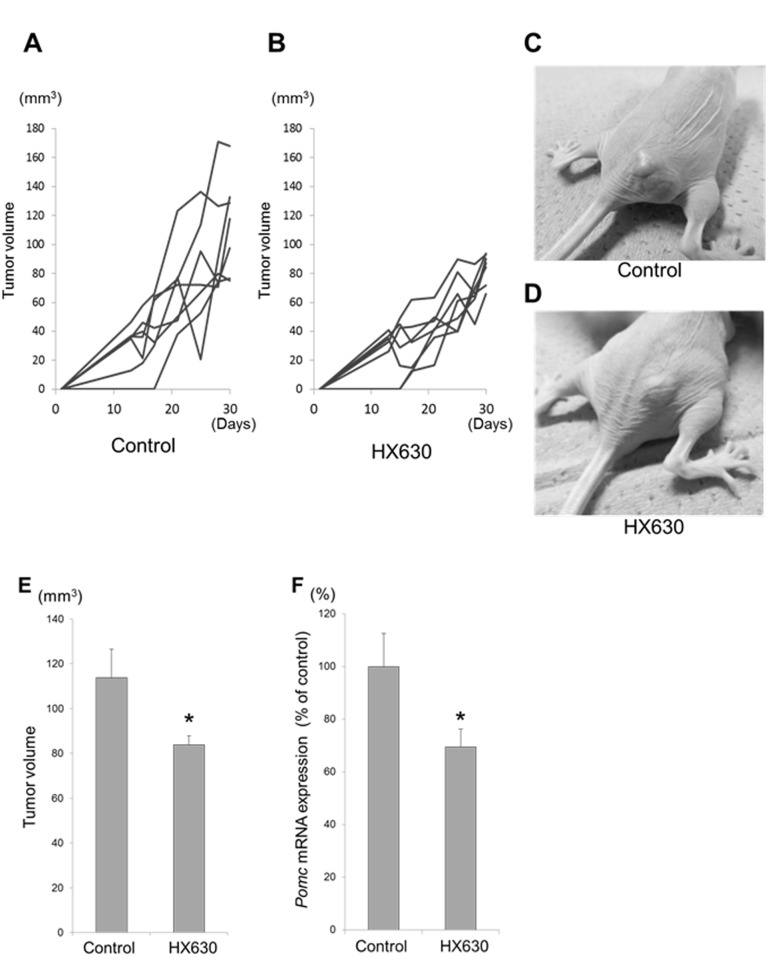
Various retinoid X receptor (RXR) agonists have recently been developed, and some of them have shown anti-tumor effects both in vivo and in vitro. However, there has been no report showing the effects of RXR agonists on Cushing's disease, which is caused by excessive ACTH secretion in a corticotroph tumor of the pituitary gland. Therefore, we examined the effects of synthetic RXR pan-agonists HX630 and PA024 on the proliferation, apoptosis, ACTH secretion, and pro-opiomelanocortin (Pomc) gene expression of murine pituitary corticotroph tumor AtT20 cells. We demonstrated that both RXR agonists induced apoptosis dose-dependently in AtT20 cells, and inhibited their proliferation at their higher doses. Microarray analysis identified a significant gene network associated with caspase 3 induced by high dose HX630. On the other hand, HX630, but not PA024, inhibited Pomc transcription, Pomc mRNA expression, and ACTH secretion dose-dependently. Furthermore, we provide new evidence that HX630 negatively regulates the Pomc promoter activity at the transcriptional level due to the suppression of the transcription factor Nur77 and Nurr1 mRNA expression and the reduction of Nur77/Nurr1 heterodimer recruiting to the Pomc promoter region. We also demonstrated that the HX630-mediated suppression of the Pomc gene expression was exerted via RXRα. Furthermore, HX630 inhibited tumor growth and decreased Pomc mRNA expression in corticotroph tumor cells in female nude mice in vivo. Thus, these results indicate that RXR agonists, especially HX630, could be a new therapeutic candidate for Cushing's disease.
最近已开发出多种维甲酸X受体(RXR)激动剂,其中一些已在体内和体外显示出抗肿瘤作用。然而,尚无报告显示RXR激动剂对库欣病的影响,库欣病是由垂体促肾上腺皮质激素细胞瘤中促肾上腺皮质激素(ACTH)分泌过多引起的。因此,我们研究了合成的RXR泛激动剂HX630和PA024对小鼠垂体促肾上腺皮质激素细胞瘤AtT20细胞的增殖、凋亡、ACTH分泌及阿黑皮素原(Pomc)基因表达的影响。我们证明,两种RXR激动剂均在AtT20细胞中剂量依赖性地诱导凋亡,并在较高剂量时抑制其增殖。微阵列分析确定了一个与高剂量HX630诱导的半胱天冬酶3相关的重要基因网络。另一方面,HX630而非PA024剂量依赖性地抑制Pomc转录、Pomc mRNA表达及ACTH分泌。此外,我们提供了新的证据表明,由于转录因子Nur77和Nurr1 mRNA表达受到抑制以及Nur77/Nurr1异二聚体募集到Pomc启动子区域减少,HX630在转录水平上负向调节Pomc启动子活性。我们还证明,HX630介导的对Pomc基因表达的抑制是通过RXRα发挥作用的。此外,HX630在体内抑制雌性裸鼠促肾上腺皮质激素细胞瘤细胞的肿瘤生长并降低Pomc mRNA表达。因此,这些结果表明RXR激动剂,尤其是HX630,可能是库欣病的一种新的治疗候选药物。