Ashur Sana Taher, Shah Shamsul Azhar, Bosseri Soad, Morisky Donald E, Shamsuddin Khadijah
Department of Community Health, Universiti Kebangsaan Malaysia Medical Centre, Kuala Lumpur, Malaysia;
Department of Community Health, Universiti Kebangsaan Malaysia Medical Centre, Kuala Lumpur, Malaysia.
Libyan J Med. 2015 Dec 28;10(1):29797. doi: 10.3402/ljm.v10.29797. eCollection 2015.
The surrounding environment influences the constitution of illness perceptions. Therefore, local research is needed to examine how Libyan diabetes patients perceive diabetes and how their perceptions influence their medication adherence.
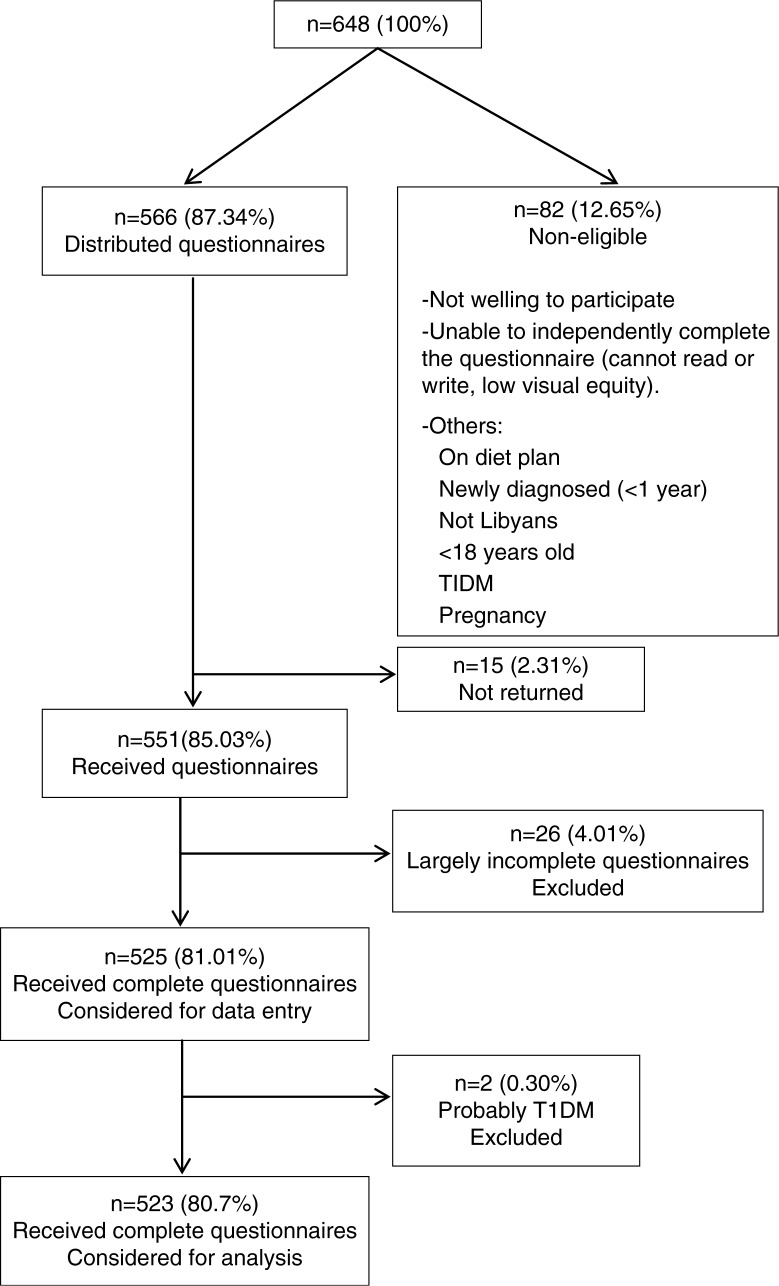
A cross-sectional study was conducted at the National Centre for Diabetes and Endocrinology in Tripoli, Libya, between October and December 2013. A total of 523 patients with type 2 diabetes participated in this study. A self-administered questionnaire was used for data collection; this included the Revised Illness Perception Questionnaire and the eight-item Morisky Medication Adherence Scale.
The respondents showed moderately high personal control and treatment control perceptions and a moderate consequences perception. They reported a high perception of diabetes timeline as chronic and a moderate perception of the diabetes course as unstable. The most commonly perceived cause of diabetes was Allah's will. The prevalence of low medication adherence was 36.1%. The identified significant predictors of low medication adherence were the low treatment control perception (p=0.044), high diabetes identity perception (p=0.008), being male (p=0.026), and employed (p=0.008).
Diabetes illness perceptions of type 2 diabetic Libyans play a role in guiding the medication adherence and could be considered in the development of medication adherence promotion plans.
周围环境会影响疾病认知的构成。因此,需要进行本土研究,以考察利比亚糖尿病患者如何看待糖尿病,以及他们的认知如何影响其用药依从性。
2013年10月至12月期间,在利比亚的黎波里国家糖尿病与内分泌中心开展了一项横断面研究。共有523例2型糖尿病患者参与了本研究。采用自填式问卷收集数据;问卷包括修订后的疾病认知问卷和8项Morisky用药依从性量表。
受访者对个人控制和治疗控制的认知程度较高,对后果的认知程度中等。他们认为糖尿病病程为慢性的认知程度较高,而认为糖尿病病情不稳定的认知程度中等。最常被认为的糖尿病病因是安拉的旨意。用药依从性低的患病率为36.1%。已确定的用药依从性低的显著预测因素为治疗控制认知程度低(p=0.044)、糖尿病认同认知程度高(p=0.008)、男性(p=0.026)以及就业状态(p=0.008)。
利比亚2型糖尿病患者的糖尿病认知在指导用药依从性方面发挥着作用,在制定促进用药依从性的计划时可予以考虑。